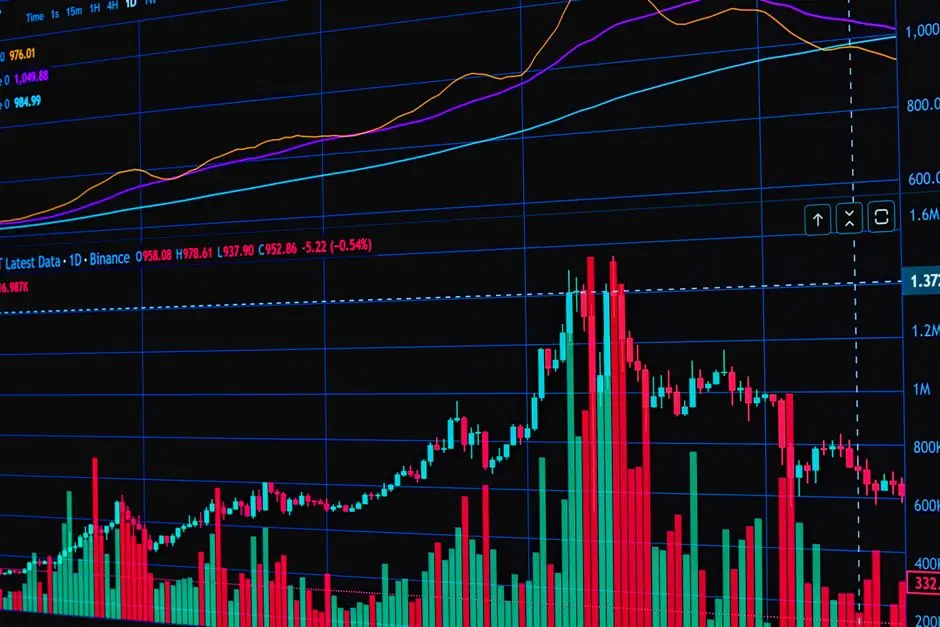
The LME Lithium Hydroxide CIF (Fastmarkets MB) series displayed closing prices of $12,261.90/MT, $12,250/MT, $12,250/MT, and $12,250/MT, but the supplied excerpt does not date them.
The comparison covers battery-grade lithium hydroxide monohydrate at a minimum 56.5% LiOH and battery-grade lithium carbonate at a minimum 99.5% Li2CO3 under CIF China, Japan and Korea assessments.
Hydroxide Versus Carbonate Price Levels
The November 2026 hydroxide benchmark of $12,250/MT sits below the $12,659/MT China price recorded for Q2 2026 and the $13,838/MT US Q2 2026 price, although the benchmarks cover different periods, locations and delivery terms [S4][S6].
IMARC reported a Q2 2026 lithium hydroxide price of $12,659/MT for China, while the displayed LME Lithium Hydroxide CIF (Fastmarkets MB) closing prices included $12,250/MT and $12,261.90/MT.
This comparison does not establish a like-for-like discount because the carbonate series is domestic Chinese pricing while the hydroxide series is CIF CJK. Freight, insurance, import duties, taxes, Incoterms and contract timing must be normalized before treating the difference as an actionable purchasing discount [S2][S6].
Regional Hydroxide Price Comparison
Q2 2026 lithium hydroxide prices were $17,392/MT in Japan, $17,065/MT in South Korea, $14,192/MT in Germany, $13,838/MT in the United States and $12,659/MT in China [S4].
Japan’s Q2 price exceeded China’s by $4,733/MT, while South Korea’s exceeded China’s by $4,406/MT and Germany’s by $1,533/MT [S4]. Those gaps make conversion and regional logistics economically relevant for buyers deciding whether to source near China, Europe or Northeast Asian markets.
A separate German series placed the Q2 2026 average at $13,135/MT, up 0.7% from $13,050/MT, which differs from the $14,192/MT German price in the broader regional dataset [S4][S7]. The variance shows why a buyer must specify the assessment source, location, period and delivery basis before comparing supplier quotations.
Contract Specifications That Control Price Meaning
CME’s hydroxide and carbonate derivatives reference Fastmarkets battery-grade spot assessments, with hydroxide specified as LiOH.H2O at 56.5% LiOH minimum and carbonate as Li2CO3 at 99.5% minimum, both on a CIF China, Japan and Korea basis [S2].
The assessment codes are MB-LI-0033 for hydroxide and MB-LI-0029 for carbonate, giving procurement teams a practical way to identify the underlying price series rather than compare a generic “lithium” quotation with a defined battery-grade assessment [S2].
CME issued notice 26-238 on July 16, 2026, with the contract amendments scheduled to take effect on July 31, 2026, subject to relevant CFTC regulatory review periods [S2]. The specification dates and minimum assay values matter because contract descriptions, physical receipts and index calculations are separate elements of the purchasing decision.
What Drives the Hydroxide Carbonate Spread
Hydroxide and carbonate are related lithium feedstocks but they are not interchangeable products: the assessed hydroxide contains LiOH.H2O at 56.5% minimum, whereas carbonate contains Li2CO3 at 99.5% minimum, and each chemistry serves different production requirements [S2].
Conversion economics depend on processing cost, yield, energy, logistics and the value of the finished product.
The relative ranking can change with battery demand. Benchmark reported in June 2021 that Chinese lithium hydroxide had restored its premium over lithium carbonate. That episode establishes the spread as market-dependent rather than a permanent product attribute.
Procurement Criteria and Discount Discipline

For a buyer seeking the largest discount to carbonate, the starting point is not the headline percentage but the normalized delivered cost for 1 tonne of LiOH.H2O at 56.5% minimum, including freight, insurance, duty, taxes, handling and quality adjustments [S2].
The price decision should be based on four measurable criteria: delivered cost per tonne of usable LiOH, assay compliance, delivery window and supply security. Regional benchmarks show why the origin matters: Q2 2026 prices ranged from $12,659/MT in China to $17,392/MT in Japan, a $4,733/MT spread before adjustments for logistics and commercial terms [S4].
Hydroxide is the stronger fit where a process requires lithium hydroxide monohydrate and conversion would add processing, energy, yield loss and handling. Carbonate becomes economically attractive only after calculating those conversion costs and confirming that its chemistry and purity meet the receiving process, rather than relying on a lower quoted commodity price [S2][S3].
Cost Drivers and Total Purchase Cost
The dominant price drivers are feedstock conversion cost, volume tier, certification and assay, contract lead time, freight route and regional supply availability.
Volume tier can affect unit price through contract structure, while certification and assay affect usable material rather than merely the headline quote. Lead time also carries an operating cost: a lower contract price can be offset by carrying more inventory, using higher-cost spot purchases during shortages, or accepting delayed production [S2][S4].
Total cost of ownership should therefore include the purchase price, inland and ocean freight, insurance, import charges, warehouse handling, sampling, energy for any conversion, yield loss and maintenance of compliant storage and dosing systems. None of these adders should be buried inside an undifferentiated discount to carbonate.
Market Signals to Track Through 2026
China carbonate fell 21.62% over the month to RMB 90,450/MT on November 11, 2026, while the broader lithium series remained 8.58% higher year on year [S5]. A narrowing hydroxide-carbonate spread would put pressure on hydroxide producers, while a widening spread would tighten hydroxide availability and support conversions [S3].
The November hydroxide closing values of $12,250/MT and $12,261.90/MT provide a traceable reference for checking incoming bids against the indexed market [S6]. The next decision points are the spread against normalized carbonate cost, changes in the regional Q2 price ladder, and whether the assessed hydroxide contract remains aligned with the MB-LI-0033 specification [S2][S4][S6].
Producers and battery-material planners can use the lithium demand and LCE supply analysis to connect this price spread with EV and storage demand before committing volume.