
Lithium-ion has moved from pilot to procurement default in material handling: lead-acid still held 70.21% of the global forklift battery market in 2025, but the Li-ion segment is forecast at an 8.11% CAGR through 2031, and operators are now buying on cost-per-cycle rather than sticker price [S3].
Three forces are converging in 2026: falling pack prices, the EU Battery Regulation and California's Advanced Clean Fleets rule pulling the demand side, and telematics-grade BMS that turns the battery into a connected asset on a forklift platform. Cold-chain warehouses, 3PL multi-shift operations, and food-grade DCs are seeing the sharpest payback curves.
Cycle Life, Depth of Discharge, and Why Lead-Acid Loses on Cost-per-Cycle
A correctly managed lead-acid forklift cell delivers roughly 1,500 charging cycles before end-of-life, while Li-ion packs in the same duty routinely exceed that figure, and depth of discharge stops being a planning headache for the operator [S1]. Lithium iron-phosphate (LFP) chemistry has become the de facto standard because it tolerates partial state-of-charge operation, opportunity charging during breaks, and the deep discharges that punish lead-acid plates.
Energy use also tilts the math: Li-ion consumes around 30% less energy than equivalent lead-acid systems, and the savings compound across every shift rather than showing up as a one-time capital gain [S1]. The practical result, documented in a 10-truck 3-shift fleet, is roughly 21,900 hours per year recovered from eliminated charging downtime and battery swaps once Li-ion is fitted [S7].
Charging Time, Opportunity Charging, and Cold-Chain Behaviour
Modern Li-ion forklift packs accept a full charge in 1 to 2 hours with a compatible high-frequency charger, versus the 8-hour charge plus 8-hour cool-down that defines a lead-acid swap cycle [S4][S5]. That window is short enough for operators to plug in during operator breaks (opportunity charging), letting one battery cover three shifts on a single truck instead of staging two or three lead-acid packs per truck [S1].
Cold storage is where LFP pulls further ahead: Li-ion retains a high percentage of capacity at low temperatures, reducing the need for additional battery sets in refrigerated warehouses operating around -25°C [S3][S4]. For cold-chain 3PLs, this often converts a second-battery budget line into one-pack-per-truck standardisation, a useful framing when sizing voltage on a rough terrain forklift conversion or a cold-rated reach truck.
Voltage Classes, Cell Formats, and Connector Compatibility
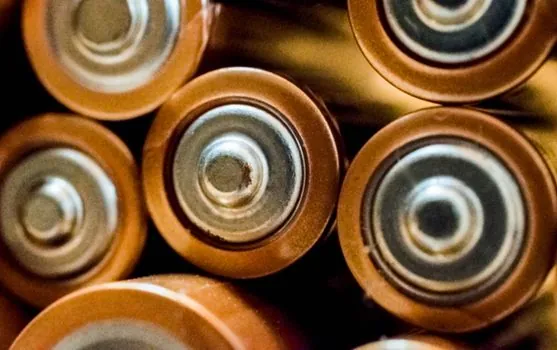
The forklift battery market segments cleanly by voltage: the 24 to 36V class held 38.22% of 2025 share, 36 to 48V is the fastest-growing at an 8.28% CAGR through 2031, and 48V to 80V packs cover counterbalance and heavy-reach trucks [S3]. On the cell level, common 2026 pack designs use LFP prismatic cells at 280Ah, 304Ah, and 314Ah to hit those voltage and kWh targets [S6].
Connectors and trays are not universal: European Jungheinrich trucks use DIN-format trays and Rema DIN plugs, while machines sold into North America, Australia, and parts of Asia are configured for BCI trays and SB or Anderson connectors [S4]. Specifiers retrofitting a fleet should confirm tray dimensions, connector gender, and BMS CAN protocol before quoting, not after.
Total Cost of Ownership: The Numbers That Justify a 2x Sticker Price
Li-ion carries a premium upfront, roughly 2x a comparable lead-acid pack, but the payback case rests on three measurable lines: eliminated watering and equalising labour, eliminated battery-swap labour and ventilation rooms, and energy savings of ~30% per kWh delivered [S1][S3]. Removing the dedicated charging room also frees floor space for revenue storage, which on a 10,000 €/m² industrial site dwarfs the battery premium within a few years.
Mordor Intelligence's driver-impact model puts the Li-ion cost-curve at +1.5% CAGR uplift on its own, and adds another +0.9% for cold-chain/multi-shift demand, with battery-as-a-service models contributing +0.7% by removing the capex barrier for fleet operators and 3PLs [S3]. Together these drivers explain why Li-ion is the fastest-growing chemistry even when the installed base still skews lead-acid.
Where Lithium-Ion Fits, and Where It Still Loses
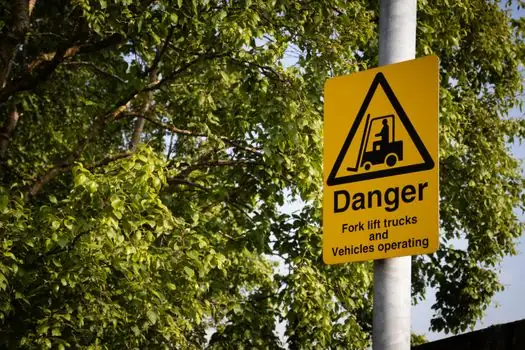
Fit-for-purpose checklist: 24/7 or multi-shift operations, cold storage at or below -25°C, food/pharma facilities that need zero gassing, indoor fleets under EU Battery Regulation and OSHA scrutiny, and sites where floor space carries a high opportunity cost. These are the operations where a 1 to 2 hour charge and a maintenance-free pack change the economics [S1][S3].
Poor fits: single-shift low-utilisation trucks that never approach lead-acid's 1,500-cycle ceiling, ultra-low-temperature freezers below LFP's published operating window, and small fleets without three-phase power for a high-frequency charger. For these, flooded lead-acid or thin-plate pure-lead still wins on total spend, and a hybrid (lead-acid main, Li-ion on the high-Utilisation trucks) often beats a fleet-wide swap.
Standards, Sourcing, and Second-Life Reuse
Compliance work for 2026 builds centres on the EU Battery Regulation (Article 7 carbon-footprint, Article 8 recycled-content, and the 2027 due-diligence rules) and on OSHA/UL 2580 for stationary and motive battery safety in North American fleets [S2][S3]. California's Advanced Clean Fleets rule is the bellwether zero-emission forklift mandate, and other U.S. states are tracking it, which sets the regulatory floor for new builds [S3].
End-of-life is no longer a footnote: a 2026 study on second-life reuse of Li-ion forklift packs shows that value retention depends on accurate state-of-health (SoH) assessment, competitive pricing of tested packs, and traceable cell history [S9]. Operators buying in volume should ask suppliers for cell-level traceability and a documented SoH test before accepting a refurbished pack, and should plan the collection route at PO stage, not at end-of-life.
Trackable signals for the next 6 to 12 months: pack-level price-per-kWh crossing the lead-acid cost-parity line in 24 to 36V segments, more U.S. states adopting California-style zero-emission forklift rules, and broader rollout of AI-enabled BMS that optimises charge windows against on-site solar and TOU tariffs, an energy-management pattern familiar to anyone sourcing pressure sensor gateways for the same facility network. For procurement teams evaluating the upgrade, the working assumption for 2026 is: Li-ion wins any multi-shift, cold-chain, or space-constrained site, and lead-acid still earns its place on single-shift, low-utilisation trucks where the 1,500-cycle ceiling is never reached.
Background reading: Electrolyzer Rectifier Lead Times 2026: What Buyers Face on AC-DC Power Cabinets.