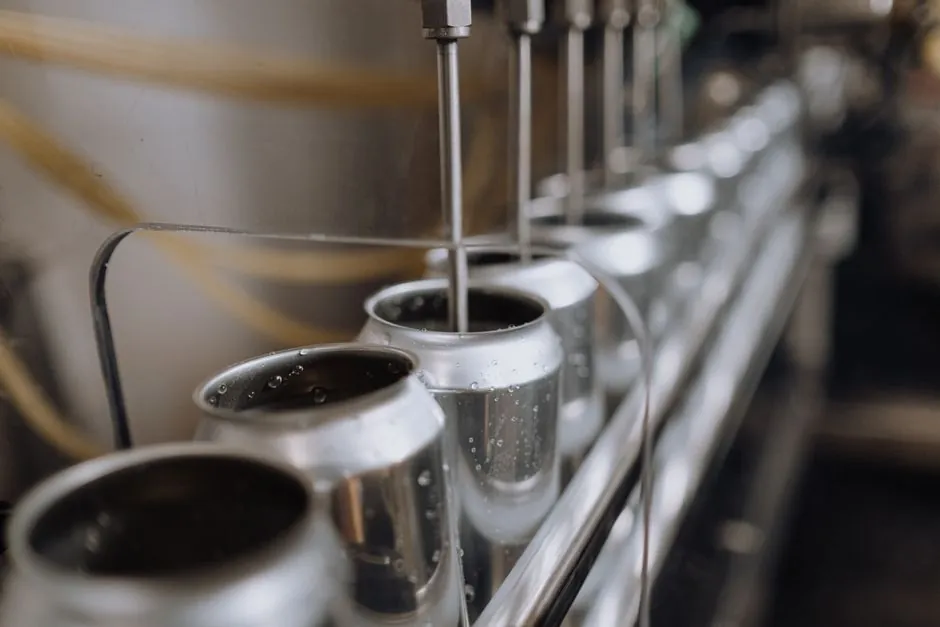
The global food processing and handling equipment market is sized at USD 132.7 Bn in 2026, projected to reach USD 200.9 Bn by 2033 at a 6.1% CAGR, with food processing equipment alone accounting for roughly 52.8% of that value and automatic machines holding 54.8% of the automation mix [S1].
Within that envelope, meat and poultry, dairy products, and bakery and confectionery are the three application lines consistently named across 2026 vendor guidance and third-party trackers, while beverages still lead by share at 19.3% of the global split [S1][S3]. Capital is tilting toward line modernization rather than greenfield, and equipment cost benchmarks for new plants in 2026 run from USD 250 to USD 850 per square foot depending on sanitary class and process intensity [S6].
Where the 2026 order book is concentrating: meat, dairy, bakery
Dairy is the dominant application segment in the food processing machinery market, anchored by extensive global milk production and derivative output, while poultry and seafood is the fastest-growing application as consumers shift toward high-protein diets [S3].
Bakery products commanded 35.23% of the food processing and handling equipment market share in 2026, reflecting the breadth of cracker, bread, and cookie lines that processors continue to retrofit with electric ovens, depositors, and cooling conveyors [S2]. For specification context, the broader food processing equipment segment (which contains these three verticals) sits at 47.75% of the total 2026 share, against food packaging and food service equipment [S2]. Plant-level cost data backs the order signal: a USDA-grade meat or dairy plant typically sits at the upper end of the USD 250-850 per SF build range in 2026, with bakery and dry-goods lines clustered lower [S6].
Equipment classes being ordered on each line
Thermal processing machinery dominates the food processing machinery market by type, driven by shelf-life extension and raw material profiling, while cutting and peeling machinery is the fastest-growing type as processors invest in fine texture and precise quality control [S3].
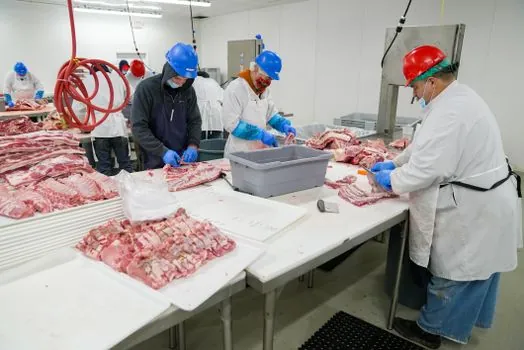
For meat lines, the active categories in 2026 are hot processing systems (cook, roast, steam, sterilize), high-pressure processing skids, and AI-assisted inspection skids for contaminant detection on deboning and forming conveyors. Hot food processing equipment, valued at USD 26.75 Bn in 2025, is forecast to reach USD 65.18 Bn by 2035 at a 9.31% CAGR, with Europe showing the fastest regional growth across the 2026-2035 window [S4]. For dairy, separators, homogenizers, pasteurizers, and CIP skids anchor the order book, with thermal units doing most of the work. Bakery is more about forming, proofing, baking, and cooling, plus increasingly, modular and interoperable ovens that talk to plant MES [S3][S4]. Hygienic design is now a first-class requirement: cleanable surfaces, sanitation access, and food-contact geometry that holds up to daily washdown are being written into RFQs rather than negotiated after award [S4].
Automation, electrification, and AI on the line
Fully automatic machinery is the fastest-growing mode of operation as plants transition to continuous, high-efficiency lines, while semi-automatic machines still hold the largest installed share among small and medium-scale processors [S3].
Electrified thermal systems, including induction, resistance heating, and infrared, are now being specified alongside traditional steam and combustion on new meat and bakery ovens, with hygienic equipment design, modular controls, and AI-enabled process control all identified as the live 2026 design drivers [S4]. In practical terms, that translates into three things engineers will see on quotes: induction or infrared bake zones on cookie and cracker lines, resistance-heated pasteurizers replacing some direct-steam units on dairy skids, and sensor-fused AI inspection at the discharge of cook tanks on meat lines. The broader food processing machinery market is estimated at USD 66.37 Bn in 2026, growing at 6.1% CAGR toward USD 106.58 Bn by 2034, with these technology choices driving the spread between premium and commodity equipment pricing [S3]. For related process-side instrumentation on these lines, see lighting and NDT equipment reference for the inspection end and process checking and testing apparatus for CIP and quality verification.
Regional split: Asia Pacific still leads, Europe is the fastest-growing for hot lines
Asia Pacific is the dominant region in the food processing machinery market, supported by large populations, rising disposable incomes, and rapid urbanization across India and China, while Europe shows the highest CAGR over the 2026-2034 window [S3].
Within the wider food processing and handling equipment market, Asia Pacific is also projected to register the fastest regional CAGR at 7.4%, while North America grows at 5.4% on the back of FSMA-driven compliance investments, automation upgrades, and strong food manufacturing capabilities [S1]. The hot food processing equipment sub-market singles out Europe as the fastest-growing region, which lines up with EU meat and dairy processors investing in electric and AI-enabled thermal systems to meet energy and hygiene rules [S4]. For U.S. processors, the 2026 spend signal is more about retrofits than greenfield: see F&B 2026 capex tilting to modernization for the parallel capex pattern across the U.S. food and beverage sector. The global food and beverage processing equipment market is independently sized at USD 85.22 Bn in 2026, growing at 7.26% CAGR to USD 120.99 Bn by 2031, a slightly more bullish trajectory than the broader machinery read because it includes downstream packaging [S7].
Cost signals, surplus options, and procurement tactics for 2026
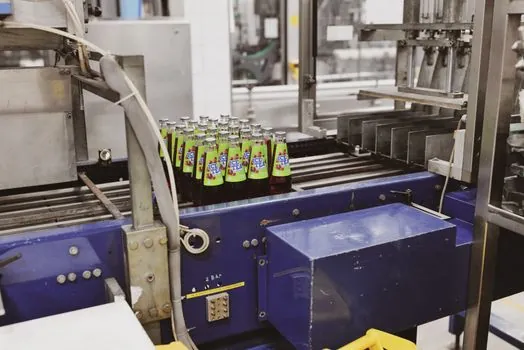
Surplus and refurbished food processing machinery in 2026 trades at 30-60% below new-equipment retail, with leading inventory suppliers quoting 24-48 hour response times and 3-5 business day fulfillment for in-stock units [S5].
That spread matters because the 2026 build-cost benchmark of USD 250-850 per SF pushes facility managers toward surplus or hybrid line strategies when a single deboning line, dairy separator, or tunnel oven can swing a project by six figures [S5][S6]. Precedence Research pegs the global food processing equipment market at USD 60.35 Bn in 2026 on a tighter scope, climbing to USD 87.82 Bn, with the gap between trackers reflecting how each counts packaging, handling, and service equipment [S8]. Mordor Intelligence's food and beverage processing equipment number (USD 85.22 Bn in 2026) is another useful cross-check for buyers who want a second source on order sizing [S7]. For facility teams scoping a line from raw intake to packaging, the construction machinery and equipment reference covers the civil side, while lamps and light fittings for hygienic process areas is a frequent miss in 2026 RFQs for washdown-rated food-grade lighting. Engineers evaluating anti-static additions for powder-handling bakery or dairy lines should cross-reference powder and electronics static control when flour or sugar dust is in scope.
Risks and constraints on the 2026 order book
High operating and energy costs on heavy equipment such as homogenizers, ovens, and continuous heaters are named as a primary restraint on the food processing machinery market in 2026, compounded by FSMA compliance overhead [S3].
Supply chain and infrastructure gaps round out the constraint list, with raw material availability bottlenecks and post-harvest storage losses capable of interrupting both manufacturing output and equipment deployment timing [S3]. On hot-processing lines specifically, the 9.31% CAGR forecast for hot food processing equipment through 2035 is built on the assumption that processors can absorb the capex for electric and AI-enabled retrofits, which is not guaranteed for every small and mid-sized dairy or bakery [S4]. Buyers should also note that two reputable trackers, one at USD 60.35 Bn and another at USD 66.37 Bn for 2026 food processing equipment and machinery respectively, can diverge by roughly 10% in the same year depending on whether packaging and service handling are included, so any internal capex memo should cite which scope it is anchored to [S3][S8]. Surplus channels can offset cost but introduce a different risk: warranty, parts availability, and validation of hygienic design intent, which the surplus market does not always document transparently [S5].
For 2026 procurement teams, three signals are worth tracking quarter by quarter: the bakery segment's share of new orders against the 35.23% 2026 baseline [S2], the split between fully automatic and semi-automatic machinery in vendor mix as it shifts from the current semi-auto-dominant installed base [S3], and the ratio of greenfield to retrofit spend in U.S. FSMA-driven projects [S1][S6]. Together those three reads will tell you whether 2026 capex is widening meat, dairy, and bakery capacity or just modernizing it.