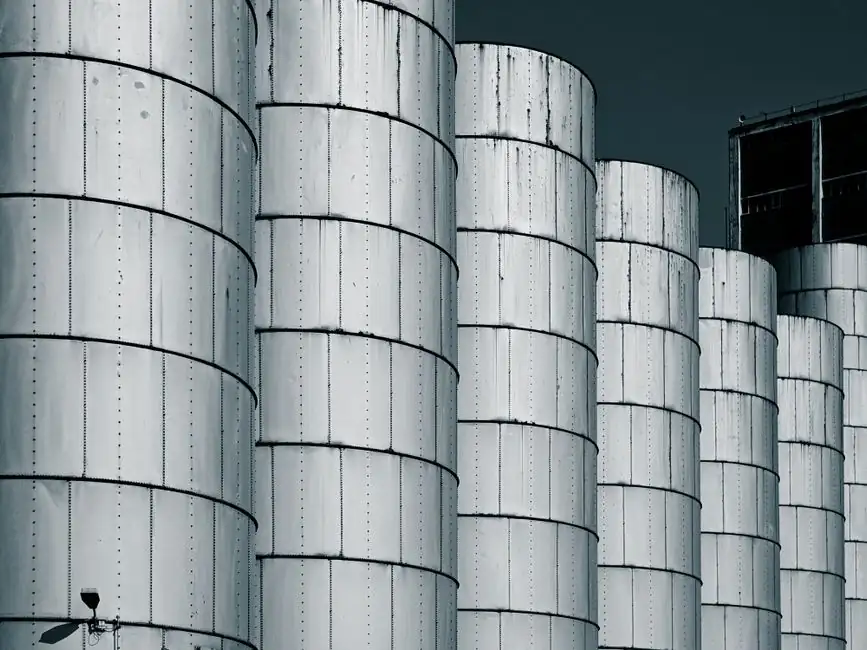
U.S. food and beverage manufacturers greenlit $6.75 billion in project construction starts during the second quarter of 2026, covering new facilities, expansions, line installations and upgrades [S4]. The capex profile has shifted decisively away from new builds, with renovations and equipment upgrades accounting for roughly half of all capital investment in March 2026 [S2].
Industrial SalesLeads counted 50 new planned food and beverage projects in February 2026, a slight uptick from 48 in January, with processing facilities (36) leading over distribution and warehouse work (17) [S5]. The job-creation pull is structural: BLS projects food and beverage manufacturing will add more jobs than any other manufacturing industry across the 2024–34 decade [S1].
Capital Spend: Who Is Writing the Big Checks in 2026
Ferrara is committing $675 million to a 750,000-square-foot candy plant in South Carolina to scale Nerds Gummy Clusters output, announced April 23, 2026 [S2]. Anheuser-Busch doubled its U.S. manufacturing commitment to $600 million under its Brewing Futures initiative on April 22, 2026, a brewery-side capex cycle spanning multiple existing sites [S2]. Chobani disclosed a $567 million La Colombe expansion on March 24, 2026, part of more than $2 billion in manufacturing projects the dairy giant has announced over the past 12 months [S2].
Coca-Cola is spending $650 million to scale Fairmilk production capacity, and Danone committed $4 million in January 2026 to grow Texas high-protein yogurt output [S2]. Chobani separately moved to acquire a KDP plant in Pennsylvania with a $1.2 billion investment package on September 1, 2026 [S3]. Smithfield Foods is planning a $1 billion processing facility in Sioux Falls, SD, with operations relocating upon completion in late 2028 [S5]. The pattern: dairy, high-protein, coffee, and confectionery growth is concentrating capex in line additions, concrete batching plant-served foundations, and packaging skids more than in greenfield land banks.
Project Mix: New Construction vs Expansion vs Renovation
Industrial SalesLeads' February 2026 sample splits planned activity into 12 new construction projects, 14 expansions, 22 renovations or equipment upgrades, and 7 plant closings [S5]. Renovations and equipment upgrades now outnumber new builds by nearly two to one, a structural inversion versus the 2018–22 cycle when greenfield dominated [S2].
The mix has direct equipment implications. Expansion work, like Arca Continental's $42 million San Antonio second line (Sept. 25, 2026) adding 20% more warehouse throughput, tends to specify checking and testing apparatus tied to existing line PLCs and CIP skids [S3]. Renovation-heavy capex, by contrast, concentrates on instrumentation retrofits, VFD upgrades, and packaging-line replacement. Sioux Honey broke ground Sept. 23, 2026 on a $130 million honey bottling plant in Sioux City, Iowa, one of the few greenfield bottling projects over $100 million in the quarter [S3].
Geographic Footprint and Mid-Tier Capex

Top project geographies in February 2026 were California (6), New York (6), Massachusetts (5), Virginia (4), and Ohio and Wisconsin (3 each) [S5]. The leading mid-cap investments: a $165 million dairy processing expansion in Logan, UT; a $105 million, 175,000-square-foot processing facility in Jonesboro, AR; and a $35 million, 57,000-square-foot animal feed plant in Madison, FL [S5]. Distribution-side capex is also active, with a $33 million, 150,000-square-foot foodservice redistribution expansion in Bear, DE breaking ground in Spring 2026 for Summer 2027 completion [S5].
Other notable 2026 starts: Tandem Foods, $42 million in Pennsylvania (Sept. 24, 2026); SunOpta beverage expansion in Midlothian, TX (Sept. 22, 2026); Nestlé Canada confectionery expansion in Toronto (Sept. 16, 2026); Wells Enterprises first-phase ribbon cutting in Dunkirk (Aug. 27, 2026); Asahi Beer USA high-speed bottling line in Waunakee, WI (Aug. 11, 2026); and Mother Parkers' cold brew extract line opening on July 28, 2026 [S3]. The supply chain for these projects runs through construction machinery and equipment channels, with conveyors, mixers, and packaging skids as the high-frequency specified categories.
Strategic Posture: Selectivity, Footprint Reduction, Disciplined M&A
Planned project activity across food and beverage manufacturing declined 26% in 2025 versus 2024, bottoming at 48 announced projects in May 2025 [S2]. The 2026 rebound is narrower and more selective: companies are modernizing existing plants while shrinking physical footprints, a pattern visible in Campbell's and Smithfield's plant consolidation programs [S2]. Plante Moran's February 24, 2026 outlook calls for 2026 M&A improvement over 2025, with investors staying disciplined amid profitability pressure [S7].
Manufacturers are also rewriting the materials specification. PFAS rules are pushing equipment buyers to re-evaluate fluoropolymer seals and gaskets, a procurement shift that directly affects how lamps and light fittings wash-down rated enclosures and conveyor bearings are specified in hygienic zones; the PTFE, PVDF, FKM 2026 price trajectory under PFAS rules is now a real line-item in capex models. Persistent labor shortages and supply chain disruption remain the two top risks named in 2026 trend surveys, ahead of eCommerce marketplace expansion as the third [S8].
Decision Lens: Build New, Expand, or Retrofit
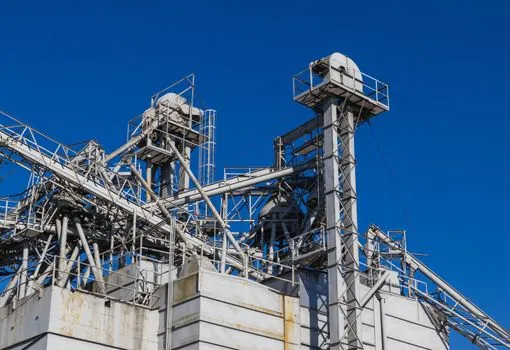
For a mid-cap food or beverage operator with $30–100 million to deploy, the 2026 calculus splits cleanly along three decision criteria. New construction wins on throughput step-change and a clean CIP / hygienic-zone design, but it carries 24–36 month lead times and the highest regulatory and labor ramp risk, Smithfield's Sioux Falls project being a representative case with late-2028 completion [S5]. Expansion, like Arca Continental's San Antonio second line or Mother Parkers' cold brew extract line, is the lowest-risk path for 10–25% capacity uplift when an existing site has utility headroom [S3]. Renovation and equipment upgrade, the largest 2026 Food and Beverage project mode reported by Industrial SalesLeads (22 of 50 new projects in February), aligns with the broader industry shift toward modernizing facilities while shrinking their footprints [S2][S5].
The tradeoff matrix: greenfield scores highest on long-run unit cost and hygienic design but worst on capex risk and time-to-revenue; expansion balances both; renovation is the lowest-capex, fastest-payback option but inherits existing plant constraints including older lighting equipment and electric lamps layouts that may not meet current USDA-FSIS or FSMA sanitary-design guidance. The 2026 mix shows operators picking renovation and expansion about three times more often than new construction, a ratio that should hold into early 2027 barring a sharp input-cost reversal [S5].
Trackable Signals into Q4 2026
Three datapoints will confirm whether the 2026 capex cycle is reaccelerating or flattening: the Q3 2026 Industrial SalesLeads project count, which benchmarks against the 50 projects reported in February and 48 in January [S5]; Anheuser-Busch's Brewing Futures spend pace against the $600 million ceiling announced April 22, 2026 [S2]; and Smithfield Foods' Sioux Falls permitting milestones on the $1 billion processing facility, the largest single project on the 2026 board [S5].