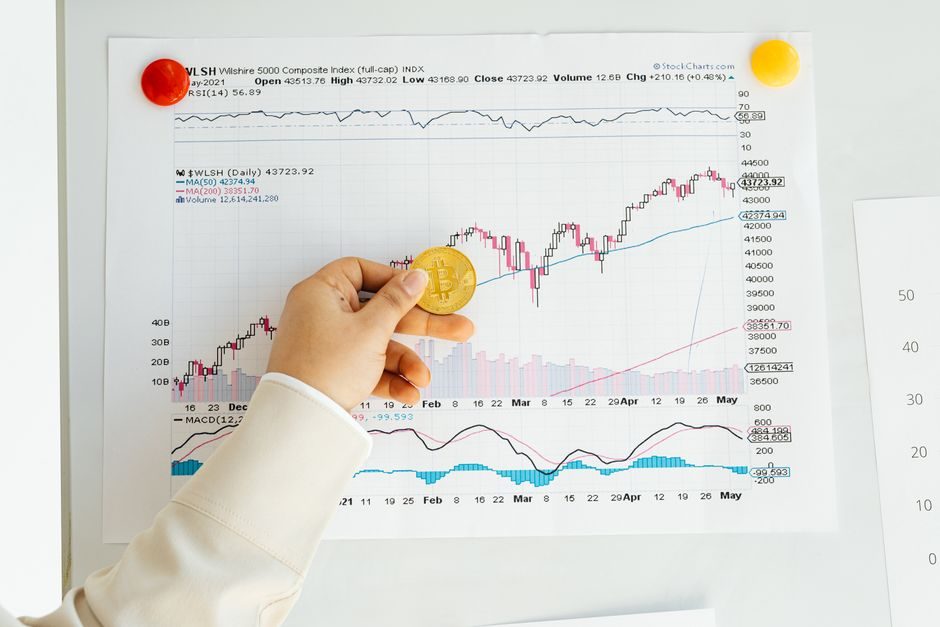
Battery-grade lithium carbonate CIF Asia hit a 27-month high of $12,250/t in August 2021 on strong Chinese cell output and plug-in EV sales, while a separate 2023 snapshot pegged the China domestic spot price at 219,000 yuan/t (~$31,800) — down 56.4% YoY and more than 60% off the ~570,000 yuan/t peak [S4][S7].
Two years later, June 2026 Made-in-China factory quotes for downstream LiFePO4 and Li-polymer packs sit at $200-400 for a 12V 150Ah Bluetooth-monitored unit, $520-650 for a 20-40 kWh stacked home-storage pack, and $0.95-1.35 for a 210mAh 3.7V Li-polymer cell with a 10-piece MOQ [S8][S9]. These factory FOB bands are the practical reference point for any 2026 buyer or planner reconciling raw-material swings against finished-battery pricing.
What "lithium price" actually means: spot vs contract vs finished pack
The spot market is split by grade and route. Battery-grade lithium carbonate (Li2CO3 99.5%) trades separately from industrial-grade carbonate (Li2CO3 99%) and from battery-grade lithium hydroxide monohydrate, and each grade has both a China domestic quotation and an international (mainly CIF Asia/CIF Europe) reference [S10]. CBCIE Metal publishes a daily battery-grade Li2CO3 spot alongside industrial carbonate and hydroxide lines, plus an international price column, so procurement teams can watch domestic and seaborne moving in parallel rather than as one number [S10]. Benchmark Minerals runs the same split through its lithium carbonate and hydroxide price page and ties the raw-material chart to its downstream Market Explorer covering raw materials, active materials, cells, recycling, and grid demand [S6].
Finished-pack quotes absorb the raw-material move with a lag. June 2026 Made-in-China listings show a 12V 150Ah LiFePO4 pack with Bluetooth BMS at US$200-400 per piece (MOQ 4), a 10kWh residential stack at roughly $520-650, and a 100-200kWh high-voltage (600V) all-in-one cabinet at $1,200-1,384 [S8][S9]. For scooter/E-bike applications, a 3.7V 1500mAh Li-polymer pack with UN38.3 / CE / RoHS documentation lists at US$1.20 per piece, and a two-wheel EEC-certified e-scooter with a portable lithium pack runs $300-480 (MOQ 10) at one Guangdong supplier and $699-799 at a second [S2][S3].
Who 2026 lithium pricing is for — and who should ignore the spot tape
The spot tape matters most to (a) cell and cathode-active-material makers with no long-term offtake, (b) trading desks hedging seaborne CIF Asia cargo, and (c) procurement teams writing 3-6 month forward orders for industrial-grade carbonate or hydroxide. Benchmark Minerals' lithium-prices hub is built for that audience and pairs the price chart with demand modules for energy storage, recycling, and EVs [S6]. Caixin's 2023 reporting flagged a 57% YTD drop in the China spot quote as the trigger that made downstream buyers halt restocking, which is a useful precedent for how fast downstream demand can decouple from terminal EV demand [S7].
Buyers of finished packs — EV OEMs, scooter integrators, home-storage installers, UPS panel builders — should not anchor decisions on the spot carbonate quote. A 20-40 kWh stacked solar pack at $520-650 already bundles cells, BMS, enclosure, and UN38.3 documentation into a shipped unit, so the raw-material delta is one of several cost drivers, not the line item that moves the PO [S8]. For these buyers, the actionable signals are supplier-level MOQ, certification stack (UN38.3, CE, RoHS, MSDS), and lead time, all of which sit on the Made-in-China product pages rather than on a commodity index [S2][S3][S8][S9]. The same logic applies to a 3.7V 210mAh Bluetooth cell at $0.95-1.35, where the unit economics are dominated by packaging and connector choice, not by lithium-carbonate spot moves [S9].
Decision criteria: spot price vs hydroxide vs finished pack

For a 2026 sourcing decision, three criteria separate the options: [S1]
1) Volatility exposure. Battery-grade lithium carbonate CIF Asia is the most volatile of the three, with documented 27-month-high and 57%-YTD-drop episodes inside a five-year window [S4][S7]. Battery-grade lithium hydroxide is structurally tighter because high-nickel cathode chemistry (NCM811 and above) routes through hydroxide, not carbonate, and pricing carries a premium to equivalent-purity carbonate [S10]. Finished LiFePO4 and Li-polymer packs show the lowest spot volatility, with June 2026 Made-in-China bands of $0.95-1.35 for a sub-1Wh cell, $200-400 for a ~1.9kWh 12V pack, and $1,200-1,384 for a 100-200kWh cabinet [S8][S9].
2) Specification tightness. A "lithium price" headline number is meaningless without grade (battery vs industrial), purity (99% vs 99.5%), and route (carbonate vs hydroxide monohydrate) attached; CBCIE's daily table enforces that split by publishing separate rows for battery-grade Li2CO3 99.5%, industrial-grade Li2CO3 99%, industrial-grade LiOH, and battery-grade LiOH, each with China-domestic and international columns [S10]. Finished-pack quotes carry their own spec layer: voltage (3.7V, 12V, 48V, 600V), capacity (210mAh to 200kWh), chemistry (NMC, LFP, LCO, LMO), and certifications (UN38.3, CE, RoHS, IEC 62133) [S2][S8][S9].
3) Lead-time and MOQ. A 10-piece MOQ on a 3.7V Li-polymer cell is a prototyping signal, a 4-piece MOQ on a 12V 150Ah LiFePO4 pack is small-batch, and a 10-piece MOQ on an EEC e-scooter ($300-480) is an integrator-tier commitment; spot carbonate trading has no MOQ but carries CIF logistics and customs exposure [S2][S3][S9].
Real 2026 use cases and what each one is paying
Home storage / solar self-consumption: June 2026 Made-in-China listings show a 10kWh residential unit at $520-650 and a 20-40kWh stacked variant in the same band, both 48V-class LiFePO4 with Bluetooth BMS options; a 100-200kWh 600V all-in-one cabinet lists at $1,200-1,384, which implies a per-kWh band of roughly $52-65 at the 20kWh SKU and $6-14 at the 100-200kWh SKU [S8]. The per-kWh step-down is consistent with cell-to-pack scaling rather than with a raw-materials move.
Two-wheel EV / e-mobility: A portable-pack two-wheel EEC scooter is listed at $300-480 by Speedsphere (Guangdong) and at $699-799 by a second China supplier, and a 3.7V 1500mAh Li-polymer replacement pack lists at $1.20 with UN38.3 / CE / RoHS paperwork [S2][S3]. The 2x spread on the scooter FOB is driven by motor power, frame spec, and EEC certification scope, not by lithium-carbonate spot moves.
Industrial / IoT and small-format cells: A 3.7V 210mAh Li-polymer cell with Bluetooth-class form factor lists at $0.95-1.35 (MOQ 10), and Bluetooth-monitored 12V 150Ah LiFePO4 packs list at $200-400 (MOQ 4) — both Shenzhen-/Guangdong-sourced and both carrying UN38.3 documentation [S9]. The wider relative spread on the small-format cell is normal because connector, BMS, and harness choices dominate the BOM at sub-1Wh sizes.
Failure modes and reading errors to avoid
Three reading errors are common in 2026 lithium-price briefings. First, comparing a battery-grade CIF Asia quote (Benchmark, S&P Global) to a China-domestic industrial-grade yuan quote (CBCIE) without converting grade, purity, and Incoterm — these are not the same product [S4][S6][S10]. Second, treating a 2023 Caixin-reported 219,000 yuan/t spot print as a current 2026 number; the 56.4% YoY collapse and 60%-off-peak move were accurate to the 2023 reporting window and the structural drivers (supply overhang, weak EV restocking) may or may not persist [S7]. Third, treating a 27-month-high print from August 2021 ($12,250/t CIF Asia) as a forward forecast — that number is a historical peak, not a 2026 reference [S4].
Spec-side failure modes are equally common. A 12V 150Ah LiFePO4 pack at $200-400 and a 10kWh residential LiFePO4 stack at $520-650 look superficially similar but are different form factors (lead-acid replacement vs wall-mount stack) and different BMS classes; a 600V 100-200kWh cabinet at $1,200-1,384 is a commercial/industrial SKU, not a residential one [S8]. On the scooter side, EEC approval is a specific EU type-approval, not a generic CE mark, and the $300-480 vs $699-799 spread is largely an EEC scope and motor-power spread, not a lithium-content spread [S3].
Sourcing, standards and trackable 2026 signals
Trackable signals to watch in the second half of 2026: (a) the CIF Asia battery-grade lithium carbonate line on Benchmark's price page, which the firm explicitly maintains as a separate module from its hydroxide and downstream Market Explorer views [S6]; (b) the daily CBCIE battery-grade Li2CO3 99.5% spot, paired with the international column, which is the cleanest free public reference for the China-domestic vs seaborne spread [S10]; and (c) the S&P Global Commodity Insights blog, which is the source of record for the $12,250/t 27-month-high and the cobalt "range-bound" framing that travels with every lithium update [S4].
For finished-pack sourcing, Made-in-China category pages for lithium battery packs, lithium battery (broad), lithium Bluetooth battery, and lithium scooter EEC pricing are the most consistent 2026 quote sources, with MOQ, region, and supplier tier (Diamond/Gold Member, Audited Supplier) all visible on the listing card [S2][S3][S8][S9]. For broader supply-chain context — how the upstream carbonate move is being absorbed by global cell and pack capacity — the lithium battery global production capacity rankings feed is the natural companion read. For buyers weighing the raw-material bet against a hardwired industrial asset decision, the explosion-proof electrical buying guide is the cross-reference for hazardous-area enclosures that frequently house LiFePO4 battery banks in chemical and mining plants. And for the storage-system spec layer (48V stacks, 600V cabinets) the wiring duct price bands and the cable drag chain buying guide are the matching mechanical-and-construction reads. The next node to track: whether the China-domestic battery-grade Li2CO3 99.5% print on CBCIE's daily table continues to track the seaborne CIF Asia print within historical band, or decouples the way it did in the 2023 supply-overhang window [S7][S10].
For component-level specifications, see pressure transmitter, flow meter, and industrial valve.