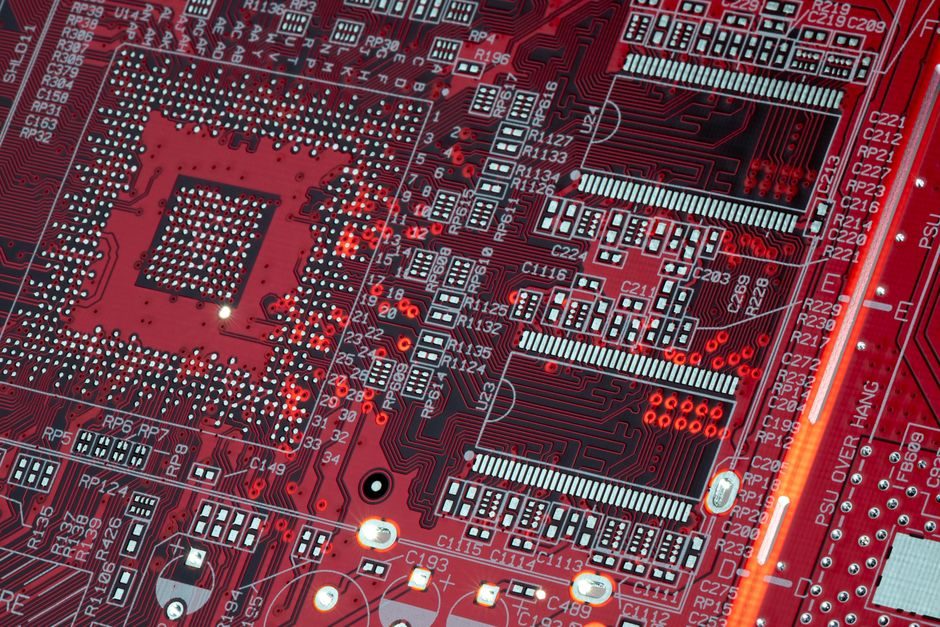
Asia Pacific captured 86.80% of the global semiconductor foundry market in 2025, with the foundry segment valued at USD 175.1 billion that year and projected to reach USD 202 billion in 2026 and USD 263.1 billion by 2034 at a 3.40% CAGR [S4]. That share is the single most cited data point for any country-by-country AI chip capacity discussion, because nearly every AI accelerator — GPU, TPU, NPU, Trainium, ASIC, FPGA — is fabricated in merchant foundries rather than captive fabs.
The same MarketsandMarkets forecast sizes the broader AI chip market at USD 203.24 billion in 2025, rising to USD 564.87 billion by 2032 at a 15.7% CAGR, with HBM, DDR, NICs and interconnects counted as part of the offering stack alongside GPU, NPU, TPU, Trainium, Inferentia, MTIA, LPU and Athena-class ASICs [S1]. That definition matters for capacity accounting: training-grade HBM3E/HBM4 and high-speed SerDes interconnects are now on the same critical-path as the logic die itself.
Taiwan: TSMC's Leading-Edge Logic Monopoly and CoWoS Bottleneck
Taiwan holds the largest single-country share of leading-edge AI logic capacity through TSMC, whose N5, N4, N3 and N2 nodes fabricate the bulk of NVIDIA, AMD, Apple, Google TPU, AWS Trainium2 and most custom hyperscaler ASICs. The structural bottleneck is advanced packaging — TSMC's CoWoS-S and CoWoS-L lines cap how many AI accelerators can be completed per quarter, regardless of wafer-start volume. S1 lists GPU, TPU, Trainium, Inferentia, Athena ASIC, MTIA and LPU as distinct AI chip offerings, and almost every accelerator in that list passes through Taiwan for its most advanced variant [S1]. The country's position is therefore a function of both front-end lithography and back-end integration capacity, with the latter now the rate-limiter.
South Korea: HBM Memory and Foundry Dual Role
South Korea contributes AI chip capacity through two distinct vectors: Samsung Foundry's logic nodes (including the 2 nm GAA gate-all-around process in risk production) and the dominant HBM3E / HBM4 stack supply from SK hynix and Samsung Memory. HBM is treated as a first-class AI chip offering in the MarketsandMarkets taxonomy alongside DRAM and interconnect IP [S1], and Korea's HBM share is the single most concentrated memory node in any AI accelerator bill of materials. Korea also packages some logic at scale, but the country's structural role in 2026 is "memory anchor plus second-source foundry," not primary leading-edge logic.
Mainland China: SMIC, YMTC, CXMT and Domestic Substitution Capacity
Mainland China's AI chip production capacity is split across SMIC for logic (mature 28 nm to a constrained 7 nm/N+1 process), YMTC for 3D NAND, and CXMT for DDR5, with Huawei HiSilicon and a wave of domestic NPU/ASIC designers consuming that output. China's chip output grew 41% year-on-year in July 2021 according to official data reported by People's Daily, an early indicator of the capacity build-out that has since been redirected toward AI inference silicon under export-control constraints [S3]. The Sina Finance analysis from April 2026 notes that AI-driven memory chip exports added 1.2 percentage points to China's 2025 export growth and are expected to keep supporting 2026 export growth, an unusual signal where a country's AI chip capacity shows up directly in the trade balance [S7].
United States: Intel Foundry, TSMC Arizona and Packaging Build-Out
US-based AI chip capacity is dominated by fabless designers (NVIDIA, AMD, Qualcomm, Apple, Amazon, Google, Meta) whose silicon is fabricated offshore, with Intel Foundry and the TSMC Arizona Fab 21 module the only domestic leading-edge logic lines in volume ramp. Intel's 18A node is targeted at internal and external AI tile production, while TSMC Arizona adds roughly 20,000 wafers per month of N4 capacity in its first module with N3/N2 follow-on. The US is also building advanced packaging capacity (Amkor's Arizona facility, Intel's EMIB/Foveros lines) to relieve the CoWoS bottleneck in Taiwan, but domestic volume remains a single-digit percentage of global leading-edge output in 2026. [S1]
Japan: Rapidus 2 nm and Specialty Process Re-Entry
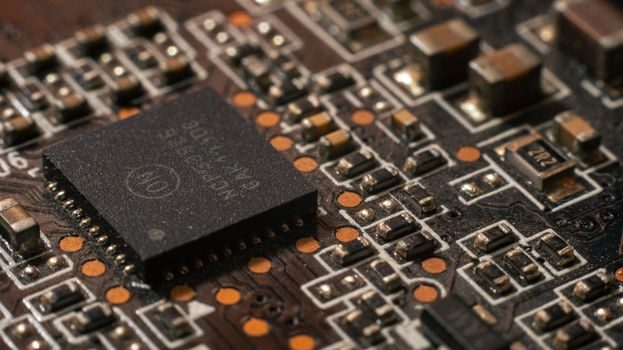
Japan re-entered leading-edge logic through Rapidus, which targets 2 nm GAA pilot production at its Chitose Hokkaido facility in 2026, with IBM and imec as process partners. Backed by JASM (TSMC's Jukuoka fabs) producing N12/N22 and N7 specialty nodes, plus Kioxia for 3D NAND, Japan's role in 2026 is still small in absolute wafer count but disproportionately important for national AI sovereignty programs in Japan, the EU and the US. Kioxia, Sony semiconductor and Renesas also contribute specialty AI inference silicon for automotive and industrial edge applications. [S2]
Country Comparison: Foundry Share, Leading-Edge Logic and HBM Dominance
On a four-criterion comparison — foundry revenue share, leading-edge logic node access, HBM memory share, and domestic AI accelerator design base — Taiwan ranks first on the first two criteria, South Korea first on HBM, the US first on design volume, and mainland China first on domestic-substitution policy intensity [S4][S1]. The MarketsandMarkets taxonomy lists offerings explicitly as "GPU, CPU, FPGA, NPU, TPU, Trainium, Inferentia, T-head, Athena ASIC, MTIA, LPU" for logic and "Memory {DRAM (HBM, DDR)}" for stacked memory, so any country-level capacity statement should be qualified by which of those offering categories it covers [S1]. The Sensor Tower data cited in 36Kr's June 2026 piece records 232% year-on-year growth in generative-AI app revenue from Q2 2025 to Q1 2026, a downstream demand signal that pulls wafer demand at every node shown above [S6].
Trackable Signals for the Next Reporting Cycle

Three numbers are worth watching: TSMC's quarterly CoWoS wafer-equivalent output (the binding constraint on AI accelerator shipments), SK hynix and Samsung HBM3E/HBM4 qualification velocity with NVIDIA and AMD, and SMIC's 7 nm/N+1 yield curve under existing lithography constraints. For background on how capacity is sized in other process industries, see the country-level methodology used in natural gas global production capacity by country 2024-2026 rankings, and for the offshore-wind analogue to foundry build-out pacing see offshore wind capacity 2026 country rankings and pipeline signals. [S3]
For component-level specifications, see pressure transmitter, flow meter, and industrial valve.