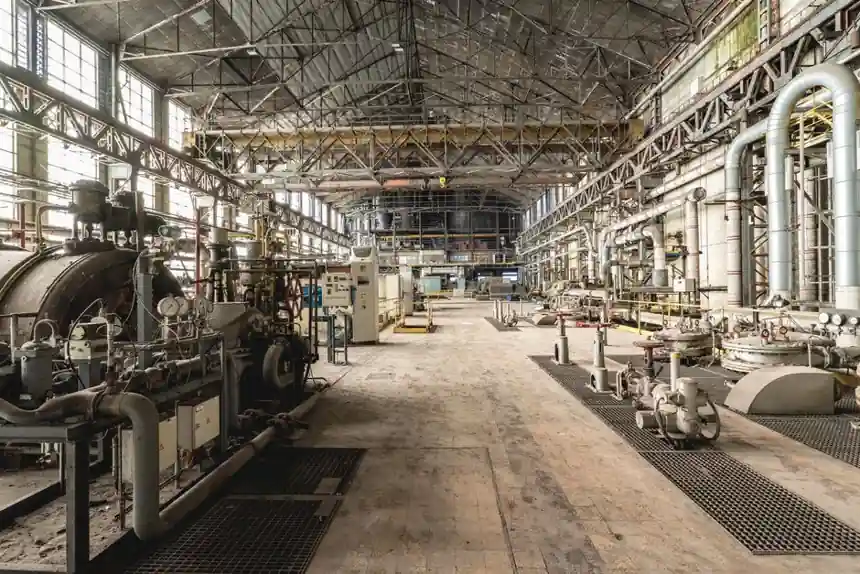
Battery-grade lithium specification sits at 99.5% Li minimum with single-digit ppm limits on Fe, Mg, Al, Ca, and other metals, and the constraint on the battery supply chain is no longer mining capacity but the industrial machinery that purifies spodumene concentrate [S4]. Roughly 60% of global lithium originates from hard-rock spodumene, with the remainder from brine, and both routes converge on the same tight purity window before LFP or NMC cathode chemistry can accept the product [S4].
Refining is sequential purification: each stage drops an impurity set, and at every transition the analytical measurement has to be fast enough to hold a control loop and representative enough to drive a reagent pump or a crystallizer setpoint. Greenfield refineries built since 2024 are increasingly designed with AI-driven process control embedded at the flowsheet level rather than retrofitted after mechanical completion [S4].
Refinery Process Train and the Control Variables That Matter
A spodumene refinery runs as a coupled chemical sequence. Calcination roasts α-spodumene at roughly 1,050°C to drive the phase change to reactive β-spodumene, and the variables the control system must hold are kiln temperature and residence time, since both under- and over-calcination cost lithium yield downstream [S4]. The acid-roast stage operates near 250°C with sulfuric acid to convert lithium into water-soluble lithium sulfate; here the control targets are acid-to-ore ratio and roast bed temperature, with off-gas measurement of SO₂ and acid mist as the secondary safety loop [S4].
Water leach dissolves the sulfate into a pregnant liquor, and the control objectives shift to leach recovery and solution concentration. Purification then precipitates Fe, Al, Mg, and Ca in a sequence of pH- and reagent-controlled steps, which is where the ppm-level measurements earn their keep; pH and ORP probes, ICP-grade online analyzers, and titration systems are typical at this stage. The final convert-and-crystallize step makes either Li₂CO₃ via soda ash reaction or LiOH via causticization, and crystallization control, particle size, and mother-liquor composition decide whether the powder meets cathode-grade specification [S4].
Analyzer Technology Classes: ASTM vs Correlative
Refinery online analyzers split into two functional classes. ASTM-based analyzers reproduce or closely follow recognized laboratory test methods; they correlate well with lab results and are less sensitive to feedstock drift, but carry longer response times and higher maintenance burdens [S2]. Correlative analyzers, including NIR, FTIR, and magnetic-resonance systems, are faster and often more economical, but they must be calibrated and validated against laboratory reference methods using appropriate ASTM procedures, with performance dependent on representative samples and robust chemometric models [S2].
For lithium purification trains, titration remains the workhorse for acid/base stoichiometry and impurity assays: the Metrohm 2060 platform is one example of a multifunctional online process analyzer covering titration, ion chromatography, and NIR in explosion-proof housings suitable for hazardous-area installation, with more than 10,000 such units installed globally since the first online unit at Dow Chemical in 1978 [S1]. Inline NIR analyzers are commonly specified where multi-property monitoring is required across blending, leach concentration, and crystallization mother-liquor streams [S2]. Raman and near-infrared methods are increasingly used for in-reactor speciation in purification and crystallization stages where the chemistry is non-trivial and off-line sampling introduces delay.
Selection Criteria for Online Analyzers in a Lithium Plant
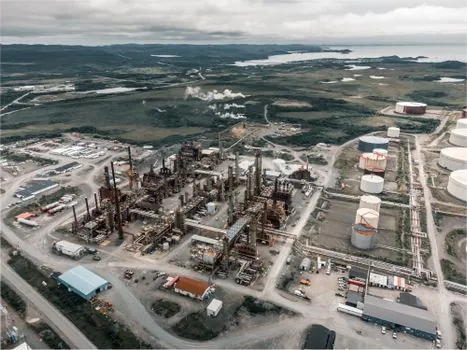
Selection starts with a clear definition of the process stream: pressure, temperature, flow rate, and full composition including trace matrix components [S2]. The required accuracy and sensitivity must be set against the battery-grade specification: an analyzer that resolves to 5 ppm in a stream with 50 ppm Fe is too coarse, and one that resolves to 0.1 ppm on a stream with 0.5 ppm is over-specified. Other selection factors include the standard laboratory method used for cross-validation, response time, maintenance interval, sample conditioning needs, calibration standard stability, cross-interference from chloride or organic carryover, multi-stream switching capability, and total lifecycle cost [S2].
Process analyzers are increasingly expected to be hazardous-area certified. The Metrohm 2060 line, for example, is offered as an explosion-proof analyzer for installation in classified zones, with options for single-parameter or multiparameter measurement [S1]. For refining, the typical practice is to size the analyzer to the worst-case stream, not the cleanest, since acid-roast off-gas and leach slurry streams place the most aggressive demands on materials of construction, sample transport, and analyzer survivability [S2].
Sample Conditioning: Where Most Measurement Errors Originate
The sample reaching the analyzer must be identical to the process stream, or differ from it in a known and predictable way, and poor sampling causes measurement errors even when the analyzer itself is accurate [S2]. In a lithium plant, sample conditioning is non-trivial: leach slurries carry suspended solids, roast off-gas carries acid mist and particulates, and crystallization mother liquors are viscous and prone to precipitation in transport lines. Sample probes, transport lines, and conditioning systems must avoid contamination, phase separation, dead volume, excessive delay, and composition change before the measurement cell [S2].
Conditioning hardware typically includes pressure reduction, temperature control, filtration, flow regulation, and bubble or particulate removal, plus a defined return or disposal path for the sample stream [S2]. A well-designed conditioning skid protects the analyzer, improves repeatability, and ensures the measured value reflects the real process rather than a sampling artifact, which is the difference between a control loop that holds 50 ppm Fe and one that drifts across the battery-grade limit [S2]. For multi-stream systems, switching time, sample transport delay, cleaning between streams, and stream compatibility must all be specified up front; the design can cut analyzer count but cannot cut sample-system complexity [S2].
AI-Driven Control and the Greenfield Integration Question
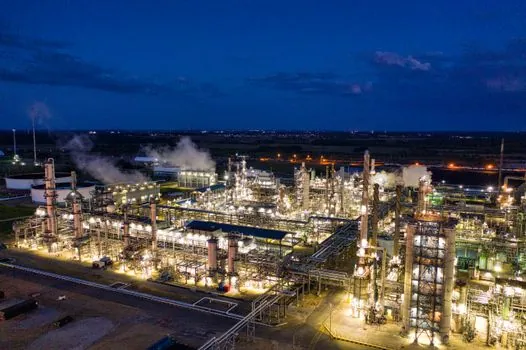
Modern lithium refineries are being designed with AI-driven process control embedded at flowsheet stage, covering kiln temperature, acid dosing, leach recovery, purification pH, and crystallization setpoints across all five process stages [S4]. The economic case is straightforward: holding spec automatically is what fills offtake contracts, and a greenfield project can integrate the model-predictive and machine-learning layer with the DCS, historian, and analyzer network from day one rather than retrofitting it after first product [S4]. The industry context is that refining capacity is the binding constraint and is targeted to grow roughly 10× over the decade, so the plants that commission with tight control loops gain a margin advantage that compounds across every batch [S4].
Integration decisions cascade into instrument selection: an AI layer needs analyzers with low enough latency to feed a 30-second control loop, and the sample system must deliver that latency on every relevant stream. Practical reference for refinery control loop tuning and instrument selection can be found in the related coverage of process control fundamentals, while online liquid analyzer architecture for refining is detailed at online water and process analyzers and analyzer calibration practice in process calibration methods. For plants scaling analyzer count beyond the original design, the cost and reliability trade-offs of keeping legacy analyzers versus replacement are similar to those covered in repair vs replace an aging PLC: decision criteria for 10–20 year service life.
Process Choice and Analyzer Configuration: Li₂CO₃ vs LiOH
The product decision shapes the back end of the plant and the analyzer mix. Lithium carbonate is made by reacting purified lithium solution with soda ash and crystallizing, and is the more established route with a simpler crystallization step used for LFP cathodes [S4]. Lithium hydroxide is made by causticizing with lime or by converting from carbonate and then crystallizing; it is moisture- and CO₂-sensitive, and is used in high-nickel NMC cathodes, so handling and crystallization control are tighter, and the analyzer set typically expands to include CO₂ monitoring on the crystallizer vent and moisture on the product [S4].
Either way, the final purity verification step typically relies on online ICP-OES or online titration for the principal impurities (Fe, Mg, Ca, Na, K) and on conductivity or pH for the mother-liquor composition. A practical comparison axis for the analytical platform choice is: (1) correlation with lab method, (2) response time, (3) maintenance burden, (4) hazardous-area certification, and (5) lifecycle cost. ASTM-based analyzers win on correlation and feedstock robustness, NIR/FTIR/Raman win on speed and operating cost, and titration platforms such as the 2060 series win on multi-parameter flexibility and explosion-proof deployment in Zone 1/Class I Div 1 areas [S1][S2].
Trackable next signals for the lithium-refining analytical market include: new greenfield refinery FID announcements in Australia, Chile, and the US Gulf, which typically firm up analyzer-of-record awards 6 to 12 months before mechanical completion; AI-driven MPC reference projects published by the major DCS vendors covering lithium flowsheets; and any revision to ASTM or ISO methods covering battery-grade lithium carbonate or lithium hydroxide assay, which would force a revalidation cycle for ASTM-style analyzers in the installed base.