
Plants standardize on PROFINET because it carries non-time-critical TCP/IP traffic and hard-real-time IRT control on the same unmodified IEEE 802.3 cabling, a stack that fits IT/OT convergence programs without a second physical network [S3][S6].
Machine builders prefer EtherCAT because its processing-on-the-fly frame, distributed clocks with sub-microsecond jitter, and switch-free line topology deliver 50–250 µs cycle times even as node counts climb, exactly what servo-heavy machine modules need [S2][S3].
What PROFINET and EtherCAT actually do on the wire
PROFINET is built on standard IEEE 802.3 Ethernet and runs three channels concurrently: TCP/IP for configuration, diagnostics, and parameterization; RT for standard real-time control using prioritized frames; and IRT for isochronous motion, where hardware time-slot scheduling reserves a deterministic window inside each cycle [S3][S6]. PROFIsafe rides on top of this stack per IEC 61784-3-3, and IRT-capable managed switches are part of the bill of materials when the application needs the hard channel [S2].
EtherCAT, standardized under IEC 61158, sends one Ethernet frame through every slave in sequence; each node reads its inputs and writes its outputs as the frame passes, so the master sees the whole network updated in a single telegram pass [S3][S7]. That design is what lets EtherCAT drop external switches in many line topologies and what keeps the per-node latency contribution near zero [S1][S3].
Cycle time, jitter, and the motion-control envelope
EtherCAT's typical cycle time sits in the 50–250 µs band, with distributed-clock jitter below 1 µs; PROFINET IRT lands at 250–500 µs with sub-microsecond jitter, while PROFINET RT spans 1–10 ms with matching-millisecond jitter, enough for sequencing and I/O but not for tight servo loops [S2]. FSoE (IEC 61784-3-12) carries safety over EtherCAT and rides in the same telegram, so safety I/O does not consume a second network layer on the machine [S2].
On a high-speed packaging line, that gap shows up as EtherCAT stopping a filler diverter within fractions of a millisecond, while a millisecond-class deterministic protocol introduces inconsistent response on the same event [S5]. For servo-driven indexing tables and multi-axis synchronized gantries, this is the decisive difference: every drive updates inside one cycle, with no managed switch latency stacked in front of the drive's own control loop [S2][S5].
Topology, switches, and why the cabinet wiring looks different
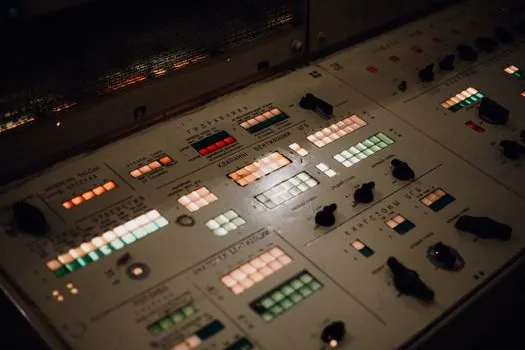
EtherCAT line topologies can avoid separate managed switches, with each slave carrying two ports so the frame daisy-chains through the segment [S1]. PROFINET devices may have integrated two-port switches for daisy-chaining, but IRT deployments need IRT-capable switches, and large star or tree layouts are routine, which is what plant network standards usually want [S1][S3].
For a machine builder shipping a self-contained module, fewer managed switches in the BOM is a real cost and engineering win: less configuration, fewer failure points, and a topology that matches how the machine is mechanically laid out [S1]. For a plant standards group, the same PROFINET switch infrastructure shows up across the facility, which is the entire point of a plant standard, and the IRT channel is reserved only where the application demands it [S3][S6].
IT/OT convergence, diagnostics, and the plant-side wish list
PROFINET's TCP/IP channel is where plant IT earns its keep: configuration, asset data, parameterization, web diagnostics, and PLC programming all ride the same cable as the real-time I/O [S3][S6]. HMS Networks' 2025 industrial network market shares report put PROFINET at roughly 27% of new factory automation node installations, ahead of EtherNet/IP at 23% and EtherCAT at 17%, which tracks with PROFINET's plant-wide positioning [S3].
EtherCAT does not carry generic TCP/IP on the same telegram in the same way; it is optimized for the machine-internal motion path, and IT traffic is generally separated onto a parallel or upstream network [S1][S5]. For a plant network architect consolidating diagnostics, MES polling, and remote engineering access, that separation is a feature gap, which is why the same plant often mandates PROFINET on the cell backbone while the machines inside the cell still speak EtherCAT through a gateway or coupled network [S2][S6].
Who each protocol is for, and who should not pick it
PROFINET is the right call for plant-wide rollouts, brownfield cells that must coexist with existing Siemens and PROFIsafe infrastructure, and any application where IT, MES, and control must share one physical network [S3][S6]. It is not the right call for a standalone machine whose value proposition is the fastest possible distributed motion across dozens of drives, where EtherCAT's processing-on-the-fly model and DC-based synchronization set the practical floor on cycle time [S1][S2][S3].
EtherCAT is for machine builders, motion OEMs, cobot cell integrators, and any architecture where the real-time responsibility sits in the fieldbus layer across multiple synchronized participants [S2]. It is not a substitute for a plant-wide IT/OT converged backbone, and forcing EtherCAT into that role typically lands the team on parallel networks or gateways that undo the integration savings [S1][S6].
Standards, safety transport, and the certification picture
Both protocols are IEC 61158 standards, but their safety profiles split cleanly: PROFINET pairs with PROFIsafe per IEC 61784-3-3, and EtherCAT pairs with FSoE per IEC 61784-3-12, with safety I/O sharing the same telegram as motion on EtherCAT and riding the PROFINET IRT channel on the plant side [S2]. PROFINET is positioned by PI as minimizing installation, engineering, and commissioning cost for plant and machine manufacturers, a positioning that assumes a plant ecosystem that already runs PROFINET, not a greenfield machine that has to ship standalone [S6].
For a new greenfield build, the practical question is which responsibility sits in the fieldbus layer; if it is distributed motion across many synchronized participants, EtherCAT earns the slot, and the plant network above it is built around it. If the fieldbus responsibility is PLC-to-machine coordination with standard safety and diagnostics, PROFINET earns the slot, and the machine's internal motion is integrated through a coupler that keeps both worlds native [S2][S3][S6].
Selection criteria compared

Across four decision criteria, the two protocols split as follows: cycle time, EtherCAT 50–250 µs vs PROFINET IRT 250–500 µs; topology, line/daisy-chain with no managed switches for EtherCAT vs star/tree with IRT-capable switches for PROFINET IRT; IT/OT convergence, parallel or upstream IT network for EtherCAT vs shared TCP/IP and RT/IRT on one cable for PROFINET; and market footprint, EtherCAT at roughly 17% of new factory automation node installations vs PROFINET at roughly 27% per HMS Networks' 2025 figures [S2][S3].
PROFIsafe per IEC 61784-3-3 and FSoE per IEC 61784-3-12 are both certified safety transports; the practical difference is that PROFINET's PROFIsafe is widely accepted in plant safety standards, while EtherCAT's FSoE is widely accepted in machine-builder safety designs, with the choice usually following whose engineering organization owns the cell [S2][S6].
Field signal: what integrators are actually seeing
Field chatter on automation forums in September 2026 shows engineers used to PROFINET and EtherNet/IP on the local machine network asking basic questions about EtherCAT, a pattern that matches the machine-builder / plant-side split the protocols are built around [S4]. The 2023 KEB America write-up on EtherNet/IP vs EtherCAT framed the same divergence, with EtherCAT favored for synchronized motion and EtherNet/IP for IT-integrated cells, a split that has not closed in the three years since [S5].
The 2026 Promwad article on real-time Ethernet for cobots makes the architectural point directly: the controller still owns safety, path planning, and core motion on most cobots, so the fieldbus decision is about how the cell is synchronized and expanded, not about which acronym sounds more future-proof [S2].
How the two networks coexist in one plant
A typical 2026 cell runs PROFINET on the plant backbone and EtherCAT inside the machine module, joined through a PROFINET-to-EtherCAT coupler or gateway that preserves the deterministic channel on each side [S2][S6]. This dual-stack arrangement is not a compromise; it is the intended architecture, with the plant owning IT/OT convergence and standardized diagnostics, and the machine owning distributed motion under its own deterministic cycle time.
For specification work, that means writing the cell-level network requirement around PROFINET, the machine-internal motion requirement around EtherCAT, and the safety requirement around PROFIsafe on PROFINET and FSoE on EtherCAT, with the coupler as the named integration point, as detailed in this 2026 PROFINET vs EtherCAT architecture breakdown [S1], this 2026 TSN vs EtherCAT vs PROFINET cobot analysis [S2], and this 2026 EtherCAT vs PROFINET automation guide [S3]. Watch for further TSN profile adoption on the plant backbone through 2026 and 2027, since that is where the IT/OT convergence requirement is pulling the next round of standards work, not inside the machine [S2].
Component reference pages worth checking: coding machine, core machine, and cutting machine.
This topic is covered further in Counterbalance vs Reach Truck: Load-Stability Design, Aisle Math, and Spec Tradeoffs.