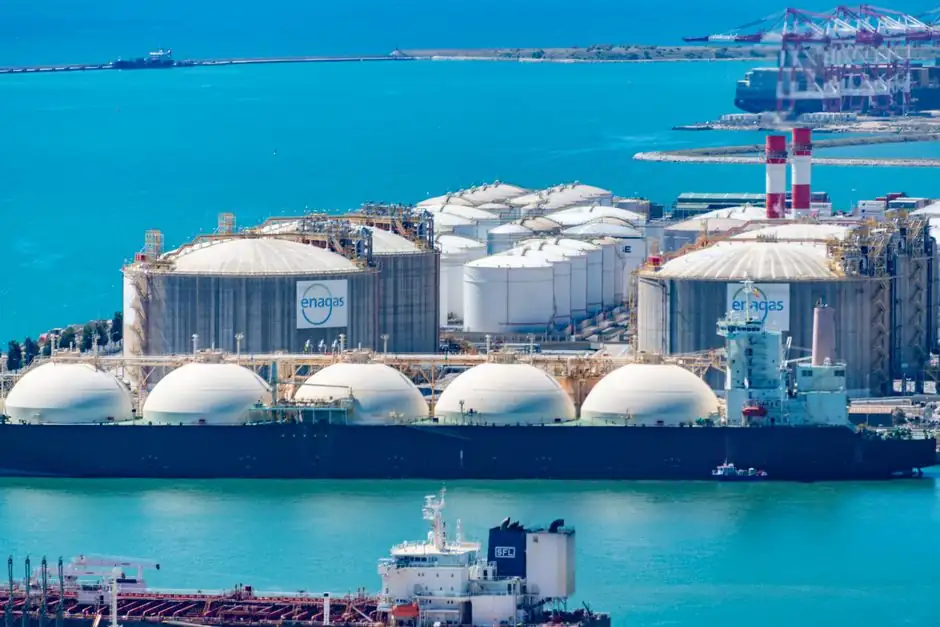
Factory-gate lead times for spiral coil-wound main cryogenic heat exchangers expanded from 28 months in 2021 to 36–44 months across the 2021–2026 procurement cycle [S2].
The 2026 LNG equipment market is estimated at USD 53.6 billion, with cryogenic pumps, heat exchangers, compressors, vaporizers and storage systems exposed to high-pressure, low-temperature procurement constraints [S4].
Heat Exchangers Set the LNG Critical Path
Main cryogenic heat exchangers are long-lead items because each spiral coil-wound unit must be fabricated, assembled, tested and delivered as a large engineered package. Factory-gate lead times reached 36–44 months across the 2021–2026 cycle, compared with 28 months in 2021 [S2]. This range makes the exchanger, rather than a commodity pump or valve, the controlling constraint for many liquefaction-train schedules.
The spiral heat exchanger configuration is central to large baseload LNG trains, where cryogenic heat exchangers are used for refrigerant-cycle duties [S1][S5]. The global LNG liquefaction equipment market was valued at USD 12.4 billion in 2024 and is forecast to reach USD 17.6 billion in 2030 at a CAGR of 5.9% [S3].
A 36-month procurement commitment leaves less tolerance for a late design freeze, revised feed composition or late vendor data than an eight-month equipment interval. Buyers should therefore place exchanger geometry, process duty, nozzle orientation, material requirements and utility interfaces into the first critical-path review rather than waiting for detailed vendor engineering.
Cryogenic Pumps Need Early Sizing
Cryogenic pumps for LNG service must be selected against the defined low-temperature duty, fluid characteristics and required hydraulic performance, with vibration and motor-current behavior established as operating references. A monitoring platform for LNG and refrigerant pumps compares vibration, motor current trends and hydraulic performance against pump curves [S7].
Pump specification should freeze the minimum flow, maximum flow, suction conditions, discharge pressure and fluid temperature before procurement. Those parameters determine the impeller, casing, shaft seal, bearing arrangement, driver concept and required NPSH. A pump ordered before the process and utility interfaces are stable can become a schedule liability even if its manufacturing slot is secured.
Cryogenic pumps are suitable for repeated low-temperature hydrocarbon or refrigerant service, but they are not a substitute for equipment designed for contaminant-bearing or variable feed gas. Feed gas pretreatment removes H₂S, CO₂, H₂O, mercury and heavier hydrocarbons before cryogenic cooling [S5]. Specification teams should also establish whether the pump handles clean LNG, mixed refrigerant, a regenerative stream or another low-temperature service.
Selecting Exchanger and Pump Configurations
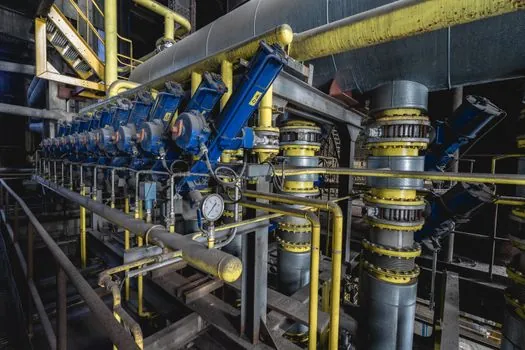
The equipment decision should compare thermal performance, cryogenic suitability, fabrication route, interface burden and schedule exposure rather than treating pumps and heat exchangers as equivalent procurement packages. [S5]
The shell-and-tube heat exchanger covers pre-cooling, sub-cooling and refrigerant-cycle duty, while the spiral configuration supports large baseload trains [S1][S5]. LNG service may also use plate-fin heat exchangers, but package geometry, allowable pressure, thermal duty and material compatibility must be checked case by case rather than assumed from generic service labels.
Cryogenic pumps offer straightforward liquid transfer when the duty is defined, but their mechanical configuration depends on suction pressure, flow range, speed, driver type and required reliability. Heat exchangers demand greater attention to multi-stream duty allocation, pressure drops, alloy selection, tube-bundle geometry and test arrangements [S5]. The practical selection matrix is therefore:
Shell-and-tube exchangers provide established LNG duty coverage and familiar fabrication codes, but their thermal and pressure design must fit the package. Spiral exchangers suit large-scale, high-efficiency baseload trains but carry a 36–44-month factory-gate range for the main units [S2]. Plate-fin exchangers can offer compact heat-transfer arrangements, but envelope, pressure, accessibility and constructability must be verified for the specific train. Cryogenic pumps address liquid movement, yet they add little to the schedule unless suction, discharge, driver and utility interfaces are frozen.
Which Projects Need the Longest Planning Horizon?
Long-lead planning is most relevant to greenfield baseload liquefaction trains, large capacity expansions and floating or modular LNG systems where several cryogenic packages must arrive in sequence. The global LNG and gas processing equipment market was valued at USD 50.7 billion in 2025, with midstream LNG infrastructure accounting for 43.1% of revenue [S4].
Smaller applications can use a different procurement logic. The global LNG cryogenic equipment market was estimated at USD 6.04 billion for 2026 [S6], while the broader cryogenic equipment market was valued at USD 27.59 billion for 2026 [S8]. Equipment scope, operating temperature, pressure and whether the package is custom-built determine whether the project faces a factory-gate constraint or can use a standardized package.
Buyers should apply the longest planning horizon to new LNG liquefaction trains, large-scale LNG storage and transfer systems, and facilities with multiple mixed-refrigerant or cryogenic-service pumps. A small vaporization skid with one duty point and limited customization may be manageable, provided its storage and transport interface remains unchanged. Expansion projects also need scrutiny because replacing aging equipment and debottlenecking existing facilities create demand for custom packages [S4].
Materials, Codes and Failure Modes
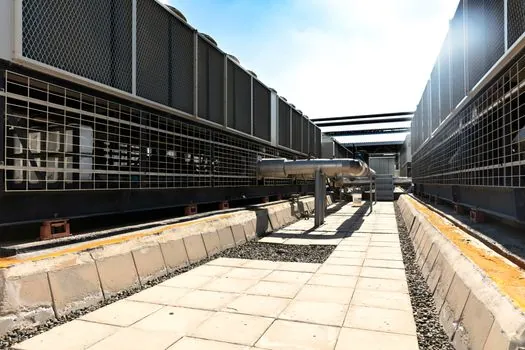
LNG equipment must accommodate cryogenic temperatures around -145 °C to -163 °C after impurities have been removed from the feed gas [S5]. Material selection, design temperature, impact-testing requirements and applicable code requirements must be evaluated for each project [S5].
Available material families include 304L, 316L, duplex and AL-6XN, with high-nickel alloys selected for contaminant service and carbon steel used for structural applications [S5]. Harris Thermal also identifies ASME Section VIII, Division 1, TEMA for exchangers, API 620 for tanks and API 650 for tanks as relevant fabrication references, including lethal-service and cyclic-service designs [S5].
The principal failure risks begin with material or design-temperature errors, including inadequate low-temperature toughness. Other risks include contamination before cold operation, incorrect pressure-part ratings, thermal-expansion restraint problems, pump cavitation from unstable suction conditions, seal or bearing failures, and exchanger fouling that changes pressure drop and heat transfer. Feed composition changes are particularly consequential because impurities can alter phase behavior, deposition risk and equipment metallurgy [S4][S5].
Commissioning control should therefore retain the same operating basis used for procurement. Baseline vibration, motor current and hydraulic performance provide measurable references for later comparison with pump curves [S7]. For heat exchangers, the as-built configuration and test results should be reconciled with the process model so that degraded performance is not mistaken for normal plant variation.
Procurement Controls for a 36–44 Month Window
Projects should reserve formal plant capacity and front-end design resources before the main cryogenic heat exchanger reaches fabrication, because the 36–44 month factory-gate range leaves little schedule recovery margin [S2]. The procurement sequence should identify the critical exchanger first, then release dependent pumps and rotating equipment against frozen process interfaces.
Commercial planning should separate manufacturing, fabrication, testing, shipment, customs and site-readiness assumptions rather than quoting one undifferentiated lead time. It should also identify which design changes remain permissible after order placement. A documented “no-change” boundary for nozzle orientation, elevation, material class, pressure rating and driver voltage protects the schedule more effectively than a general promise that equipment will be delivered on time.
Market demand remains a supporting constraint rather than a substitute for engineering judgment. LNG liquefaction equipment was forecast to grow from USD 12.4 billion in 2024 to approximately USD 17.6 billion in 2030 at a 5.9% CAGR [S3]. The broader LNG and gas-processing-equipment segment is projected to rise from USD 53.6 billion in 2026 to USD 80.6 billion by 2033 at 6.0% CAGR [S4]. Equipment manufacturers are also being asked for packages combining turbomachinery, cryogenic heat transfer, automation and instrumentation for high-pressure, low-temperature and variable feed-gas service [S4].
The first trackable signal is whether an EPC confirms the main exchanger delivery slot and freezes the interfaces for cryogenic pumps before design changes consume the schedule margin. The second is whether the project preserves a dated process basis for feed composition, design temperature, pressure, materials and testing requirements, with each deviation routed through formal change control.