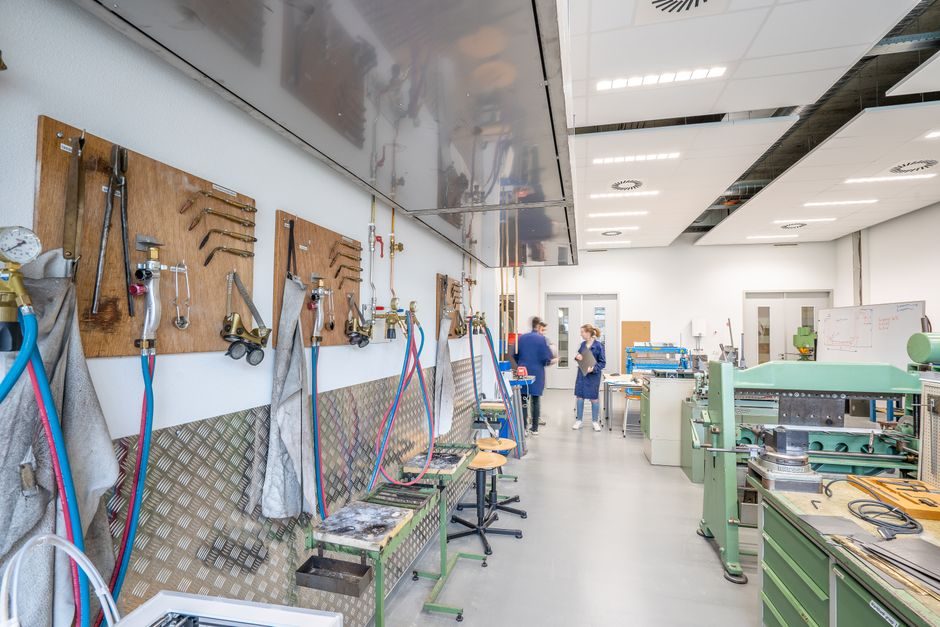
Yuhuan Fittings Manufacturing Co. (Zhejiang) lists its core product line as industrial locking assemblies and clamping elements, certified to ISO 9001, with the factory specialising in the category since 1995 [S6]. That 30-year tenure inside a single Taizhou-based plant anchors the low-cost end of the global supply base for locking assemblies used in power transmission.
Across Made-in-China's Lock Device category (snapshot dated 2026-07-04), keyless shaft-hub locking devices from Zhejiang suppliers such as Cimo Transmission Co. are listed at US$1.00–10.00 per piece with a 10-piece MOQ, while higher-spec Rlk110/Z11 lock-nut bearing-style shaft locking assemblies trade at US$5.00–35.00 [S2][S9]. Over 1,000 product listings are live in that single category, with the Supplier Discovery filter narrowing to Diamond/Gold audited members [S2].
Two product families, two supply pools
Locking assemblies split cleanly into two procurement pools: mechanical shaft-hub/clamping devices and electrical locking connectors [S1][S6]. Mechanical units are produced overwhelmingly in Zhejiang and Shandong, with typical price bands of US$1–35 per piece and MOQs of 1–10 pieces, against a 1,000+ listing population on Made-in-China's Lock Device index as of July 2026 [S2][S9]. Electrical locking connectors are dominated by European and Japanese OEMs (LEMO, Hirose, MARECHAL ELECTRIC, Legrand) on DirectIndustry, with 31 LEMO SKUs indexed and price/spec negotiation gated behind active RFQ [S1].
The application envelope differs: mechanical locking assemblies transmit torque on rotating shafts and need bore/shaft tolerance, surface finish and a defined torque capacity; electrical locking connectors carry current and need IP rating, mating cycles, voltage class and contact count [S1][S6]. Specifying the wrong family — e.g. buying a keyless shaft locking device when the requirement is a bayonet-locked power connector — is a common error driven by the shared "locking" keyword in catalogue search [S1][S2].
Mechanical locking assembly: what the 2026 catalogue says
Keyless shaft-hub locking devices from Cimo Transmission (Zhejiang) are listed at US$1.00–10.00 per piece at a 10-piece MOQ, covering both rigid-coupling and power-transmission variants on the same price line [S9]. Rlk110/Z11-design lock-nut bearing locking assemblies, a separate tapered-sleeve geometry, list at US$5.00–35.00 with the same 10-piece MOQ on Made-in-China's 2026 product grid [S2]. The Zhejiang province cluster (Yuhuan, Ningbo, Hangzhou) produces most of the keyless-locking-assembly SKUs that turn up in EU and US RFQs, with bolt-on taper-lock hubs and adaptors in cast iron and blackened finish appearing as the default low-cost standard [S8].
For spec engineers, the practical decision points are bore diameter range, shaft tolerance class (typically h6/h7), rated torque, and the surface treatment of the tapered sleeve. Made-in-China's 2026 product listings concentrate on alloy-steel construction in the 5–10 USD/piece band, with no published torque-vs-bore curves visible in the open catalogue — buyers must request test data per RFQ [S2][S8][S9]. Where higher torque or precision balancing is required (e.g. machine-tool spindles, gearbox pinions), the same suppliers offer a customisable tier on the same product page, normally requiring an additional 2–4 week lead time versus the catalogue SKU [S8].
Electrical locking connector: what the 2026 catalogue says
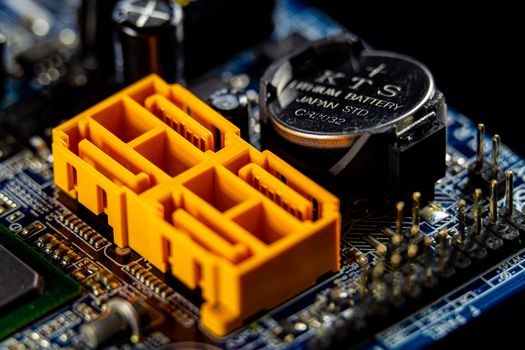
LEMO's B Series push-pull self-latching connectors cover 8 shell sizes, up to 64 contacts, IP50 indoor use, with primary current 2–45 A, voltage 0.75–2.7 kV, and impedance options of 50 or 75 Ω [S1]. The K Series extends the LEMO range to outdoor IP68 with an operating temperature window of −55 °C to +200 °C, primary current 1–50 A, and voltage 1–3.2 kV [S1]. The REDEL 2P pushes the same push-pull latching principle into medical/industrial high-voltage territory, with primary current options of 1, 6.5, 8, 11 A at 5 kV across 34 contacts inside an 18 mm shell [S1].
On the Hirose Electric Europe side, the HR41 Series is a plastic-shelled outdoor waterproof connector with bayonet locking, IP67/IP68 in the mated condition, primary current 20/24/38 A, voltage 1,000 V, and an operating temperature range of −40 °C to +105 °C; the HR41A is a single-pole 13 A variant on the same lock geometry [S1]. DirectIndustry's locking-connector index lists 31 LEMO SKUs and 4 each for JPC Connectivity, KEL Corporation, MARECHAL ELECTRIC and MPE-GARRY, with Legrand contributing 1 listed SKU at the snapshot date [S1]. The connector family is materially smaller than the mechanical-locking supply base, but the entry price (engineering hours, qualification cycles, MOQs) is also materially higher.
Decision map: mechanical vs electrical, and which supplier pool fits
Four criteria separate the decision: torque class, environmental sealing, current/voltage class, and lot size. [S1]
For torque transmission on a rotating shaft with no electrical continuity requirement, a Chinese keyless shaft-hub locking assembly at US$1–35 per piece from an ISO 9001 Zhejiang supplier is the cost-default, with Yuhuan Fittings (est. 1995) as a long-tenure option and Cimo Transmission (Zhejiang) as a high-volume ODM [S2][S6][S9]. For IP68 outdoor sealing, push-pull latching and traceable test data, LEMO's K Series (−55 °C to +200 °C, 1–50 A) or Hirose's HR41 Series (IP67/IP68, 20–38 A, 1,000 V) are the catalogue references in the European locking-connector pool [S1]. For high-voltage panel-mount at low contact count (≤4 poles, three-phase + ground), the Hirose EM35M Series (30/50/70 A, 1,000 V, snap-in lock, −40 °C to +125 °C) fits the spec [S1]. For RFQ-only supply (custom keying, non-standard voltage, medical-grade), LEMO's REDEL 2P at 5 kV on 34 contacts is the high-density benchmark [S1].
Mechanical-locking buyers should ask suppliers for torque-vs-bore curves, surface-finish data on the taper, and a sample of the actual lock-nut geometry (Z11 vs Z17 family) before issuing a PO, because the catalogue price bands do not disclose the rated torque [S2][S8]. Electrical-locking buyers should confirm IP rating in the mated condition, mating-cycle rating, and the latching mechanism (push-pull self-latching vs bayonet vs snap-in) against the published spec sheet before issuing an RFQ to a DirectIndustry-listed OEM [S1].
What the catalogue does not tell you
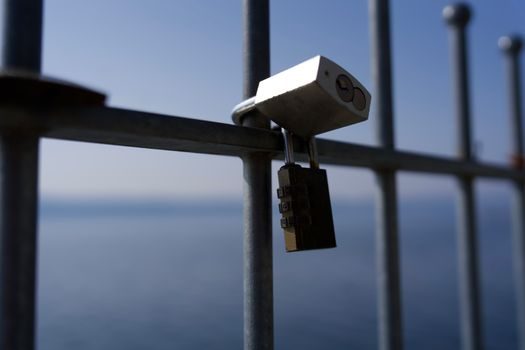
None of the live Made-in-China 2026 listings in the Lock Device category publish a rated-torque-vs-bore curve, a balancing grade, or a fatigue-life number for keyless shaft-hub locking assemblies [S2][S9]. Lot-level traceability, material certificates (EN 10204 3.1) and RoHS/REACH compliance are gated behind "Send Inquiry" and typically returned only after a paid sample or audit is opened [S2]. For European buyers, ATEX/IECEx-rated locking assemblies are not visible in the open Chinese catalogue and must be specified as a custom request — the same applies to NACE MR0175 sour-service grades for oil-and-gas duty [S1][S2]. For buyers sourcing locking assemblies that will sit next to a pressure transmitter on the same skid, the locking-assembly supplier's QA documentation needs to match the instrument supplier's calibration pedigree, otherwise the documentation gap shows up at the FAT [S6].
Lead times on custom-geometry mechanical locking assemblies from Zhejiang run 3–5 weeks for sample and 4–6 weeks for production lot at the snapshot date; for European locking connectors (LEMO, Hirose) the production lead time on standard SKUs is 4–8 weeks against an RFQ, with custom keying adding 2–3 weeks [S1][S8]. For related decision criteria across adjacent power-transmission components, the spec-side map in Locking Assembly Sizing and Selection: Spec Engineer's Decision Map is the natural next read, and the duty-band comparison in How to Choose a Locking Assembly: Shaft, Plate, and Container Duty Compared covers the application split this article only outlines.
Component reference pages worth checking: flow meter.