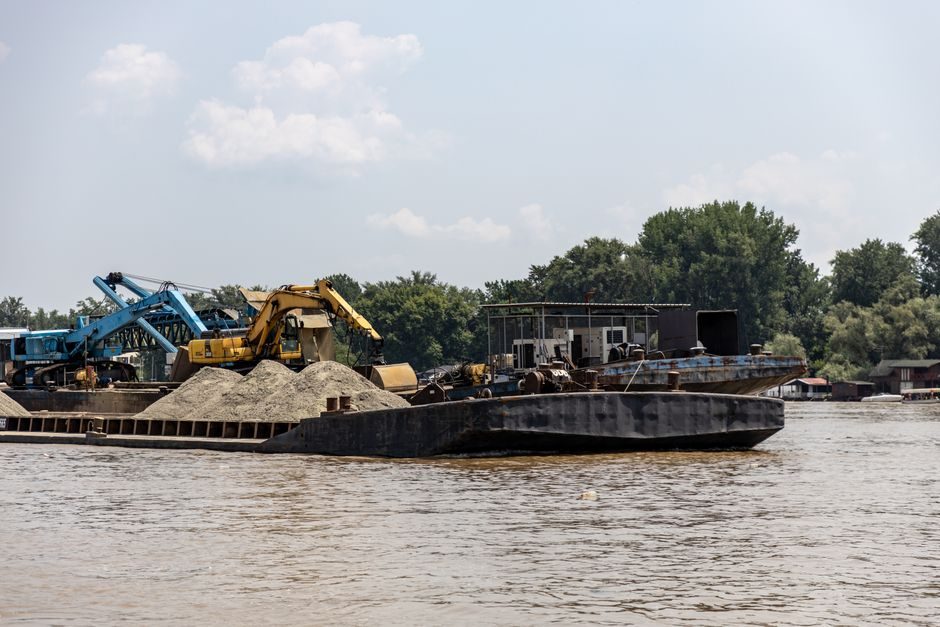
Long-reach excavators are a distinct subclass of hydraulic crawler machines defined by an extended boom-and-stick geometry rather than by engine or hydraulic architecture, with manufacturer literature grouping them into demolition, dredging, and deep-hole digging duty cycles [S1][S3].
Operating weights for the segment span roughly 7 t amphibious pontoon units to 130 t carrier-class booms, with HAWK documenting amphibious undercarriage kits from 7 to 130 tons and a modular long-reach boom-and-stick product line that retrofits existing excavator brands [S1]. SANY catalogues the long-reach model as a sibling to its Mini, Small, Medium, Large, and Mining excavator tiers, confirming it is treated as a configuration family rather than a separate machine class [S3].
Reach Band Classification and Boom Geometry
Long-reach excavator reach is typically benchmarked against standard boom dig depth: most OEM retrofit kits add 30–100% to the parent machine's horizontal and vertical envelope by lengthening the boom and adding a parallelogram or bent-stick geometry [S1].
HAWK's long-reach product line ships as a stick-and-boom kit with pre-plumbed hydraulics and hose mounts, sold as an aftermarket conversion to existing excavator brands rather than as a dedicated carrier [S1]. SANY groups its long-reach model in the same excavator family as Mini (typically under 6 t class), Small, Medium, Large, and Mining tiers, indicating the long-reach configuration is offered on multiple base machine sizes rather than as a single size [S3].
Three Working Subtypes: Demolition, Dredging, Deep-Hole
Manufacturer application guides separate long-reach excavator duties into three load cases: high-reach demolition, precision dredging, and deep-hole digging, each driving a different stick profile, hydraulic priority circuit, and attachment interface [S1].
HAWK publishes a dedicated high-reach construction demolition guide alongside an excavator deep-hole digging applications guide, treating demolition and deep-hole as separate engineering problems rather than a single duty cycle [S1]. Dredging duty is paired with the HAWK Vision RTK GPS positioning system, which the manufacturer markets specifically for mechanical and hydraulic excavation, construction, and dredging projects where the operator must verify bucket or pump position relative to a target elevation [S1].
Selection Criteria: Carrier Class, Hydraulics, Transport
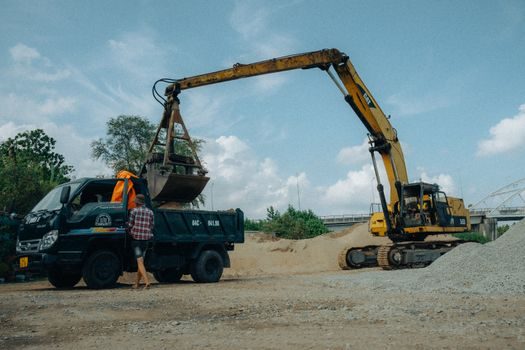
Selecting a long-reach excavator is gated by three engineering constraints: the carrier operating weight class, the available hydraulic flow at reduced engine speed for the longer lever arm, and the transport envelope of the assembled or disassembled boom on a low-loader [S1].
HAWK's amphibious undercarriage product line covers 7 to 130 tons, indicating that the long-reach retrofit is offered across the full carrier weight band rather than only on mid-size machines [S1]. HAWK also publishes a dedicated transportation guide for long-reach excavators, confirming roadability is treated as a first-class selection criterion because the assembled boom typically exceeds standard transport height and length limits on a low-loader [S1].
Comparison: Demolition vs Dredging vs Deep-Hole Configuration
Across the three working subtypes, decision criteria differ on attachment interface, hydraulic priority, and the requirement for a positioning aid such as RTK GPS. [S1]
High-reach demolition configurations favour a heavy stick and a quick-coupler-rated shear or crusher interface, with the operator working at maximum vertical reach from a fixed stand-off. Dredging configurations pair a long-reach boom with an amphibious undercarriage and an RTK GPS system to prevent over- or under-digging below the waterline, as documented in HAWK's dredge positioning literature [S1]. Deep-hole digging configurations prioritise a long, slender stick and a narrow bucket to maximise vertical dig depth within a small surface footprint, with HAWK publishing a dedicated deep-hole applications guide separate from the demolition guide [S1]. The same long-reach boom-and-stick kit architecture from HAWK's product line underpins all three subtypes, with the differentiation in attachment, undercarriage, and positioning electronics rather than in the base boom geometry [S1].
Site Integration: Amphibious Undercarriages and Sectional Barges
Long-reach dredging operations frequently pair the extended boom with an amphibious undercarriage or a sectional barge to give the machine stable footing in soft ground or open water, with HAWK documenting modular sectional barges designed to be assembled and resized on site [S1].
HAWK's amphibious undercarriage range from 7 to 130 tons is offered for most major excavator brands, meaning a fleet operator can keep an existing carrier and bolt on the pontoon undercarriage and the long-reach boom-and-stick kit as separate modules [S1]. The sectional barges are described as 100% modular with an interlocking system for on-site installation, allowing the same platform to be scaled up or down for marine construction or water-based transport without returning to a yard [S1].
Limitations: Lift Capacity, Transport, and Cycle Time
Extending the boom geometry multiplies the hydraulic moment on the stick, so lift capacity at full reach drops sharply versus the parent machine's standard-arm rating, and cycle times lengthen as the longer lever reduces attachment speed at the same pump displacement [S1].
Long-reach retrofit kits ship with pre-plumbed hydraulics and hose mounts, but the parent machine's counterweight and track length govern the safe working envelope, meaning a 20-tonne carrier converted to long reach will not match a 20-tonne standard-arm machine in terms of digging force or swing stability [S1]. The combination of long-reach boom plus amphibious undercarriage plus a low-loader transport step also adds disassembly/reassembly labour, and HAWK's rental-versus-purchase resource frames this as a recurring decision point for project-based buyers rather than fleet operators [S1].
Standards and Sourcing Signals
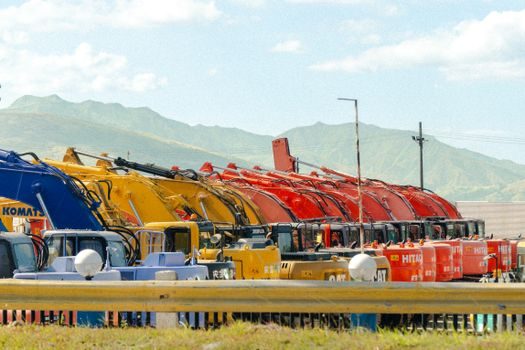
Long-reach excavator supply is dominated by Asian OEM long-reach product lines offered alongside Mini, Small, Medium, Large, and Mining excavator tiers, with SANY listing the long-reach model in the same excavator product family as those standard classes [S3].
Aftermarket retrofit kits are sold as a separate channel, with HAWK offering stick-and-boom kits with pre-plumbed hydraulics and hose mounts that convert an existing excavator rather than requiring a dedicated carrier purchase [S1]. For buyers cross-checking wheeled and tracked variants, the wheeled excavator selection guide on duty, axle, engine, and tire criteria provides a useful side-by-side framework when a project requires mobility between long-reach digs. Sourcing signals worth tracking into late 2026 include whether major OEMs expand the long-reach offering on larger carriers above 50 tonnes and whether amphibious undercarriage modularity becomes standard rather than an optional kit [S1][S3].
Detailed specification references: reach truck, and pressure transmitter.