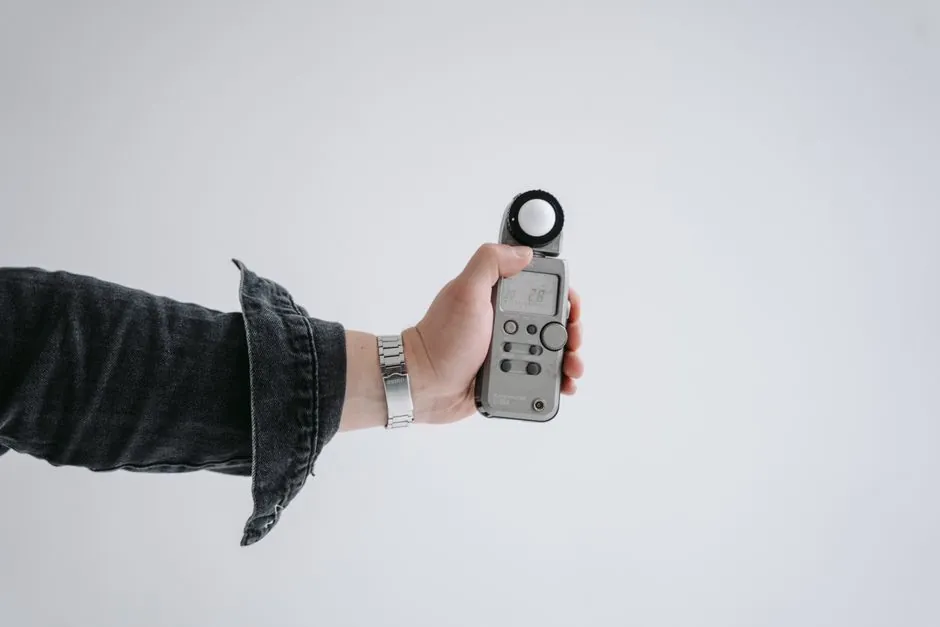
A loop calibrator is a portable source/measure instrument for the 4-20 mA current loop that powers and reads a two-wire process transmitter; selecting the wrong one usually shows up as either a 0.5% drift on a custody-meter loop or a refusal to commission a device in a Zone 1 area. The four specs that drive every buy decision are: mA accuracy, internal 24 V loop supply, hazardous-area certification, and HART pass-through, in roughly that order of weight for a process plant.
Handheld loop calibrators cover a 0-24 mA range with 0.01 mA resolution on entry units and 0.001 mA on higher-tier units. Fluke 715 lists 0.01% accuracy at 1 µA resolution across 0-20 mA and 4-20 mA ranges, with 100 mV and 10 V source ranges for PLC and transmitter output checks [S2]. For a deeper dive on how the same vendors differentiate adjacent instruments, see the loop tester reference page and the broader loop calibrator primer.
Accuracy class: 0.01% vs 0.025% vs 0.02% of span
Accuracy in loop calibrator data sheets is stated as "% of reading" or "% of span" plus a floor count in µA, and the difference between classes is meaningful on a 4-20 mA span. REED-Direct's VC05 loop calibrator publishes 0.02% of reading accuracy and 0.001% of span on its display, with selectable step or ramp outputs and a 24 V loop supply [S1]. Omega's CL309A handheld lists "better than 0.025%" across 4-20 mA functions and bundles a 24 V loop supply for two-wire transmitter work [S5].
Fluke 715 tightens that to 0.01% with 1 µA resolution [S2]; for a 16 mA span that converts to roughly 1.6 µA of total error, against about 4 µA on a 0.025% class unit. On a 4-20 mA flow loop with a 100:1 turndown, the 0.01% class is the safer pick; on a 10:1 turndown level loop, 0.025% is usually adequate. Watch for "% of span" vs "% of reading" claims: span-based figures penalize you at 4 mA and zero-out the error at 20 mA, which can mask a real low-end drift problem. For a side-by-side framing of where this sits against other handheld instruments, the multifunction process calibrator reference is a useful cross-check.
24 V loop supply and two-wire transmitter drive
Most modern loop calibrators include an internal 24 V DC power supply to power a two-wire transmitter while the calibrator reads its output, removing the need for an external supply during bench checks. REED-Direct VC05 advertises a 24 V loop power supply in its spec block [S1]; Omega CL309A pairs the 24 V drive with mA source/measure for two-wire work [S5]; the legacy Druck UPS-II/III documented in the GE Druck product literature explicitly offers source mode and measure mode for two-wire devices, plus continuity and voltage/current selection from the setup menu [S6].
If you also need to source or simulate a 4-20 mA signal into a recorder, PLC analog input, or valve positioner, the same 24 V supply typically doubles as the loop power, so the calibrator can replace a transmitter on the bench. The practical rule: if the duty ever involves energizing a 2-wire device, the 24 V supply is non-negotiable, since you cannot reliably measure a 4-20 mA loop without it. For distributed loop-power architectures in a cabinet, the loop power distributor reference covers the panel-mount variant of the same function.
Hazardous-area certification: when a 707Ex is mandatory
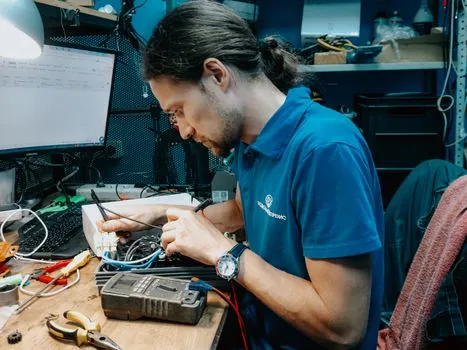
Loop calibrators used in refinery, chemical, or gas-distribution sites must carry an intrinsic-safety (IS) rating if they are taken into a Zone 1 or Zone 0 classified area. Fluke's 707Ex IS loop calibrator is the canonical example in the Fluke catalog and is certified for use in potentially explosive environments, distinct from the non-IS 707 and 705/715 line [S4]. The trade-off is unit cost: IS-rated units typically carry a meaningful premium and a tighter operating-temperature window, so plant stores often hold both IS and non-IS units and gate them by area classification.
For plants without a hazardous-area duty, that premium is wasted. The 707Ex being explicitly discontinued in Fluke's storefront at the time of the August 2026 snapshot is also worth flagging: spare-part and re-calibration availability for IS units with an end-of-life notice can stretch out, so the procurement decision should weigh 5-7 year support, not just sticker [S4]. Buyers in oil and gas often keep a Druck/GE IS unit as a second source for that reason [S6].
HART pass-through and communicator integration
A loop calibrator with HART pass-through allows a HART communicator (475/375, Trex, or AMS Trex) to talk to a smart transmitter while the calibrator holds the loop at a known current. This is critical for valve positioner trim, multivariable transmitter ranging, and any device that exposes configuration parameters only over HART. Entry-level mA-only units such as the REED-Direct CC-422 (0-19.99 mA / 0-24.0 mA, 0.01 mA resolution) are pure analog and will block HART traffic, which limits them to dumb transmitters and bench simulation [S1].
Mid-tier units like the Fluke 715 are analog-only as well, so they pair with a separate HART communicator on the bench [S2]. Full-featured units with HART support cost more and add a 250 Ω loop resistor plus HART modem, but they cut one instrument from the field bag. If the bulk of your loop is 4-20 mA-only I/P or D/P, an analog-only unit is fine; if you regularly range smart differential-pressure, Coriolis, or mag-meter transmitters, buy the HART-enabled variant. The selection logic mirrors the broader pattern in flow meter selection, where a single protocol choice cascades through the whole spec.
Source/measure modes, ramping, and step output
Two functional features separate bench tools from quick field troubleshooters. The first is selectable step and ramp outputs: the REED-Direct VC05 explicitly lists selectable step or ramp outputs, which is what you need for linearity checks and valve stroking [S1]. The second is a simultaneous source-and-measure mode, which lets you read the loop current while sourcing a setpoint into a positioner, eliminating the back-and-forth with a separate multimeter. Fluke 705/707/715 units are widely deployed for this dual-mode workflow [S3].
For valve cut-in and full-stroke tests, a 4-20 mA step in 4 mA increments at 30 s dwell is the typical acceptance pattern. If the calibrator does not support a programmable dwell, the test becomes manual and inconsistent, which is why entry-level units without ramping are bench-only tools. For shop-floor metrology work where you also need to hand off to a higher-accuracy standard, the selection criteria overlap with general dimensional measurement practice, where documented step-and-read procedures beat ad-hoc probing.
Selection map: who should buy which variant
Four realistic buyer profiles and the matching unit class, drawn from the published spec sheets: (1) A bench technician in a calibration lab needs 0.01% accuracy and HART pass-through, and the Fluke 715 class (0.01%, 1 µA) covers it [S2], with the note that a HART-enabled model is required if smart transmitters dominate. (2) A field instrumentation tech doing day-to-day 4-20 mA loop checks wants 0.02-0.025% accuracy, internal 24 V supply, and ramping; REED-Direct VC05 (0.02%, 24 V supply, step/ramp) and Omega CL309A (0.025%, 24 V) both fit [S1][S5]. (3) A refinery or gas-plant tech working in Zone 1 needs an IS-rated unit; the Fluke 707Ex is the historical reference, with end-of-life status now a procurement risk [S4]. (4) A purchase-driven buyer needing 5-9 unit spares for a plant rollout finds the Omega CL309A at $998.75 each (1-4 tier) and $948.81 at 5-9 units, with $848.94 at 100+ units, a 15% volume discount that meaningfully shifts total cost of ownership [S5].
Who should NOT buy the mainstream 4-20 mA-only unit: anyone in custody transfer, anyone ranging smart multivariable transmitters, and anyone working in Zone 0/1. The mainstream unit is the right pick for analog loops and bench simulation only. The cross-vendor comparison on accuracy, loop supply, IS, and HART is the cleanest way to shortlist, since a data point of "0.02% of reading" is meaningless without the "% of span" floor and the 24 V drive [S1][S2][S5]. For process engineers framing this against adjacent selection decisions, level switch selection uses the same criteria-first pattern, and a working knowledge of pressure calibrator specs helps when the loop also has a pressure transmitter to verify.
Limitations and failure modes
Three failure modes show up repeatedly. First, loading error: a 4-20 mA loop is current-mode, but the calibrator's input impedance plus the loop's burden resistor can pull the loop down at the 4 mA low end; the data sheet's "input impedance" or "loop burden" spec must be checked for each model, since 50 Ω vs 250 Ω behavior is different [S2]. Second, 24 V supply droop under 20 mA load: cheap loop supplies collapse to 18-20 V on a 20 mA draw, which causes some smart transmitters to brown-out; bench verification of the loaded supply voltage is part of the acceptance test. Third, HART impedance mismatch when a HART modem is inserted in series without the correct 250 Ω, which mutes the HART signal and prevents the communicator from connecting.
Operating-temperature window is also a real constraint on IS units, and units with end-of-life notices (the 707Ex is flagged discontinued in Fluke's storefront as of the August 2026 snapshot) are best avoided for new critical-loop spares [S4]. For non-IS units, the typical 0-50 °C operating range is fine for indoor and most outdoor field work, but cold-weather plants below -10 °C should verify the spec, since LCD refresh and battery capacity both degrade.
Two trackable signals close the loop. First, monitor the HART-enabled handheld segment, where new entrants with built-in Bluetooth logging are starting to appear in adjacent categories such as signal calibrator lines; if a major vendor (Fluke, Beamex, Druck/GE) ships a HART + Bluetooth loop calibrator in the 0.01% class, the price benchmark for mid-tier units will reset. Second, watch the hazardous-area variant: with the 707Ex discontinued, the next IS-rated Fluke release, or a Beamex/GE equivalent, will be the de-facto replacement for Zone 1 refinery work, and its 2026-2027 specification will set the new accuracy-vs-cost frontier for the segment.