Global medium-voltage wire and cable revenue is forecast at USD 78.78 billion in 2026, while the broader data-center power-cable market is projected at USD 4.8 billion and grow at about 16% through 2032 [S1][S2].
Renewable collection, grid reinforcement and power-intensive digital infrastructure are the core demand channels, with product mix split by voltage, insulation, conductor material and installation method [S2][S3][S4].
Market Scope and Forecast Boundaries
Published 2026 estimates range from USD 36.43 billion to USD 78.78 billion for medium-voltage cable or wire-and-cable studies, while one narrower cable forecast starts at USD 50 billion [S2][S4][S5]. The variation is material because the studies cover different cable constructions, regional aggregation rules and end-use definitions, so their values should not be combined into a single market total.
The global wires and cables market was valued at approximately USD 230.90 billion in 2025 and is projected to reach USD 313.19 billion by 2033 [S3]. Within that broader category, the medium-voltage wire-and-cable forecast rises from USD 71.68 billion in 2025 to USD 78.78 billion in 2026, with a 6.8% CAGR through 2035 and a projected USD 142.15 billion endpoint [S2].
Data-center demand has a separate market expression: data-center power cables are projected to increase from USD 4.8 billion in 2026 to USD 11.7 billion by 2032, approximately 16% annual compound growth [S1]. A broader power-cable forecast rises from USD 237.5 billion in 2026 to USD 376.4 billion by 2033 at a 6.8% CAGR [S6].
Renewable Collection Drives Route-Level Demand
This queue matters because collection-system cable demand is tied to project execution, route approvals and interconnection schedules, not merely to installed generation announcements.
XLPE-insulated medium-voltage cables are being used for renewable-energy projects, urban distribution and industrial networks because of their thermal stability, current-carrying capacity, operational life and reduced maintenance requirement [S4]. The underground segment is expected to account for 46.0% of the global medium-voltage cable market in 2026 [S4].
Renewable collection also needs interfaces beyond the cable itself: substations, switchgear and feeder equipment must be selected for the same operating environment. The grid-scale transformer market therefore affects the delivery and voltage alignment of collection projects, even though transformer procurement follows a separate specification path from cable selection.
Data Centers Add Concentrated Load and Delivery Pressure
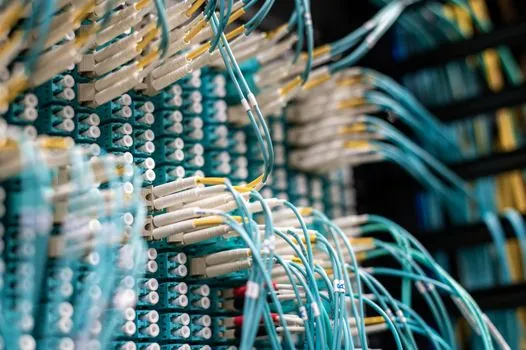
The data-center power-cable market is forecast to grow from USD 4.8 billion in 2026 to USD 11.7 billion by 2032, a rise of USD 6.9 billion and approximately 16% compound annual growth [S1]. AI data centers are explicitly identified as a demand driver for medium-voltage cable, linking large computing loads to distribution infrastructure that operates above conventional low-voltage building systems [S1][S7].
Data-center projects and renewable assets therefore compete for grid capacity, connection work and skilled installation resources, making cable availability and route scheduling central project variables.
The scale comparison is important for procurement teams: data-center power cables form a USD 4.8 billion segment in 2026, while the medium-voltage wire-and-cable study reports USD 78.78 billion [S1][S2]. The figures describe overlapping but non-identical markets, so a data-center operator should budget cables within the electrical route and vendor package rather than apply the larger market forecast as a project-price estimate.
Voltage, Material and Installation Options
The 1 kV to 15 kV segment is estimated to hold 49.0% of the global medium-voltage cable market in 2026, making it the largest identified voltage band in the forecast [S4]. Underground systems are expected to account for 46.0% of the global medium-voltage cable market in 2026 [S4]. These shares describe the studied global mix, not a universal project ratio.
XLPE is an insulation choice, not a complete cable specification. Conductor size, screen arrangement, armouring, installation method and terminal compatibility must be fixed together, especially where the route serves both renewable collection and data-center substations [S2][S4].
Smart Monitoring Extends the Cable Package
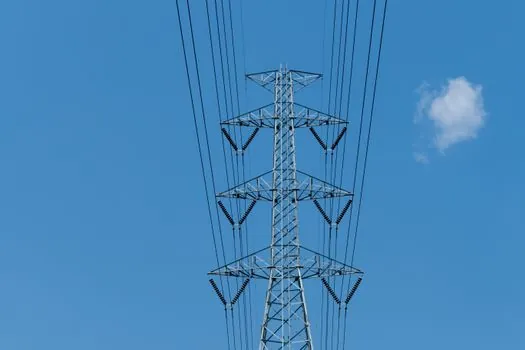
Medium-voltage networks are incorporating fiber-optic sensing, distributed temperature monitoring and predictive-maintenance capabilities as part of digital-grid modernization [S4]. These systems can detect faults earlier, reduce unplanned downtime and improve asset utilization, but they add instrumentation, integration and commissioning work beyond the cable installation scope.
Condition monitoring is most valuable where a circuit combines a large generation asset, a long collection route and a high-availability downstream facility. The engineering choice should be based on measurable failure detection, communications compatibility and maintainability rather than on a generic smart-cable label [S4].
For plants where cable failure can stop a production line or a critical data-center load, protective coordination and isolation equipment form part of the same reliability decision. A medium-voltage VFD is relevant where motor feeders require medium-voltage conversion and coordinated protection, but its control and protection requirements do not replace feeder-cable thermal, ampacity and fault-duty verification.
Procurement Risks: Lead Time, Routing and Supplier Depth
Medium-voltage wire and cable demand is increasing while project timing remains exposed to cost escalation, manufacturing availability and route approvals [S2]. Cable selection that ignores those constraints can leave compliant material without an executable delivery and installation path.
The supplier structure is also relevant. Prysmian Group led the medium-voltage wire-and-cable market with more than 12.5% share in 2025, while Prysmian Group, Nexans, LS Cable & System, Sumitomo Electric Industries and NKT collectively held 40.0% [S2]. The figures make large supplier capacity a procurement dependency and support early allocation for projects with fixed energization dates.
On May 16, 2026, Prysmian Group introduced a new XLPE-insulated medium-voltage cable portfolio for industrial sites with improved thermal and environmental performance [S4]. For owners, the relevant comparison is not brand alone: schedule, certified type test evidence, route compatibility, termination support and delivered capacity determine whether the electrical design remains executable [S4].
Who Benefits and Where MV Cables Fit
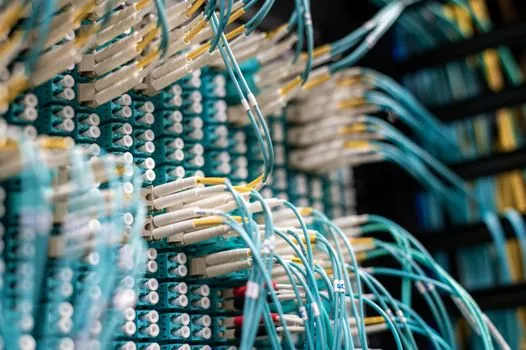
Medium-voltage cable is suited to utility feeders, renewable collection circuits, industrial distribution, underground infrastructure and high-capacity data-center power systems where low-voltage distribution is unsuitable for the required load or distance [S2][S7]. It is not the default choice for every internal branch circuit, and it does not eliminate the need for transformers, switchgear, protection coordination or thermal design.
Renewable developers benefit where generation remains far from usable load and collection routes must reach substations. Data-center developers benefit where electrical demand is concentrated and uptime requirements justify dedicated medium-voltage distribution. Utilities benefit where underground feeders improve weather resilience, although excavation and permitting can offset that operational advantage [S2][S4].
The market evidence supports staged procurement rather than a single global forecast. Track confirmed interconnection queues, announced data-center power procurement, regional supplier allocation and underground-route approvals as four trackable signals. The global data-center power-cables market is projected to grow from USD 4.8 billion in 2026 to USD 11.7 billion by 2032 [S1].