
Pharmaceutical label inspection at full line speed requires a freely programmable industrial camera, not a black-box smart camera, when integration with OEM line controls, recipe management, and audit traceability is non-negotiable [S1][S2].
Baseline spec for label and code verification is a 5-20 MP global-shutter area scan camera on GigE Vision or USB3 Vision, paired with structured LED illumination and a programmable framework supporting C++, Python, and HALCON, plus OPC UA and REST for line-side hand-off [S1][S2].
Why "freely programmable" beats turnkey on a pharma label line
Freely programmable camera platforms expose the full imaging pipeline, sensor register access, trigger model, and image processing hooks, which lets a vision engineer tune exposure, gain, and region of interest per SKU instead of accepting a vendor-fixed decision tree [S1]. IMAGO's open platform, for example, ships with the ViewIT software framework plus native bindings for C++, Python, and HALCON, and runs the same application binary across its industrial camera and industrial PC families [S1]. That portability matters on a packaging line where a blister machine OEM, a labeler OEM, and a serialization track-and-trace vendor each need to read or push inspection results to a shared MES [S1].
Turnkey or smart cameras are faster to deploy for a single fixed inspection, but they constrain recipe count, custom OCR models, and the depth of audit logs that FDA 21 CFR Part 211 and EU GMP Annex 1 expect during a deviation review [S2]. When the line must validate 100% of labels and codes against a serialized SKU database, the camera needs to expose its trigger, pass/fail, and image-archive events to the line PLC and the MES in machine-readable form, which is what OPC UA and REST on an open platform give you out of the box [S1].
Sensor, shutter, and interface: the non-negotiable spec floor
Global shutter is mandatory on any conveyor-fed label line; a rolling shutter will smear 1D barcodes and 2D Data Matrix codes whenever the line ramps above a few hundred millimeters per second, even at short exposure [S2][S4]. MindVision's selection guide for pharmaceutical inspection explicitly calls out GigE or USB3.0 area scan cameras at 5-20 MP with global shutter as the workhorse range for tablet and label applications [S2].
Interface choice is governed by cable length, bandwidth, and EMC environment rather than marketing preference. GigE Vision scales to 100 m on Cat6A and is the default for cabinet-to-line retrofits, while USB3 Vision is the pragmatic pick for short pigtails inside an IP65 enclosure where a GigE NIC is overkill [S2][S4]. CoaXPress enters the picture when the label area exceeds the bandwidth of a single GigE link, for example 10+ MP at frame rates above 60 fps on a vision-guided print verification station [S4].
Sensor size and pixel pitch should be matched to the smallest code element and the optical magnification, not to the camera's headline resolution. A 5 MP global-shutter sensor with a 25 mm C-mount lens typically resolves a 0.2 mm Data Matrix module at the working distances used on a wrap or front label station; going to 20 MP only pays off when the label area exceeds the field of view at that pixel density, otherwise you are paying for data you will downsample before decoding [S2].
Lighting and optics: where label inspection is actually won or lost
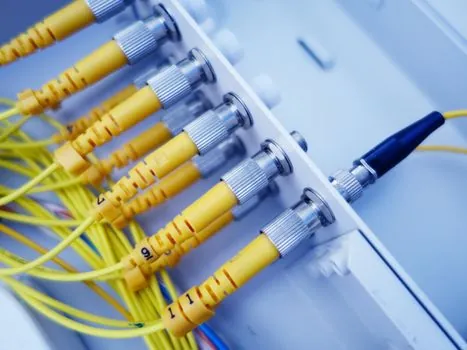
Lighting is the single largest contributor to first-pass yield on a label inspection, and the lighting choice depends on the substrate. For glossy carton stocks, a dome or coaxial light suppresses specular reflections that would otherwise corrupt OCR and 1D/2D code edges; for matte paper labels, a ring or bar light from a low angle maximizes contrast on printed characters [S2][S4]. Backlight is reserved for silhouette tasks, such as detecting a missing label on a vial or a torn seal flap, rather than for code reading [S2].
Opto Engineering's label-inspection design notes stress that an effective machine vision system is a stack of optics, lighting, camera, and processing tuned to the same defect catalogue, not a stack of off-the-shelf parts [S3]. For pharma, that defect catalogue usually includes: missing or skewed label, wrong language variant, print color drift, lot/expiry misprint, 2D code grade failure under ISO/IEC 15415 or ISO/IEC 29158, and tamper-evident seal defects [S2][S3].
Software stack, AI, and the line-side integration boundary
The programmable layer is what separates a freely programmable industrial camera from a closed vision sensor. The IMAGO ViewIT framework exposes the full pipeline so that the same code that reads a Data Matrix on a vial can, on a different SKU, run a HALCON-based OCR or a Python deep-learning classifier for variable-data print verification, with no firmware change [S1]. On the AI side, edge accelerators such as NVIDIA Jetson or an integrated industrial PC with GPU are now common inside the camera housing, which lets a Python or ONNX model run inline at line rate without an external vision server [S4].
Integration back to the line is through OPC UA, REST, or classic PLC handshakes, and the choice has audit consequences. The Overview.ai integration guide notes that AI software must publish results, images, and confidence scores in a form the MES can archive for traceability, otherwise the inspection record is incomplete for FDA deviation review [S4]. For a freely programmable platform, that is configured in the application layer; for a turnkey unit it is typically fixed by the vendor.
Comparison: open programmable vs smart camera vs PC-based vision
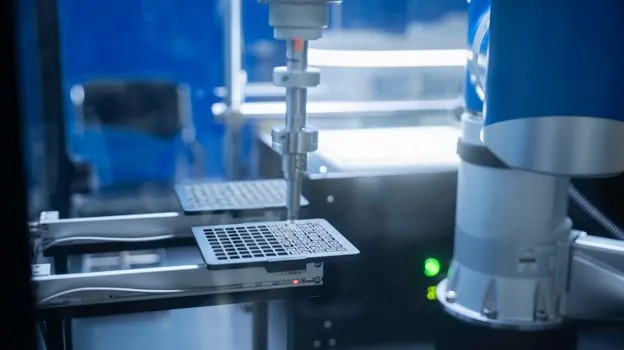
The three architecture options line up against the four criteria that matter on a pharma label line as follows. Open programmable industrial camera (for example, IMAGO ViewIT on a 5-20 MP GigE global-shutter sensor): full code access, native C++/Python/HALCON, OPC UA/REST, mid deployment effort, highest recipe flexibility, mid unit cost [S1][S2]. Smart or X86 smart camera with onboard AI: lowest integration effort, fixed vendor toolchain, limited recipe depth, lowest unit cost but vendor lock-in on OCR and code libraries [S2]. PC-based vision with industrial camera + industrial PC + GPU: highest throughput and model complexity, longest deployment, highest total cost, best fit when the line already has a controls cabinet and a controls engineer [S4].
Failure modes, limits, and when not to specify an open platform
An open programmable platform fails when there is no in-house vision engineer to maintain it, or when the inspection is a single, fixed check on a low-SKU line. In those cases a turnkey or smart camera with a vendor-warranty recipe will return the inspection faster and at lower lifecycle cost [S1][S4]. The other hard limit is bandwidth: a 20 MP sensor at 60 fps over GigE Vision saturates a 1 Gb link and forces either a 10 GigE upgrade, CoaXPress, or on-camera compression, which then has to be decoded before any AI model sees the image [S2][S4].
For more on the industrial camera category itself, including sensor and interface trade-offs, see the industrial camera encyclopedia entry; for the wider controls-side picture, including PLC hand-off, the programmable logic controller reference covers trigger and result publication patterns commonly used on these lines.
Track these signals next: revision status of EU GMP Annex 1 and FDA 21 CFR Part 211 guidance on AI/ML model validation, and the migration of 10 GigE Vision and CoaXPress 2.0 from machine-builder retrofit to brownfield label-line default through 2027.
Component reference pages worth checking: industrial adhesive.
Background reading: Boiler Bimetal Thermometer Dial Size: 4 Specs That Drive the Choice.