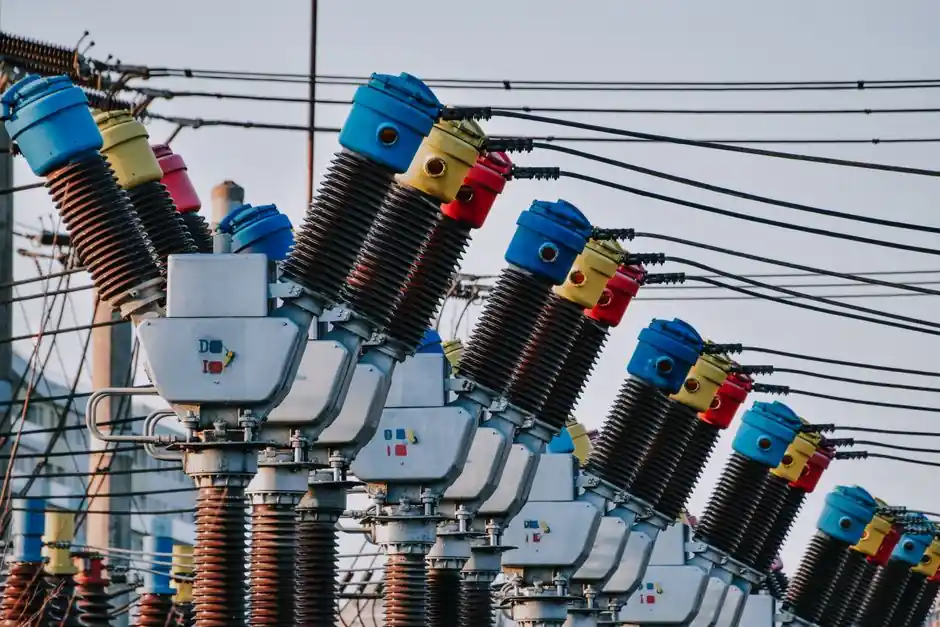
Energy equipment housings (battery enclosures, inverter shells, wind-pitch gear cases, solar tracker nodes) hit one structural problem: the OEM needs a part light enough to ship and tough enough to survive vibration, so magnesium HPDC keeps coming up in RFQs, and the question is no longer whether to use it, but which magnesium die casting machine to specify.
Selection in this segment clusters around four numbers: clamp tonnage (typically 400T-9000T for energy-related structural parts), injection force (600-900 bar for magnesium), shot fill time under 100 ms, and a real-time shot curve monitor on every cycle, per current Chinese-OEM spec sheets for cold-chamber HPDC platforms (2025-08) [S1][S2][S3].
Cold-Chamber HPDC Is the Only Viable Mg Process
Magnesium melts at 650 degrees C and burns in oxygen; a hot-chamber Mg machine is not a manufactured product class, so any die casting machine being specified for magnesium must be a cold-chamber horizontal unit with a dosing furnace and SF6/CO2 cover-gas on the ladle [S2][S6]. Cold-chamber Mg cells from Chinese suppliers are typically offered in the 400T-9000T clamp range, with the 5000T band explicitly described as the structural-parting line for large EV battery housings, inverter shells and energy-storage enclosures [S3].
Practical bench-level bounds: a cold-chamber Mg shot needs an intensification ratio high enough to push 600-900 bar of injection pressure; vacuum-assist and semi-solid rheocasting variants are listed as options on the same platforms for parts where porosity control drives leak-tightness, such as battery coolant manifolds [S3][S6]. Compared with aluminum die casting machine cells of the same clamp tonnage, magnesium cells run faster intensification strokes, smaller shot sleeves, and stricter cover-gas flow control, so a plant converting an Al line to Mg should not assume a one-to-one swap.
Selection Criteria Specific to Energy Equipment
Three spec axes dominate RFQs in this segment: weight-per-part target, leak-tightness, and electromagnetic compatibility (EMC). Magnesium cuts housing weight 30-35% versus the same part in A380 aluminum at comparable stiffness, which is why magnesium die casting machine cells in the 400T-9000T clamp range are being qualified for EV battery trays, wind turbine pitch housings and solar tracker drive enclosures [S3][S4].
Leak-tightness is where the HPDC cell earns its keep: vacuum-assist cold-chamber magnesium cells are specified for sealed battery enclosures, with 400-900 bar injection, intensifier-driven fill below 100 ms, and a real-time shot curve monitor to flag fill-velocity drift before porosity kills a coolant channel [S3][S6]. EMC-driven parts (inverter housings, power-converter chassis) lean on the same machine class but require a defined die surface treatment and a documented trim/die-cast workflow, because the as-cast surface roughness (typically Ra 3.2-6.3 micrometres before machining) determines whether secondary CNC milling is needed for shielding gasket seating [S3].
Comparison, the four machine options a buyer actually sees on a 2026 quote sheet:
1) Standard cold-chamber HPDC, 400T-2000T clamp, 600-900 bar injection, manual or servo shot. Best for small-to-medium energy brackets, sensor housings, junction boxes. Lowest capex, highest tolerance to operator error [S1][S2].
2) Large structural cold-chamber HPDC, 2000T-5000T clamp, 600-900 bar injection, real-time shot curve monitor, vacuum-assist optional. Best for EV battery housings, inverter shells, large structural castings. Typical lead time 6-9 months, common in tier-1 Chinese OEM lines [S3][S6].
3) Ultra-large cold-chamber HPDC, 5000T-9000T clamp, two-platen or four-platen tie-bar layouts, semi-solid rheocasting option. Best for wind turbine pitch housings, large energy-storage frames. Capex is high, throughput per cell is the only way to justify it [S3].
4) Vacuum cold-chamber HPDC, 400T-4000T clamp, vacuum chamber below 50 mbar, leak-checked castings. Best for sealed battery coolant manifolds and parts that must hold coolant under 2-3 bar service pressure. Slower cycle, lower porosity [S3][S6].
Who This Machine Class Is For, and Who It Is Not For

It is also the right call when the part has thin walls (2.0-3.5 mm), complex internal geometry, and a leak-tightness requirement that rules out gravity casting.
It is not for low-volume prototyping (a 3D-printed or sand-cast magnesium sample is cheaper), not for parts that will see sustained temperatures above 200 degrees C in service (magnesium creep and oxidation accelerate), and not for buyers who need hot-chamber cycle rates (a hot-chamber Mg machine does not exist as a product class) [S2][S6]. A gravity die casting machine is sometimes quoted as a cheaper Mg alternative, but for any structural or leak-tight energy part, cold-chamber HPDC is the credible answer.
Process Discipline: What Catches Plants Out
Three failure modes show up repeatedly on cold-chamber Mg lines: cover-gas flow loss (ladle SF6/CO2 under 0.5% on the melt surface causes flash fires and porosity), shot fill time creeping over 100 ms (the magnesium starts to skin in the sleeve, leaving cold-shut defects), and intensification pressure below 600 bar (the fill front stalls, leaving microporosity that leaks under coolant pressure) [S2][S6]. A real-time shot curve monitor and a documented SPC loop on these three numbers is what separates a production cell from a one-off demonstrator.
Vacuum-assist is not a marketing label. On a vacuum die casting machine configured for magnesium, the vacuum chamber should pull below 50 mbar before shot, and the leak-up rate should be specified, because a leaky vacuum seal defeats porosity control. For energy-storage coolant manifolds, vacuum cold-chamber magnesium has become a near-default on new Chinese-built cells, per supplier spec sheets (2025-08) [S3][S6].
Alloy selection matters: AZ91D is the default for energy housings where castability and corrosion resistance dominate; AM60B and AM50A are used where ductility matters more than strength; rare-earth-containing alloys (WE43, ZE41) appear in some wind and aerospace energy sub-assemblies but carry higher per-kg cost and tighter melt-handling rules [S3][S6].
Sourcing, Standards, and Lead-Time Reality
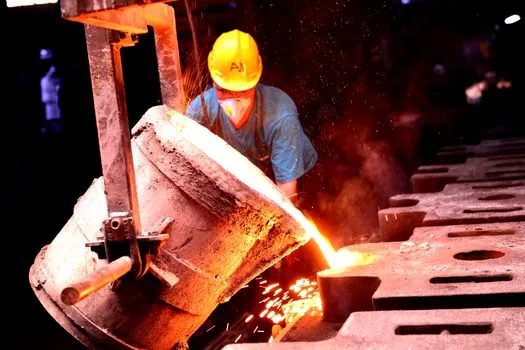
Chinese cold-chamber magnesium HPDC platforms from suppliers in the 400T-9000T clamp range dominate the current sourcing landscape, with documented footprints of roughly 100,000 square metres of manufacturing floor for tier-1 OEMs and lead times of 3-6 months for standard 400T-2000T cells, 6-9 months for 2000T-5000T cells, and 9-12 months for ultra-large 5000T-9000T cells [S1][S3]. Documented quality systems for these lines include ISO 9001 and IATF 16949, with CMM, X-ray porosity inspection and material/leak testing described as standard workflow steps on supplier engineering pages (2025-08) [S3].
For plants already running a zinc die casting machine line, the leap to magnesium is non-trivial: a zinc hot-chamber cell shares almost no hardware with a magnesium cold-chamber cell, and the safety envelope (cover gas, melt-handling, fire suppression) is qualitatively different, so do not assume the same crew or the same work instructions transfer.
Two trackable signals to watch over the next two quarters: (1) whether Chinese tier-1 suppliers formalize 9000T+ cold-chamber magnesium cells into catalogue offerings rather than one-off builds, and (2) whether vacuum-assist and semi-solid rheocasting options for magnesium become standard catalogue items at the 2000T-5000T clamp band, given their current optionality on supplier spec sheets (2025-08) [S3][S6].
Related analysis: Magnesium Die Casting Machine Spec Map for Hardware Plants.