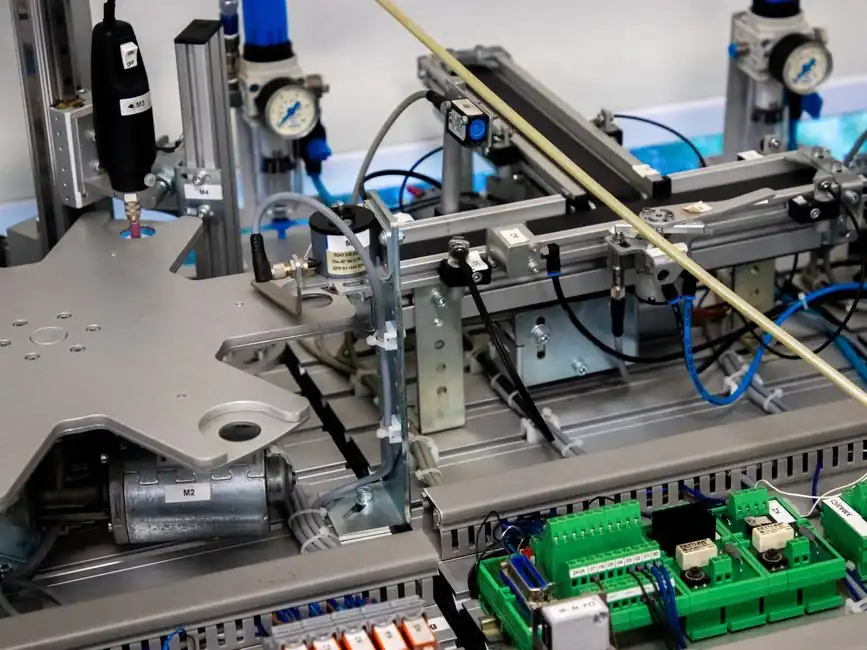
Electronics housing programs running thin-wall magnesium parts between 0.8 mm and 2.0 mm typically settle on a cold-chamber magnesium die casting machine rated 400-1600 kN clamping force, with 5-7 m/s intensification velocity and shot weights in the 0.6-1.2 kg band [S1][S2].
AZ91D and AM60B are the two alloys most frequently qualified for laptop covers, phone frames, and power-tool shells; the AE family (AE42, AE44) and AM50 enter when the housing sits near a heat source above 120°C [S1]. China's magnesium resource base continues to anchor global supply, and cold-chamber builds are the default for these thin-wall electronics parts [S2].
Why Cold-Chamber Beats Hot-Chamber for Electronics Housings
Cold-chamber machines are the industry default for magnesium electronics housings because Mg melt reacts with the iron-based shot sleeve at hot-chamber temperatures, raising iron pickup and corrosion risk in the finished housing [S2][S3]. Cold-chamber cells keep the melt in a dosing furnace and inject it into a separate steel sleeve, which holds iron contamination at the typical Mg-alloy target of 50 ppm or less [S3].
Vacuum-assist cold-chamber is increasingly specified for 0.8 mm laptop and tablet walls: the vacuum die casting machine configuration reduces porosity in the final part, which matters for EMI shielding and for tight flatness on display-side surfaces. Sourcing data for 2026 lists integrated HPDC and vacuum systems as standard offering on 400-5000 t magnesium-capable lines from major Asian builders [S2].
Clamping Force, Shot Weight, and Intensification Map
For phone and tablet frames with projected area around 200-400 cm² and thin-wall flow length of 250-400 mm, a 600-900 kN cold-chamber machine with 0.8-1.5 kg shot capacity is the common match [S1][S2]. Laptop bottom covers (300-600 cm²) and 2-in-1 chassis push that envelope to 1250-1600 kN with shot weights in the 1.5-2.5 kg range.
Intensification pressure in the 60-100 MPa band and plunger velocity of 5-7 m/s during second phase are the two figures that decide fill on a 0.8 mm wall; drop below 4 m/s and you see cold-flow lines, run above 8 m/s and oxide entrainment starts to fail leak tests on a sealed housing [S1]. For general die casting machine selection logic beyond magnesium, the same intensification-and-clamping tradeoff applies to aluminum work and is covered in the die casting machine reference page.
Alloy Selection for Housing Thermal Loads
AZ91D is the workhorse: castable, dimensionally stable, and adequate for most handheld and laptop skin temperatures below 100°C. AM60B and AM50 buy back ductility for snap-fit bosses and for drop-test survival, with a tensile elongation gain of roughly 50-80% over AZ91D at the cost of about 10% lower yield strength [S1].
Where the housing is a heat-sink adjacent to a CPU, LED driver, or wireless charging coil, AE42 and AE44 become relevant. Research on rare-earth-modified Mg die casting alloys shows that AE44 retains useful creep strength up to 150-175°C, well above the 120°C ceiling of conventional AS-series alloys [S1]. This matters for set-top boxes, gaming console chassis, and industrial panel PCs where the magnesium skin is also the structural heat spreader. For parts where aluminum would be considered instead, the aluminum die casting machine reference is the right starting point.
Cycle Time, Vacuum, and Cell Layout for Electronics Volumes
Realistic cycle times on a 900 kN cold-chamber magnesium cell with a 2-cavity laptop-cover die sit in the 60-90 second band once vacuum, spraying, and robotic extraction are factored in [S1][S2]. Vacuum-assist adds 5-10 seconds per cycle and a chamber leak-check step, but it removes the post-machining and impregnation operations that an electronics OEM usually does not want in-line.
For programs under 50,000 housings per year a single 600-900 kN cell is usually enough; above that, a tandem layout with one 1600 kN primary and one 400-600 kN secondary for small inserts is the common pattern. Compared to a gravity die casting machine build, cold-chamber magnesium HPDC gives you 2-3x cycle-time compression and far thinner wall capability, at the cost of higher tooling investment.
Surface, Corrosion, and EMI Shielding Constraints

Magnesium housings for electronics need a chromate-free conversion coating or an anodized layer because bare Mg fails salt-spray testing within hours [S1]. Iron contamination above 50 ppm, copper above 100 ppm, and nickel above 50 ppm all accelerate galvanic corrosion when the housing contacts a copper heat spreader or steel fastener, so melt-handling discipline and clean tool steel are non-negotiable.
For EMI, a magnesium housing at 1.0-2.0 mm wall provides 40-60 dB attenuation in the 30 MHz-1 GHz band typical of Wi-Fi and cellular testing, which is usually adequate when paired with a conductive gasket. If the design needs better shielding than that, move to 2.0-2.5 mm wall or to a magnesium-aluminum laminate, both of which push the cell into the 1250-1600 kN band discussed earlier. Programs that need corrosion-grade and cosmetic surface in the same housing often route the part from a cold-chamber HPDC cell straight into CNC machining and a robotic coating line, as documented in current 2026 supplier capability lists [S1][S2].
Sourcing, Standards, and Qualification Gates
China-based magnesium die casting suppliers are the dominant source for electronics volumes, with published capability ranges from 400 t to 5000 t clamping force, magnesium cold-chamber HPDC, and integrated CNC machining on the same site [S1]. When qualifying a vendor, ask for the actual Mg-alloy it runs, its iron-control practice, and whether the machine is dedicated to Mg (cross-contamination from Al melt is a common field failure). Spec sheets from 2020-2026 align on cold-chamber magnesium builds being the mainstream cell for electronics housings, with vacuum and semi-solid rheocasting options layered on for premium programs [S1][S2].
For a sibling spec map that covers the same machinery class but for higher-temperature automotive powertrain work, the automotive magnesium die casting machine selection guide is the natural next read; for lighting fixtures where the housing is also a heat sink, the lighting-fixtures magnesium die casting machine spec page lines out the same clamping-force logic under a different thermal envelope.
Track two signals over the next two quarters: (1) whether Chinese OEM cells are quoting 1600-2500 kN magnesium cold-chamber machines as standard catalog items rather than custom builds, and (2) whether AE44 / AM50 vacuum-cell pricing drops within 10% of AZ91D cold-chamber pricing, which would move alloy selection on electronics skin-temperature programs.