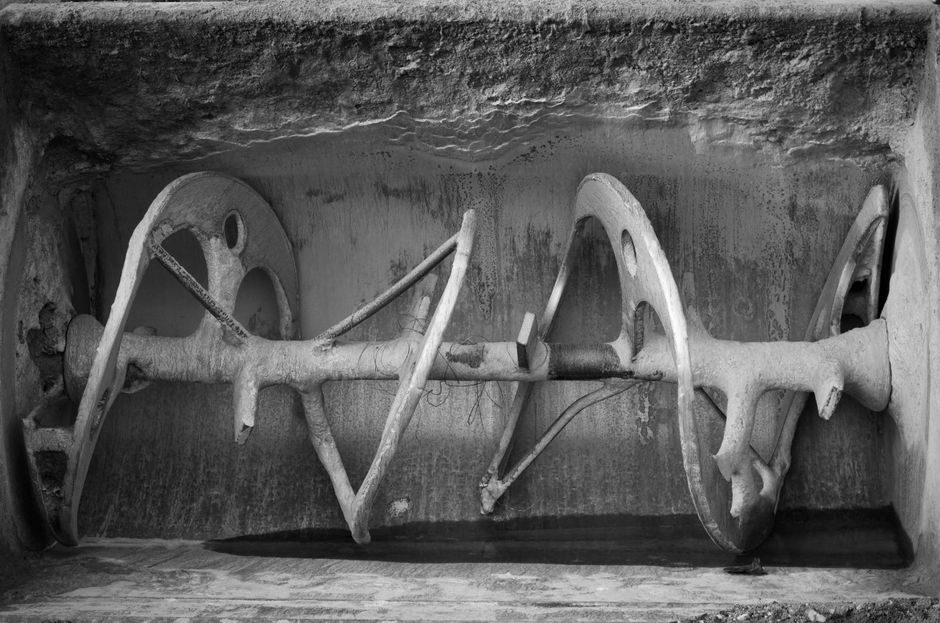
Magnesium die casting machines and squeeze casting machines solve overlapping but materially different problems, and the wrong pick shows up as porosity, hot-tearing, or a tonnage class the foundry cannot justify. The 2026 vendor line-up spans cold-chamber Mg cells from 200 to roughly 1200 tonnes clamping force, and vertical/horizontal squeeze casters delivering 50–150 MPa direct or indirect pressure on slow-shot metal [S5][S8].
Squeeze casting is also called liquid-metal forging (liquid die forging) and splits into two process families: direct squeeze casting, where pressure acts on the full free surface of the melt like forging, and indirect squeeze casting, where pressure is transmitted through a runner like die casting. Indirect squeeze castings sit between high-pressure die casting and direct squeeze on internal quality, which is why buyers use the process for safety-relevant structural Al and Mg parts [S8]. Magnesium die casting machines, by contrast, are purpose-built for low-density Mg-alloy housings where throughput dominates the unit-cost equation, with China's Mg reserves cited as the primary supply reason for the technology stack [S6].
Process Fundamentals: High-Speed Injection vs Slow-Shot Pressure
Magnesium die casting is a high-speed, high-pressure die casting variant running melt velocities typically in the 30–100 m/s range at the gate, with a Mg-rated shot end, an SF6 or SO2 cover-gas-protected melting cell, and a closed-loop injection curve (PPCS-style multi-slide control) that monitors shot velocity and switch-over position every cycle [S1][S2]. A modern cold-chamber Mg cell from vendors such as Yizumi and Shibaura Machine in 2026 ships with real-time injection-curve monitoring, servo-valve hydraulic control, and integrated die-temperature mapping that feeds back to the PLC [S2][S3].
Squeeze casting deliberately runs the opposite regime: slow shot speed, late-stage intensification, and pressure held on the solidifying melt until the casting reaches near-eutectic solidification. Direct squeeze casting is a vertical or horizontal press where the upper punch applies 50–150 MPa on a metered melt charge; indirect squeeze casting uses a die-casting-style shot sleeve and runner, then intensifies pressure inside the cavity through a booster [S8]. The result is a casting with mechanical properties approaching gravity-cast or forged material, with the as-cast part often used without secondary impregnation — the structural payoff comes from forcing shrinkage porosity closed while the alloy is still feeding.
Machine Architecture and Clamp Force Envelope
Magnesium die casting machines are built in both hot-chamber and cold-chamber variants. Hot-chamber Mg machines exist but are constrained by Mg melt attacking iron-bearing components at 640–680 °C, so the dominant 2026 production class is cold-chamber cells with shot weights from roughly 1 kg up to 15+ kg, tied to a 200–1200 tonne clamping platform [S2][S5]. Cold-chamber Mg cells from Techmire-class builders add multi-slide die geometry, allowing thin-wall phone-frame and laptop-housing parts to fill in a single shot cycle with shot monitoring per cavity [S1].
Squeeze casting machines are press-class equipment, not horizontal die-casting cells. Direct squeeze units use a vertical hydraulic press with a punch matched to the part footprint, platen sizes typically 600 × 600 mm up to 1500 × 1500 mm, and intensification rams sized for 50–150 MPa cavity pressure. Indirect squeeze machines reuse a horizontal cold-chamber die-casting frame, swap the high-speed shot end for a slower, intensifier-driven shot, and add a horizontal shot sleeve that can be tilted or held in a vertical orientation depending on the builder [S8]. Buyers in 2026 commonly see 800–2500 kN direct-press models for automotive knuckles and sub-frames, and 5000–25000 kN indirect units for larger Al suspension and EV battery tray components.
Selection Criteria: Throughput vs Porosity vs Mechanical Property

Use a magnesium die casting machine when the priority is unit-cost on thin-wall, high-volume Mg parts, the geometry is fill-limited rather than feeding-limited, and porosity in the 1–3% range is tolerable for the application. Cover-gas consumption, shot-end life, and die-cooling uniformity dominate the operating cost stack; 2026 OEM documentation emphasises closed-loop shot-curve control as the productivity lever, with shot velocity repeatability specified inside ±5% over a production shift [S1][S2].
Use a squeeze casting machine when the application is safety-critical or pressure-tight, the part wall is 5–25 mm, the alloy is a heat-treatable Al or Mg grade, and as-cast mechanical properties must meet forged-baseline targets (typical 2026 spec lines target 280–340 MPa UTS on heat-treated Al-Si-Mg indirect-squeeze parts versus 220–260 MPa for high-pressure die cast equivalents). Direct squeeze is reserved for simple, thick geometries (cylindrical hubs, brackets) where the punch footprint matches the part; indirect squeeze is the go-to for complex automotive structural castings where die cost must be amortised across high volume [S8].
Alloy, Temperature and Safety Envelope
Magnesium die casting machines are designed for AZ91D, AM60B, and AM50A Mg alloys at melt temperatures 640–680 °C, with the cold-chamber die casting machine body shared with Al cells but the shot end, furnace, and melt-handling area built to NFPA 484 / ISO 16250-type Mg safety rules — SF6/SO2 cover gas, melt-pool temperature interlocks at 700 °C, and water-free extinguishers on the cell [S2][S6]. Yizumi-class 2026 product sheets call out dedicated Mg-rated shot sleeves, steel components nitrided to limit Fe pickup, and flux-free melting pots as the baseline Mg cell spec [S2].
Squeeze casting is alloy-agnostic in principle: Al-Si, Al-Si-Mg, Al-Cu, and Mg alloys all run, typically at 660–720 °C for Al and 640–680 °C for Mg. The pressure-hold time is the critical process parameter: 30–180 s on a 10–25 mm wall part, dropping for thinner sections. Because pressure stays on the solidifying skin, die-life is the economic bottleneck, and squeeze dies are routinely run with H13 tool steel, surface treatments, and intensified cooling to survive the longer thermal cycle [S8]. For high-pressure die cast aluminum work in the same plant, see the aluminum die casting machine reference for the contrasting high-speed Al cell.
Comparison Table: Mg Die Casting vs Squeeze Casting on Decision Criteria

Four criteria separate the two platforms in a 2026 buying decision. Throughput: Mg die casting runs 50–200 cycles/h on small parts; squeeze casting runs 3–15 cycles/h because of the slow shot, pressurise-hold, and longer die open time. Porosity: Mg die casting lands at 1–3% microporosity concentrated near hot spots; squeeze casting targets below 0.5% volumetric porosity with directional solidification under pressure. Mechanical property: HPDC Mg typically delivers 200–260 MPa UTS, 130–170 MPa yield; indirect squeeze Al-Si-Mg in T6 delivers 280–340 MPa UTS, 200–260 MPa yield. Die cost: a four-cavity Mg die runs 60,000–250,000 USD; a single-cavity direct-squeeze die with the punch set runs 80,000–400,000 USD with longer lead time [S8].
The 2026 unit-cost crossover falls around 8,000–15,000 parts/year: below that line, squeeze casting's longer cycle cancels the property win; above it, the as-cast property and lower scrap rate make squeeze casting the lower-cost-of-quality choice for structural parts. Plants running both technologies — common in 2026 China EV Tier-1 and Tier-2 supply — use vacuum die casting machine cells for premium HPDC work as a middle option between standard HPDC and full squeeze, with vacuum pulling cavity gas below 50 mbar to cut porosity to roughly 0.3–0.8%.
Use-Case Fit and Where Each Technology Fails
Magnesium die casting machine is the wrong pick when the part must pass a 0.5% maximum porosity spec for pressure tightness, when the section thickness exceeds roughly 15 mm (the slow fill creates cold shuts and cold laps), or when the alloy is a heat-treatable grade that needs 100% soundness to develop T6 properties. It is the right pick for Mg consumer-electronics housings, instrument panels, steering-column frames, and 3C products where low mass and cosmetic surface dominate. [S1]
Squeeze casting is the wrong pick when cycle time must stay under 30 s, when the part geometry is too complex for direct-squeeze punch access, or when the foundry cannot justify the 2–6 month die-build lead time. It is the right pick for Al automotive knuckles, sub-frame nodes, EV battery tray cross-members, and aerospace structural Al-Mg-Sc parts where forged-grade properties are needed in near-net shape. Buyers comparing the gravity die casting machine class should note that gravity die casting delivers similar low-porosity castings but at lower mechanical properties and lower capital cost, sitting between sand casting and squeeze casting on the property ladder.
2026 Sourcing Signals and Standards
The 2026 vendor map clusters around three regions: Japanese precision builders (Shibaura Machine DC-R2 series for small-to-medium Mg and Al cells) [S3]; European precision builders (Techmire multi-slide with PPCS shot-curve closed-loop control) [S1]; and Chinese volume builders (Yizumi, Lanson, Weitenglong, Shengfeng) covering cold-chamber Mg cells from 200 to 9000 kN clamp force with standardised 2026 product pages in both Chinese and English [S2][S5][S6][S7]. Selection between them follows the usual rule: Japanese/European for tight shot-curve repeatability and OEM-grade automotive audit packages; Chinese for capacity, lead time, and price per kN clamp force.
Standards driving 2026 specifications include the Mg-safety cell layout (NFPA 484 in the US, equivalent national rules elsewhere), ISO 16250-series for die-casting machine safety, and the buyer-side quality documents (IATF 16949 for automotive, AS9100 for aerospace) that dictate shot-curve data logging and process-capability reporting. For cross-reference pricing on vacuum-housed premium HPDC cells used in the same plant as a squeeze caster, see the 2026 vacuum die casting machine cost guide, and for the wider 2026 aluminum die casting tonnage and shot-weight gates, the aluminum die casting machine 2026 guide is the natural companion read.
Trackable signals over the next two quarters: (1) any 2026 H2 release of a 9000–12000 kN indirect squeeze caster sized for EV battery tray single-shot production, and (2) 2026 Q3/Q4 NFPA 484 / ISO 16250 revision work that tightens Mg cell layout for foundries running both Mg die casting and squeeze casting on the same floor.