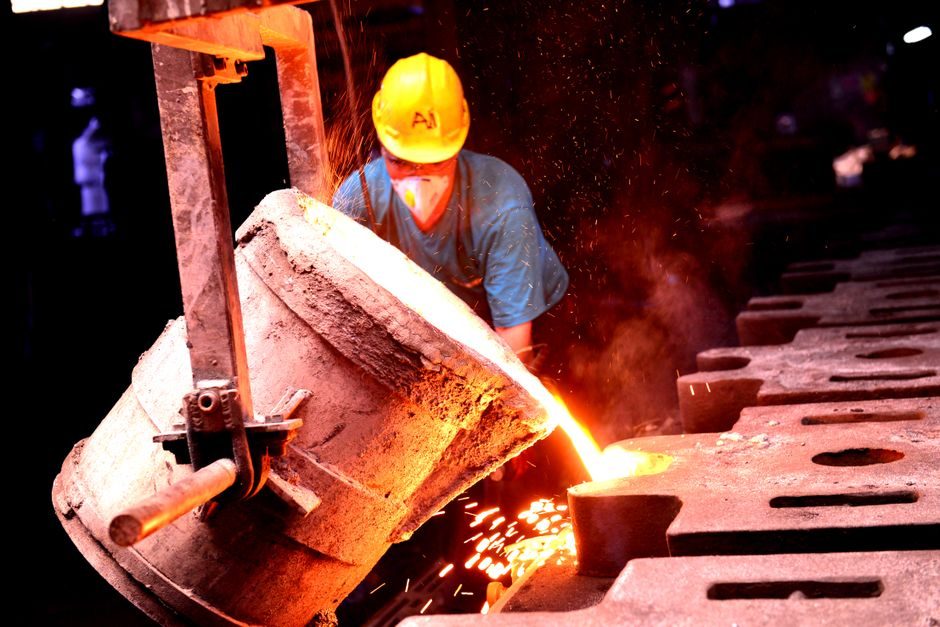
A 2026 aluminum die casting machine purchase is locked the moment three numbers are fixed: clamping tonnage (kN or tons), projected shot weight (kg of Al), and the alloy family the press will run — typically A380, A383, A384 or A390 for cold-chamber, with A13 (AlSi12) common for thin-wall housings [S4].
Real catalog price data from June 2026 puts 25-ton hot-chamber units at US$10,000-11,000 (1-set MOQ 2), 80-ton aluminum cold-chamber presses at US$17,000-22,000, and 38-40-ton hot-chamber lead/zinc machines at US$17,500-20,000 — all FOB China ex-works [S8]. Lead times on these entry-tier machines run 30-60 days, with vertical-integrated Chinese suppliers like Alumcasting handling mold design, casting and CNC in one P.O. since 2004 [S3]. Buyers who skip the tonnage-vs-shot check end up re-buying die sets within 18 months; this is the single most expensive gate in the spec.
Cold-Chamber vs Hot-Chamber: Which Process the Alloy Forces
Aluminum alloys melt at 580-660 °C, which is above the safe iron-pot operating window of a hot-chamber machine — so aluminum die casting is almost universally a cold-chamber process; hot-chamber units in the 25-40 ton class are reserved for zinc (ZnAl4, Zamak 3/5) and leaded alloys [S8]. Ningbo Dongfang lists 80-ton aluminum cold-chamber presses with shot weights sized for A380 automotive housings and 25-ton hot-chamber units for zinc souvenir/promotional parts, confirming the process split is enforced by alloy chemistry, not buyer preference [S8].
The structural difference matters at install: a cold-chamber press needs a separate gas- or oil-fired holding furnace (500-900 kg Al capacity typical), a robotic ladle or shot sleeve loader, and intensified cooling water at 25-30 °C inlet to keep the shot sleeve from sticking. Buyers specifying a cold-chamber press for a 2-3 kg A380 structural bracket should plan for 80-160 ton clamp, 1.0-1.5 L shot sleeve, and a 200 kW holding furnace.
The Five Spec Gates That Lock the Press Class
Gate 1 — Clamping force: rule of thumb 60-80 kN per cm² of projected area for A380; an automotive transmission housing at 600 cm² projects needs 360-480 tons clamp, lifting the buyer into a 500-800 ton press class that single-machine catalogs rarely stock. Gate 2 — Shot weight: must be 1.3-1.5× the part weight to keep entrapped air and cold-shut risk acceptable; a 2.0 kg part needs a 2.6-3.0 kg shot capacity, typically a 75-90 mm shot sleeve stroke. Gate 3 — Tie-bar spacing: a 450-ton press with 560×560 mm tie-bar clearance takes a die block up to 520 mm wide — a hard limit buyers miss on refurbished units. Gate 4 — Injection pressure & velocity: real production data expects 600-900 bar intensification pressure for A380 thin-wall; presses without a two-stage intensifier cannot hold that profile. Gate 5 — PLC/HMI and real-time shot curve: 2026 specification language increasingly calls for a 10-inch HMI, Ethernet/IP or PROFINET fieldbus, and a shot-curve screen recording injection profile per cycle; the selection logic behind these five gates is the most common engineering failure when a press is sized only by tonnage. [S1]
Allied pressure on these gates comes from mold-side economics: tooling and die steel are typically 30-45% of the project spend, and 2026 tool-steel pricing remains elevated — buyers who lock the press class before the die steel quote end up re-cutting die sets when the H13/P20 grade price moves. The downstream tool & die steel cost curve directly drives whether a 200-ton or 450-ton press is the right size for a 24-month part program.
Options Lined Up Against 4 Decision Criteria
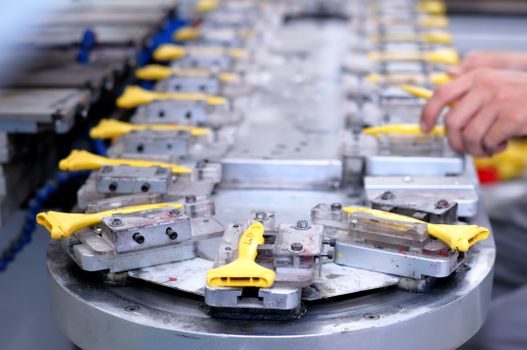
Buyers in 2026 typically weigh three machine classes: entry Chinese cold-chamber (80-160 ton), mid-tier European/Taiwanese (200-500 ton), and large-tonnage Japanese/European structural (800-1600 ton). A 4-criterion comparison from June 2026 catalog and supplier data: [S2]
Cost (ex-works, US$): entry 80-ton cold-chamber US$17,000-22,000 [S8]; mid-tier 350-ton from China-made-in-china catalogs US$50,000-150,000 [S9]; large-tonnage structural presses typically run US$300,000+ for a single 1-set MOQ [S9]. Lead time: entry 30-45 days, mid-tier 60-90 days, large-tonnage 120-180 days. Shot curve / process control: entry tier PLC with curve screen is optional, mid-tier usually standard Ethernet/IP, large-tonnage standard with closed-loop intensification. After-sales response in EU/NA: entry tier is email-and-spares (1-2 week parts), mid-tier has regional agents, large-tonnage has resident engineer contracts. The right pick depends on part weight and annual volume; an automotive Tier-1 running 500,000 A380 housings/yr is in mid-tier territory long before they hit the large-tonnage price band.
Alloy Family and the Process It Forces on the Press
A380 (AlSi9Cu3) is the default aluminum die casting alloy: 8.5-9.5% Si, 2.0-3.5% Cu, good fluidity at 660-700 °C shot, used for engine brackets, LED heatsinks, motor frames [S4]. A383 and A384 are Si-up variants (10-12% Si) chosen when the buyer needs extra fluidity for thin-wall (<2.5 mm) cosmetic parts. A390 (AlSi17Cu5) is hypereutectic and abrasive — die life drops 30-50% versus A380, so the press needs hardened die-steel tooling and frequent die-spray. A13 / AlSi12 (EN AC-44100) is the dominant European alloy for structural automotive parts where ductility and weldability matter; it casts at 580-620 °C and is the alloy Chinese suppliers handle at high volume for European OEM export.
For a 1-3 kg A380 part the cold-chamber press is the only correct choice; buyers who try to run aluminum in a hot-chamber zinc press will burn the gooseneck within a single shift. The gravity die casting alternative handles larger A356/A357 structural castings but at 10-30% higher piece price and lower dimensional repeatability; it is the right pick for castings above 8-10 kg, not for high-volume thin-wall aluminum parts.
Who the Press Is For — and Who Should Walk Away
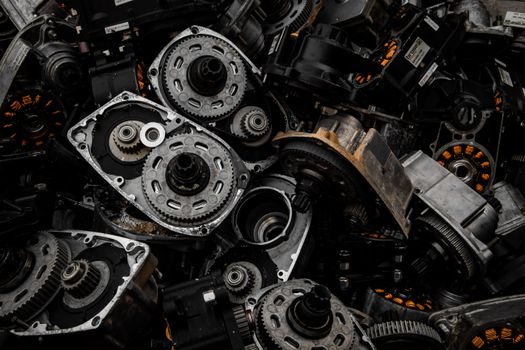
The 2026 aluminum die casting machine is for: Tier-1/2 automotive parts (housings, brackets, heat sinks) at 50,000-2,000,000 pcs/yr, LED and motor-frame shops, and electronics enclosures in A380/A383 [S4]. It is also a fit for one-stop custom job shops offering vertically integrated mold-to-CNC service, with suppliers like Bian Diecast and Alumcasting holding ISO 9001:2015 [S2] and advertising environmental/safety certifications [S1][S3], and APDC (American Precision Die Casting) running dedicated A380 aluminum cells with separate alloy stock [S4].
It is NOT for: structural castings above ~8-10 kg (use sand or gravity die casting instead), parts requiring weld-repair or heat-treatment on the as-cast part, low-volume prototyping below ~5,000 pcs/yr (3D sand printing or machined billet is cheaper), or parts needing vacuum integrity (use a vacuum die casting machine instead). The buyer who specifies a 200-ton aluminum press to run 800 pcs/yr of a 12 kg bracket has picked the wrong process — period.
2026 Sourcing Map and What to Verify on the Quote
The June 2026 supply map is heavily China-weighted: 80-90% of catalog entries for cold-chamber presses in the 80-500 ton class trace to Chinese manufacturers (Bian Diecast, Ningbo Dongfang, Alumcasting, CastingOD) [S1][S3][S7][S8]. US shops like APDC are still A380 specialists but typically buy presses from offshore OEMs [S4]. Made-in-China catalog entries for billet casting and structural presses show US$300,000 per 1-set MOQ for Shanghai AXD Heavy Machinery-class equipment, confirming large-tonnage is a 4-6× price step up from entry [S9].
Verify on every quote: (1) shot curve screen & data logging included, (2) two-stage intensification pressure ≥600 bar, (3) tie-bar clearance vs. your die block, (4) holding furnace and ladle robot quoted separately or as a turnkey package, (5) CE/UL electrical cabinet and 24 VDC safety circuit on the gate, (6) after-sales: response time in writing, spare parts kit, and resident engineer option. For buyers looking at the magnesium die casting variant the same gates apply but with SF6 cover-gas on the holding furnace and slower intensification to limit oxidation burn.
Next 30-60 day signal to watch: Chinese OEM Q3 2026 price lists on 200-500 ton cold-chamber presses — entry-tier kN/US$ ratio has been compressing 5-8% year-on-year through June 2026 [S8][S9], and the vacuum die casting alternative is now quoted at only 15-25% premium over standard cold-chamber on 200-ton platforms, narrowing the gap for buyers who need porosity under 1% on structural parts.