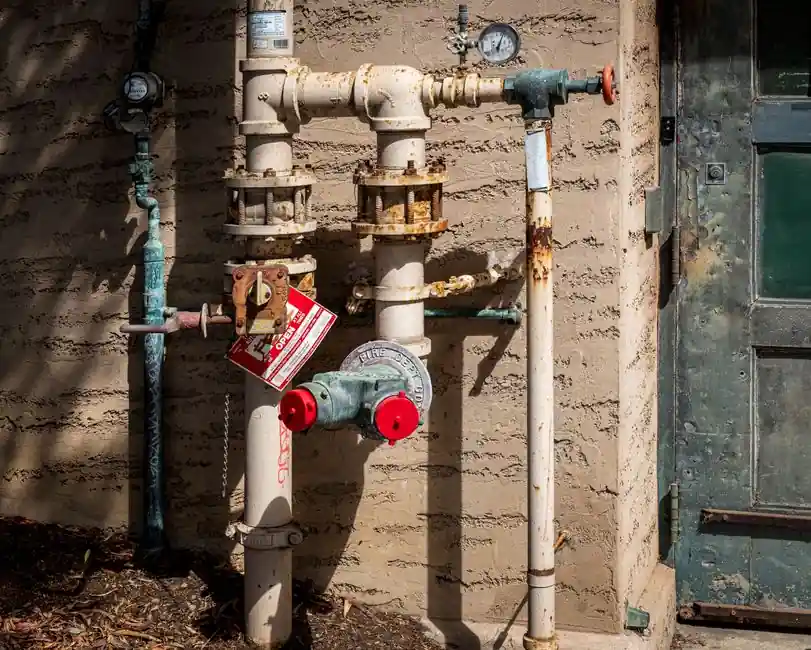
A 2026 survey of Chinese OEM listings on Made-in-China.com puts general-purpose electromagnetic flowmeters for conductive liquids at US$95-500 per piece FOB, with the lowest tier covering DN100-500 units at ±0.2-0.5% accuracy and 150:1 turndown [S1][S2]. Bulk buyers at 500+ pieces on the same Beijing-based line (trademark BJZRZC) reach US$85-95/pc, roughly an 18-26% discount versus the 1-99 piece tier [S2][S4].
Published FOB ranges for compact DN15-100 sanitary-style digital units sit at US$100-500 with a 1-piece MOQ, while an older 2016-vintage hot-item listing from a Kaifeng manufacturer still quotes "Negotiable" 1-piece terms for comparison [S1][S3]. For a complete reference frame on the technology itself, see the electromagnetic flowmeter encyclopedia entry, and for the broader meter family, the flow meter overview.
What you actually pay: 2026 FOB price bands by size and accuracy
The headline price for a Chinese-made electromagnetic flowmeter is tightly clustered: DN10-DN3000 general-purpose units with ±0.2-0.5% accuracy and a 4-20mA + HART output list at US$85-115/pc in tiered FOB pricing, breaking to US$85 at 500+ pieces [S2][S4]. Compact digital DN15-100 liquid units (water, beer, milk service) list at US$100-500 across the same 1-piece MOQ entry point, with the spread driven by liner material and sanitary fitting grade rather than bore [S1].
Physical mass is a useful sanity check: a DN100-500 process-grade meter in the BJZRZC E8000 family ships at approximately 2 kg, with 220 VAC + HART power and 5-90% relative humidity rating, signalling a converter-integral design rather than a remote-transmitter architecture [S2]. General-purpose electromagnetic flowmeters on the platform are spec'd for DN10-3000 pipe coverage, so the same housing family scales without a step-change in electronics cost [S4].
Cost drivers that move the headline number
Four levers decide where a quote lands inside the US$85-500 spread: liner/elastomer selection (EPDM, PTFE, hard rubber), electrode material (316L stainless, Hastelloy, titanium, tantalum), bore size, and signal-output stack (HART, Modbus RS485, pulse/frequency) [S2][S4]. A PTFE liner with Hastelloy electrodes can roughly double the meter body cost versus a hard-rubber/316L build at the same DN, because both the liner and the electrode pair are wetted and corrosion-limited. The CA Series from Yokogawa explicitly targets "high accuracy, high stability" with the Total Insight lifecycle concept, an indication that premium-tier meters carry diagnostics firmware and verification tooling, not just better metallurgy [S7].
Output protocol is the second biggest swing factor. The E8000 line publishes 4-20mA, 0-10mA, pulse/frequency, RS232, and RS485-Modbus as a single configurable option block, so the protocol premium is small for a domestic build but rises when a HART 7 device-descriptor (DD) and FOUNDATION Fieldbus or PROFIBUS PA stack are added, since those need certified protocol licences [S2]. For a side-by-side look at how electromagnetic units compare with mass-flow alternatives in the same liquid-service window, the Coriolis flowmeter reference outlines where Coriolis carries a higher unit price per DN for low-flow conductive service. Protocol guidance itself is covered in the electromagnetic flowmeter page.
Volume tiers, MOQ, and payment terms in 2026
Quantity discount curves on the platform are explicit, not negotiable. The E8000-style listing steps 1-99 pcs at US$115, 100-499 at US$110, and 500+ at US$95, while a parallel "Electromagnetic Flowmeter" listing from the same supplier steps 1-99 at US$100, 100-499 at US$95, and 500+ at US$85, a clear sub-100-dollar breakpoint at pallet-quantity orders [S2][S4]. Surveyed listings on S2 and S4 both start at 1 piece, and their published FOB prices show the lowest quantity tier priced about 18-21% above the 500+ piece tier on the same line (S2: US$115 vs US$95; S4: US$100 vs US$85).
Payment terms lean on T/T and L/C, with PayPal and Western Union commonly accepted on single-piece prototype orders; trade-capability flags list North America, South America, Eastern and Western Europe, Southeast Asia, Africa, Oceania, the Middle East, and Eastern Asia as covered export markets on the BJZRZC entry, a useful indicator of the supplier's logistics footprint [S2]. Lead time in the public listing is not stated, but the 220 VAC + HART, 5-90% RH, dot-matrix LCD configuration suggests a build-to-order converter assembly rather than a stocked SKU [S2].
Who this pricing applies to, and who should look elsewhere
The US$85-500 band is realistic for water, wastewater, fuel-oil, and clean conductive-liquid service on DN10-DN3000 lines, where the process is non-explosive and the fluid is benign to 316L or EPDM [S2][S4]. It is not realistic for hygienic/beverage skids (look at the DN15-100 sanitary tier at US$100-500 with tri-clamp process connections), for custody-transfer billing (which needs OIML R49 or MI-001 type approval and a verified accuracy class, both of which are not advertised in these listings), or for high-temperature slurries above the elastomer limit [S1][S2].
Buyers specifying ATEX or IECEx Zone 1 also need to budget separately: a Zone 1 certified housing, intrinsically safe electrode terminals, and a certified HART barrier stack will lift the price out of the surveyed band, and not every supplier on a general-purpose listing will hold the certificate. Yokogawa's CA Series is one example where lifecycle and verification features are explicitly designed in, but a CA Series sits well above the Chinese OEM band, so the Coriolis flowmeter vs. electromagnetic decision should be made on fluid conductivity, temperature, and turndown, not headline cost [S7].
Decision criteria: electromagnetic vs. competing liquid meters
Three selection criteria decide whether an electromagnetic flowmeter is the right tool: fluid conductivity (electromagnetic units need a conductive path, typically above 5 µS/cm), flow profile cleanliness (electromagnetic has no moving parts and tolerates slurries better than turbine or vortex), and accuracy stability over turndown (a 150:1 turndown, as published on the E8000, holds ±0.2-0.5% across the range, versus vortex precession units that list at US$300-500/pc for the same 1-piece MOQ entry but degrade faster at low flow) [S2][S4]. Cost per DN, in 2026, still favours electromagnetic on DN100 and above for conductive water service, because the wetted body is the dominant cost and the E8000 family scales linearly to DN500 at the same electronics price [S2].
For DN50 and below on low-conductivity organics, or where mass-flow accuracy (density-corrected) is the spec, Coriolis carries a higher unit price but removes the conductivity gate entirely. Procurement teams running multi-vendor frameworks typically stock electromagnetic at DN100-500 for clean water/wastewater and reserve Coriolis for chemical-feed skids where density measurement is part of the control loop. Related cross-category sourcing context, including how Chinese OEM price bands look for actuators and other process equipment, is laid out in the Pneumatic Actuator Suppliers: 2026 Sourcing Map, Spec Bands, and Certification Gates reference.
Total cost of ownership, not just purchase price
Installed cost is typically 1.5-2.5x the FOB unit price once you add engineering (gaskets, grounding rings, straight-pipe run per ISO 5167 inlet/outlet requirements), cabling (HART needs a 250 Ω loop resistor and shielded twisted pair, separate from RS485), and commissioning (loop check, zero calibration in-situ) [S2]. For water service on DN100-500 with a PTFE liner, the meter body itself is roughly 60-70% of the installed cost, electronics another 15-20%, and installation/commissioning the remainder, which is why the cheapest FOB quote is rarely the cheapest installed project.
Operating cost is dominated by power (a 220 VAC integral-converter unit draws single-digit watts continuously) and by periodic verification, which is where Yokogawa's Total Insight concept (built-in verification routines, lifecycle diagnostics) earns its premium on the CA Series: a verified-in-place meter can stay in service across two or three recertification cycles without a shop-return, materially cutting lifetime maintenance [S7].
Specifications and standards that anchor the price
Across the surveyed 2026 listings, the recurring accuracy band is ±0.2-0.5% of rate, with a 150:1 turndown ratio on the E8000 and a published 4-20mA + HART output at 220 VAC power; pipe coverage spans DN10-3000 in the general-purpose tier and DN15-100 in the sanitary tier, with operating humidity rated at 5-90% RH non-condensing [S1][S2][S4]. Yokogawa's CA Series bulletin (Bulletin 01E21A01-01EN) is the open technical reference for "Total Insight" lifecycle design, with more than half a century of field lineage cited as a stability claim rather than a dated standard [S7].
For procurement teams that need an external anchor on electromagnetic-flowmeter principles, the electromagnetic flowmeter page collects the operating principle, wetted-material guidance, and protocol stack used by the BJZRZC E8000 and similar lines. Buyers running pharmaceutical or food-grade projects should read the platform's Pharmaceutical Equipment Suppliers: 2026 China OEM Map, Price Bands, and Category Gates reference before locking a DN15-100 sanitary-meter vendor, because hygienic certification, not price, is the real gating criterion at that scale.
Trackable signals for the next 90 days: any new E8000 or equivalent listing crossing the US$80 floor at 500+ pieces, and any Yokogawa CA Series distributor push that re-prices the high-accuracy tier relative to the Chinese OEM band. Both would be material for procurement teams that have already placed 2026 framework orders at the surveyed FOB levels.