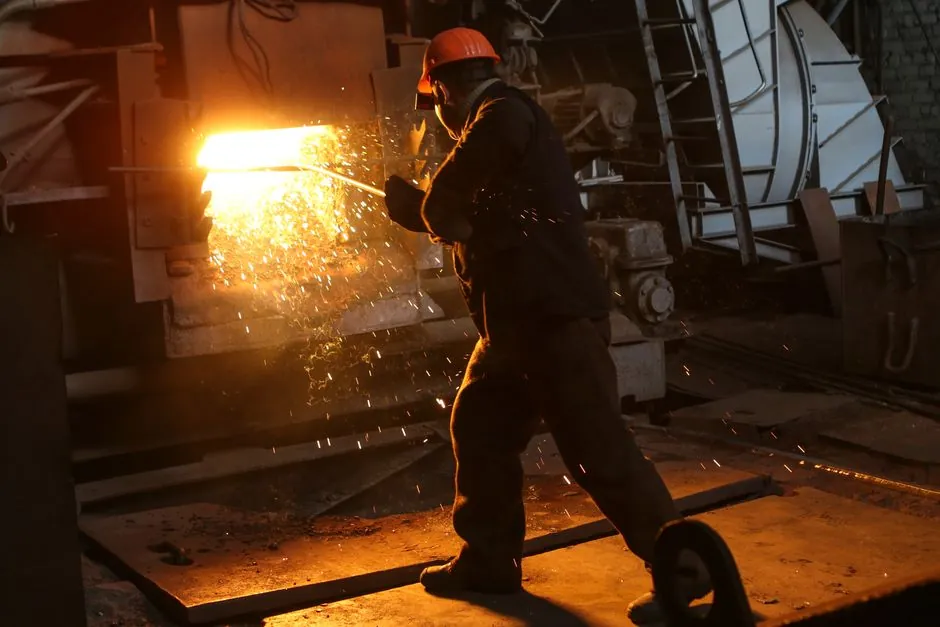
A thermowell is a pressure-retaining socket that isolates and protects a temperature sensor from the process, and its selection is governed by four hard gates: mechanical wake-frequency, corrosion compatibility, response time, and installation geometry [S1]. A wrong gate fails in weeks, not years, with documented failure modes spanning fatigue, excessive bending stress, over-pressure rupture, corrosion pitting, and erosion at the tip [S1].
The most common process-industry configuration is a threaded or flanged 6 in immersion-length thermowell in 316 stainless or brass, with the Johnson Controls TE-6300W-101 (brass, 2-piece, 6 in) and the matching TE-6300W-102 (stainless steel) covering the HVAC and light-industrial envelope that most spec sheets actually call out [S2]. When the process exceeds the envelope, the selection moves to flanged, heavy-bar thermowells sized by ASME PTC 19.3 TW, not by the sensor catalogue.
Wake-frequency calculation is the first gate, not the last
ASME PTC 19.3 TW is the standard method for thermowell mechanical design and is the document engineers cite when an inspector asks why a particular stem profile was chosen [S1]. The check compares the calculated natural frequency of the immersed stem against the worst-case vortex-shedding frequency from the flowing process, with a documented safety factor, typically well above 1, applied to the ratio. A stem that passes the static pressure and bending checks can still fail in service if the wake-frequency ratio is under 1.0, because resonant vortex shedding fatigues the stem at the root thread or weld.
For a clean, single-phase liquid in a 4 in line at 2–4 m/s, a 6 in thermowell with a 0.260 in tip diameter and 0.500 in root diameter in 316L stainless is a workable starting point; the same 6 in length with a 0.375 in tip in a heavier pipe class quickly drops the natural frequency, which is why heavy-bar thermowells are short or stepped [S1]. Engineers should treat the calculation as a hard gate and run it before settling on length and tip diameter; the in-line engineering reference in the SourceBySpec thermowell assembly encyclopedia entry cross-walks the input variables.
Stem profile: stepped, tapered, straight, or reduced-tip
Four stem profiles dominate the market, and each one trades a different pair of performance variables [S1]. A straight-shank thermowell is the cheapest and the strongest in bending, but the uniform large mass at the tip slows thermal response. A reduced-tip (small tip, large root) design cuts tip mass and speeds response, at the cost of a higher stress concentration at the step.
A tapered stem gives a continuous transition between root and tip and is the common compromise for moderate velocities. A stepped profile (two or three discrete diameter changes) is used where the wake-frequency calculation demands a larger root for stiffness while still asking for a faster tip; this is the typical profile on 6 in HVAC-class thermowells such as the Johnson Controls TE-6300W-101 and TE-6300W-102 [S2]. Process engineers building the comparison should score profiles on tip diameter, response time, root stiffness, and calculated natural frequency, because the worst combination is a small root with a long immersion.
Material selection is driven by corrosion, not by sensor
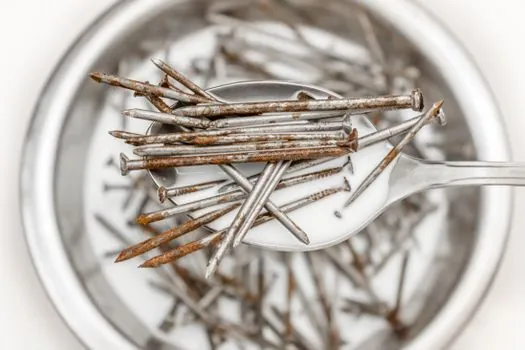
The sensor inside the thermowell sees the same process, but the thermowell itself is the pressure boundary, so its material is set by the process fluid, not by the instrument [S1]. 316 stainless covers most aqueous, food, and light chemical service; brass (as used in the TE-6300W-101) is acceptable for closed-loop hydronic, potable water, and HVAC systems where galvanic and chloride risks are low, and it costs less than stainless at the same length [S2].
For sour service, chloride-bearing streams, or strong acids, 316 is typically replaced with alloys such as Hastelloy C276, Monel 400, or titanium, with material upgrade driven by NACE MR0175 for sour H2S exposure where applicable. Stainless and brass are never mixed in the same pipe without dielectric isolation, because galvanic corrosion at the threaded interface will eat the brass well before the design life of the assembly. For more on material grade trade-offs in adjacent process hardware, the nickel alloy selection for rail piece shows how the same alloy logic travels across components.
Installation geometry: immersion length, process connection, lagging extension
Process connection options run from 1/2 in and 3/4 in NPT threaded (the standard on HVAC-class 6 in thermowells such as the TE-6300W-101) up to flanged 1 in, 1.5 in, and 2 in Class 150/300/600 for higher-pressure or larger-bore lines [S2]. A lagging extension is added when the pipe is insulated, so the threaded body sits clear of the insulation and heat-soak error is reduced. Engineers should pin the immersion length in the datasheet, not leave it as "per drawing", because the wrong length is the single most common field return on thermowells.
When a thermowell is the wrong choice
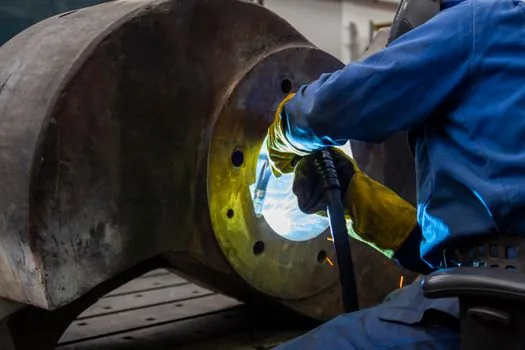
A thermowell is the wrong component in three common cases: very low flow where the well itself disturbs the stream, highly abrasive slurries where erosion of the tip is faster than the design interval, and high-vibration services where no stem profile passes the wake-frequency check even with a heavy-bar stepped design [S1]. In these cases, the alternatives are an in-line mounted sensor with no well, a thermowell with a non-standard coating (for example, PTFE or stellite), or a separate-flow bypass loop that drops the velocity seen by the well. Buyers who try to force a standard 316 stepped thermowell into a slurry or a 10 m/s gas line tend to replace it within twelve months; that cost is far higher than specifying a coated or bypass-mounted well up front.
Build the shortlist, then re-check the frequency
A defensible shortlist for most process plants starts with three to four parts: a 6 in 316 stainless stepped thermowell with 3/4 in NPT for general liquid service, a brass 6 in stepped thermowell for hydronic HVAC (the Johnson Controls TE-6300W-101 pattern), a flanged 316L heavy-bar thermowell for high-pressure steam, and an alloy upgrade (Hastelloy C276 or Monel 400) for corrosive service [S2]. Each candidate then needs the ASME PTC 19.3 TW calculation re-run with the actual line size, velocity, and specific gravity, because the wake-frequency result is sensitive to all three.
For a complementary view on how pressure-boundary components are specified in the same duty class, the RTD temperature sensor price and cost guide walks through the sensor side of the same measurement loop, and the SourceBySpec industrial valve encyclopedia entry covers the comparable pressure-boundary logic on the block-and-bleed side.
Detailed specification references: locking assembly.