Medical device adhesive specification hinges on three intersecting gates: ISO 10993-5 cytotoxicity or USP Class VI biocompatibility certification, survival of the device's terminal sterilization cycle, and a cure profile that matches the substrate and line throughput [S1][S2][S3].
The selector matrix is dominated by five resin families, cyanoacrylate, UV/visible-light acrylate, UV/visible-light epoxy, two-part epoxy, and thermal-cure epoxy, each covering a defined band of viscosity, bond strength, and chemical resistance [S1][S4][S5].
Decision Gates: Biocompatibility, Sterilization, Cure
ISO 10993-5 cytotoxicity testing and USP Class VI certification are the two biocompatibility protocols most commonly cited on medical-grade adhesive datasheets, and most major medical-grade product lines carry at least one of the two [S2][S3][S4]. Hoenle's medical-grade portfolio, for example, is qualified against ISO 10993 and/or USP Class VI across its cyanacrylate, epoxy, and acrylate grades [S4].
Sterilization compatibility is a hard filter, not a soft preference. EtO, gamma irradiation, E-beam, and autoclave each attack adhesives differently: gamma and E-beam tend to embrittle many polymers through chain scission and cross-linking, while repeated autoclave cycles (typically 121-134 °C steam) stress the glass-transition temperature of the cured bond line [S1][S4]. Adhesives specified for blood-contact and fluid-path devices must be validated against the same sterilization cycle the finished device will see, not a generic "sterilization resistant" claim [S3][S4].
Cure profile controls throughput and substrate latitude. UV and visible-light acrylates cure in seconds under a matched LED source, making them the default for high-volume disposable assemblies; two-part epoxies offer pot-life flexibility but require mix-ratio control; thermal-cure epoxies tolerate opaque substrates and high service temperatures but constrain line speed [S4][S5].
Resin Family Comparison on the Four Critical Axes
On a head-to-head read of the publicly listed medical-grade products, the four families separate cleanly. Cyanoacrylates (e.g., Cyanolit 203 TX at 1,300-1,800 mPa·s and Cyanolit 290 WR at 400 mPa·s) deliver near-instant moisture-cure bonds at room temperature on plastics such as PA, PC, ABS, and PVC, and carry ISO 10993-5 or USP Class VI certification on a per-grade basis [S4].
UV/visible-light acrylates (e.g., Vitralit 1703 at 85,000-130,000 mPa·s, Vitralit E-7041 T F at 2,100 mPa·s) bond PC, ABS, hard-PVC, PMMA, and PET variants with on-demand cure, and several grades are formulated to cure through UV-inhibited molded plastics using visible-light wavelengths [S4][S5]. UV/visible-light epoxies (e.g., Vitralit 1605 at 200-400 mPa·s) add low shrinkage, low CTE, and a high Tg, with ISO 10993-5 certification on the medical grades [S4].
Thermal-cure epoxies (e.g., Structalit 8801 at 30,000-45,000 mPa·s) carry the highest temperature and chemical resistance envelope and bond aluminum, stainless steel, glass, PEEK, and PUR, but require an oven step that constrains cycle time and excludes heat-sensitive substrates [S4]. Across the four families, viscosity spans roughly 400 mPa·s (water-like) to 130,000 mPa·s (non-flowing gel), which is the working range dispensing engineers size needle and valve hardware against [S4].
Substrate Latitude and Joint Design Constraints
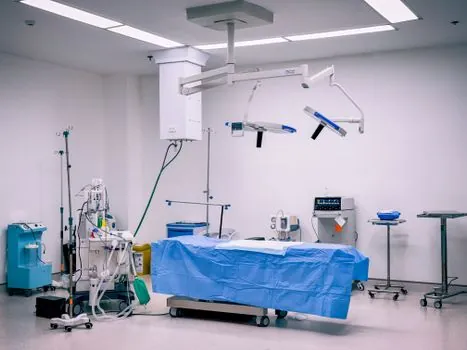
Medical devices pair dissimilar substrates more often than not: polycarbonate housings with stainless steel cannula, PMMA fluid paths with ABS cartridge shells, PEEK connectors with PVC tubing. The Coefficient of Thermal Expansion (CTE) mismatch across these pairs drives adhesive selection toward flexible or low-shrinkage systems, because rigid, high-modulus bond lines concentrate stress at the interface and crack under thermal cycling [S1][S4].
UV-inhibitor-loaded molded plastics (many medical-grade PCs and ABS grades include UV stabilizers) block the 365-405 nm peak wavelengths standard UV-LED systems deliver, which is why visible-light-cure acrylates (typically 430-470 nm) are specified for those substrates [S4]. For fully opaque assemblies, light cannot reach the bond line, so two-part or thermal-cure systems remain the only realistic path [S4].
Joint geometry matters as much as chemistry. UV cure depth is limited by the Beer-Lambert absorption of the resin plus any filler, so shadowed bond lines (deep potting, lap joints with no light path) under-cure and require a secondary heat or moisture stage [S5]. Cyanoacrylates wick into thin bond gaps but fail on heavily porous or acidic surfaces; epoxies tolerate gap fill but punish the line with mix-ratio and pot-life discipline [S1][S4].
Application-Specific Selection Paths
For diagnostic cartridges, point-of-care housings, and disposable fluid-path connectors, UV/visible-light acrylates at 2,000-130,000 mPa·s dominate because the cycle-time pressure on a high-volume disposable line is the binding constraint, and the bond does not have to survive long-term implant conditions [S4][S5]. The Incure CM-series cyanoacrylates and 5000-series UV/visible-light adhesives are explicitly positioned for this external-component scope, with per-grade EtO and gamma validation rather than generic claims [S5].
For wearable sensor housings, hearing aids, and patch-style monitors, the binding constraints are moisture and perspiration resistance plus low cure heat, both of which favor UV/visible-light acrylates with a secondary moisture-cure step for shadowed areas [S5]. Hoenle's Vitralit 1605 and similar UV-secondary-heat-cure epoxies cover this profile with ISO 10993-5 certification and high Tg for body-temperature service [S4].
For structural medical assemblies (reservoirs, filter cartridges, blood oxygenator housings, transducer bodies, syringe barrels), thermal-cure epoxies and high-viscosity acrylates carry the load because the bond must survive EtO or autoclave cycles, hold pressure on fluid paths, and resist aggressive disinfectants [S1][S4]. The two-part epoxy and thermal-cure epoxy families in the Structalit line bond stainless steel, aluminum, glass, and PEEK, and tolerate the high temperatures that autoclave sterilization imposes [S4].
What Medical-Grade Adhesive Selection Is Not For
Adhesives qualified to ISO 10993-5 or USP Class VI for external and disposable devices are not interchangeable with implantable-grade systems. The biocompatibility testing depth, extractables profile, and long-term hydrolytic stability requirements for an implant (typical indwell of 30 days or more) are materially stricter than for a 24-hour wearable or single-use disposable, and vendors separate the two product lines accordingly [S3][S5].
UV-cure chemistries are also not a fit for fully opaque or deeply shadowed assemblies: the light never reaches the bond line, the cure stalls at a low conversion, and the residual monomer leaches in service. A secondary cure mechanism (heat, moisture, or two-part backup) must be engineered into the joint for those geometries [S4][S5].
Finally, generic "sterilization resistant" claims on a datasheet are not a substitute for per-cycle validation. Gamma doses are commonly specified in the 25-50 kGy range, E-beam at similar absorbed doses, and EtO cycles at 37-63 °C with dwell times of several hours, and each cycle interacts with a given resin differently. The line of evidence a regulatory file needs is per-grade, per-cycle data from the adhesive vendor, not a portfolio-level marketing line [S1][S3][S4].
Standards, Documentation, and Engineering Handoff
ISO 10993-5 (cytotoxicity in vitro) and USP Class VI (systemic injection, intracutaneous, and implantation reactivity in animals) are the two biocompatibility anchors most often cross-referenced on medical-grade adhesive datasheets, and either or both typically appear on a single grade depending on the vendor's test program [S2][S3][S4]. Sterilization compatibility claims should reference the specific cycle the device will be exposed to, with EtO, gamma, and E-beam as the three most commonly validated modalities for single-use devices [S1][S4].
For design handoff, the adhesive vendor's technical datasheet (TDS) and material safety datasheet (MSD) are the minimum document set; for regulatory submissions, certificates of compliance (CoC) for ISO 10993 and USP Class VI testing, plus per-grade sterilization validation data, are the working set [S2][S4]. Vendor-published selection tables that line up viscosity, base chemistry, curing mechanism, substrate range, and certification status on a single page are the fastest path to a shortlist of two or three candidate grades for a given device architecture [S4].
The next trackable signal is the 2026 wave of visible-light-cure acrylate launches extending the 430-470 nm cure window to UV-inhibited medical plastics, which removes a long-standing limitation on PC and ABS housing designs; see how this intersects with broader industrial adhesive selection logic and how cure profile gates compare against industrial coating choices for the same medical housings.
For the relevant spec sheets and selection criteria, see industrial borescope.
Related analysis: Sand Cooler Selection for Hardware Manufacturing Foundries.