
Engineers specifying industrial adhesive for electronics in 2026 should anchor the decision on the failure mode being prevented, the thermal window the joint will see in service, and the substrate surface energy, not on the chemistry family label [S6]. A 2026 process-engineering framework ties adhesive type to four primary stress vectors: thermal load, electrical requirement (conductive vs. insulating), cure throughput, and environmental sealing [S5].
The candidate set in volume production is narrow: epoxy, silicone, UV/LED-curable acrylate, cyanoacrylate, and acrylic structural systems, each differentiated by Tg, dielectric strength, ionic purity, and reworkability rather than by marketing name [S1][S5]. For most consumer and automotive electronics the cut narrows further to UV-curable, epoxy, and silicone, with acrylics used in display and lens bonding where clarity and rapid fixture are required [S4][S5].
Map Adhesive Family to Failure Mode, Not to Resin Name
The first decision gate is the dominant failure mode: thermal runaway, mechanical drop shock, ionic dendrite growth, or optical misalignment, because each mode eliminates roughly half of the available chemistries before cure speed is even considered [S6]. Epoxy systems with high Tg are the default where structural strength and chemical resistance dominate, including die attach, housing bonding, and motor magnet adhesion at continuous service above 150 C [S5].
Silicone systems are specified where strain relief and wide-temperature flexibility matter more than ultimate lap shear: underhood automotive sensors operating across -40 C to +150 C, and potted battery modules where the adhesive must survive thermal cycling without cracking the housing [S4][S5]. UV/LED-curable acrylates dominate high-volume camera, display, and lens bonding because they cure in 1-3 s under controlled intensity, deliver 15-25 MPa bond strength on glass, and avoid the thermal exposure of oven cure [S4][S5]. For applications needing both mechanical bond and electrical path, silver-filled electrically conductive adhesives (ECAs) are the standard cold-solder replacement in flexible-circuit terminations and die attach on heat-sensitive substrates [S3][S5].
Substrate Surface Energy Sets the Real Bond-Strength Ceiling
UV-adhesive substrate compatibility data published in 2026 shows that bond strength tracks surface energy, not chemistry: FR-4 PCB delivers 15-22 MPa with plasma or chemical-etch pre-treatment at 44-48 mN/m, while liquid crystal polymer (LCP) at 30-35 mN/m only achieves 5-10 MPa even with plasma treatment [S4]. Glass display surfaces, above 70 mN/m, support the highest UV bond strengths at 18-25 MPa when paired with a silane primer [S4].
Surface contaminants from upstream processes, including mold release, machining oils, and fingerprint residues, can cut the achievable bond strength by 40-60% on production parts versus standardized test coupons [S4]. The practical engineering rule from 2026 process guidance is to validate lap shear and peel strength on actual production substrates with their real surface history, not on clean lab coupons [S4][S6].
Thermal and CTE Mismatch Drive Most Field Failures
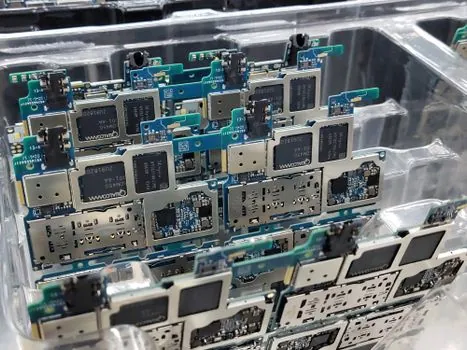
Datasheet continuous-service temperature is not the operating limit; CTE mismatch between adhesive and substrate creates shear stress during thermal cycling that drives delamination well below the rated service ceiling [S4]. A UV adhesive rated for 150 C continuous service can fail at 120 C if the substrate CTE differential is high, which is why automotive under-hood electronics default to silicone or filled epoxy with matched CTE, not to standard UV acrylates [S4][S5].
Application thermal windows published in 2026 are: consumer electronics -20 C to +60 C storage and -40 C to +85 C operating; automotive cabin -40 C to +85 C; under-hood sensors and ECU -40 C to +150 C; aerospace and avionics -55 C to +125 C with rapid thermal shock [S4]. High-Tg epoxies maintain structural integrity up to 200 C in continuous service where heat dissipation from power semiconductors is the binding constraint [S5]. For bonding heat sinks to CPUs and potting LED arrays, thermally conductive but electrically insulating grades are specified to draw heat away without creating a short-circuit path [S5].
Cure Speed, Ionic Purity, and Outgassing Are the Hidden Gates
UV-cure throughput in 2026 splits into three operating bands: 0.2-0.5 s ultra-fast, 1-3 s standard, and 5-10 s controlled, with the standard band delivering the best balance of consistent cure and low stress for most electronics assemblies [S4]. Ultra-fast cure trades shrinkage stress and incomplete cure in thick bondlines for maximum line speed, while controlled cure is preferred in optics and MEMS packaging where residual stress shifts alignment [S4].
For MEMS, optical, and RF assemblies, the binding constraints are NASA ASTM E595 outgassing (Total Mass Loss below 1.0% and Collected Volatile Condensable Materials below 0.1%) and ionic contamination limits of below 10 ppm each for Cl-, Na+, and K+ to prevent dendrite growth on PCBs [S4]. Silicone-free formulations are mandatory for optical surfaces and connector contacts, since silicone migration can poison later bonding and contact surfaces downstream [S4].
Comparison: UV, Epoxy, Silicone, and Conductive Acrylic on Decision Criteria
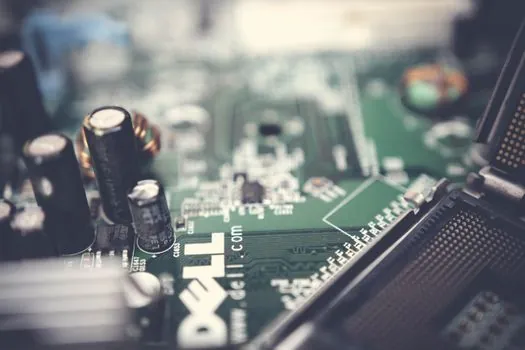
The four high-volume electronics adhesive families align against four decision criteria as follows. UV/LED-curable acrylate: 1-3 s cure, 15-25 MPa on glass, low ionic contamination, reworkable at 120-180 C with thermally debondable grades, but limited thermal ceiling around 150 C continuous [S4][S5]. High-Tg epoxy: highest structural strength, chemical and thermal resistance to 200 C, slower cure cycle, difficult to rework without thermal damage [S5]. Silicone: widest temperature range, best flexibility and strain relief, lower lap shear, longer cure unless specified as moisture-cure RTV [S4][S5]. Electrically conductive silver-filled adhesive: provides both mechanical bond and electrical path, used as cold solder in flexible circuits and die attach, but silver migration and higher cost limit it to specific contact-bonding tasks [S3][S5].
The rework dimension is decisive in 2026: thermally debondable UV grades enable disassembly at 120-180 C without damaging components, reducing scrap cost on server boards, avionics modules, and medical imaging systems by up to 80% compared to permanent bonding [S4]. Adhesives in industrial adhesive applications follow the same logic: spec by failure mode first, then by chemistry.
Limits, Failure Modes, and Common Misapplications
Three failure modes dominate 2026 field returns and each ties to a specific spec error. Adhesive failure at the interface traces to surface contamination or low surface energy, fixable by plasma or silane primer, not by switching to a stronger adhesive [S4]. Cohesive failure within the adhesive bulk at temperatures well below the datasheet ceiling traces to CTE mismatch and is only fixable by selecting a lower-modulus or filled system [S4][S5].
Ionic dendritic growth between traces traces to halogen or alkali contamination above 10 ppm and is fixable only by qualifying a low-ionic-purity grade, not by a different cure schedule [S4]. Optical misalignment in camera and display modules traces to cure shrinkage in ultra-fast UV grades and is fixable by stepping down to 1-3 s standard cure or by a controlled 5-10 s profile [S4][S5]. For surface-mount adhesive applications where soldering is the primary path, the SMA grade is selected as a hold-down agent rather than as the electrical joint, with cure profile matched to the reflow oven [S3].
Selection Checklist for 2026 Specs
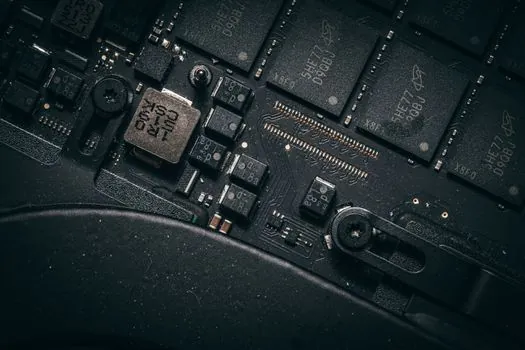
Define the failure mode first, the thermal window second, and the substrate surface energy third; only then select a chemistry family [S6]. Require substrate-specific lap shear and 90-degree peel data on production parts, not on lab coupons, and require ionic contamination and ASTM E595 reports for any grade entering MEMS, optical, or RF assemblies [S4]. Specify the rework path on the print, not in a separate engineering memo, so thermally debondable UV grades are used on high-value modules where 120-180 C disassembly cuts scrap cost by up to 80% [S4].
Track 2026 process-engineering guidance on UV-cure DOE: vary UV intensity in W/cm squared, dose in J/cm squared, and lamp distance, because the optimal cure point is rarely at maximum intensity [S4]. Use cyanoacrylate only for sub-gram fixturing and wire tacking where instant fixture and very thin bondlines dominate, and avoid it for any joint that sees thermal cycling above 80 C or sustained humidity, since standard ethyl-cyanoacrylate grades have limited toughness and moisture resistance [S1][S5]. For potting and encapsulation, balance filler loading for thermal conductivity against viscosity for flow around dense components, and confirm dielectric strength for any conformal coating that sits between high-voltage traces [S3][S5].
Engineers moving from a legacy soldered design to adhesive bonding should pilot on a non-safety module first, validate the full thermal cycle (-40 C to +85 C minimum, -40 C to +150 C for underhood), and qualify the ionic purity and outgassing reports before locking the BOM [S4][S6]. For broader engineering context on adjacent joining and coating decisions, see industrial coating selection for general fabrication, which applies the same failure-mode-first logic to surface treatment. Lab and pilot-line safety planning around solvent-borne and UV-curable chemistries is covered in eye wash station selection for laboratories.
For the relevant spec sheets and selection criteria, see industrial borescope, and industrial buzzer.