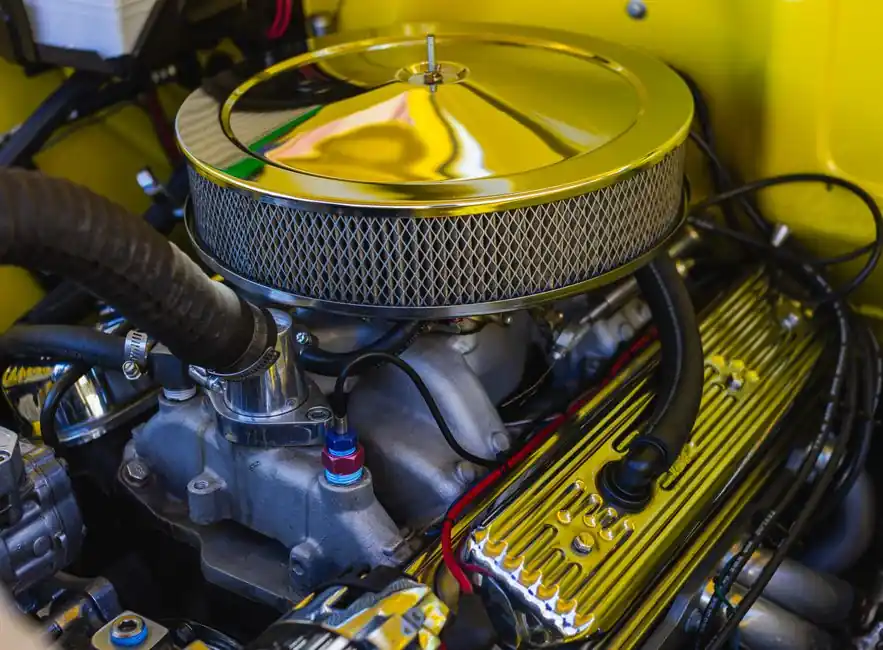
Automotive adhesive choices in 2026 resolve to four dominant chemistries, epoxy, polyurethane, structural acrylic, and silicone, mapped against substrate, cure mechanism, and EV/BIW duty cycle [S1][S3][S4].
Modern specifiers balance six concurrent gates: substrate family (steel, aluminum, CFRP, PP, PC/ABS), static and dynamic load, environmental exposure, cycle-time-driven cure mechanism, regulatory status (low-VOC, REACH), and IATF 16949 supplier evidence [S3][S4][S5]. The wrong call surfaces as e-coat blistering, thermal-cycle delamination, or windshield-bond creep, not as an obvious glue failure.
Chemistry Family Comparison: Where Each Resin Wins
Epoxy systems deliver the highest cohesive strength and chemical resistance in the automotive resin set, with one-part heat-cure grades specified for body-in-white structural bonding and chassis components, and two-part grades for room-temperature assembly where ovens are unavailable [S2][S3][S4]. Polyurethane grades trade peak modulus for elongation and glass-to-plastic adhesion, which is why direct-glazing windshield bonding and panel sealing still default to PU even when faster chemistries are available on the line [S2][S3].
Structural acrylics are the speed play: they fixture at room temperature, tolerate the light stamping oils that would defeat a one-part epoxy, and are widely used on trim, brackets, and magnet bonds, with fast-cure two-part acrylics increasingly viable for structural joints when paired with induction or infrared assist [S2][S3]. Silicone and modified silicone chemistries own the thermal-management and electrical-insulation zones around EV packs and high-voltage components, where continuous exposure to heat and dielectric stress would push epoxies past their glass-transition temperature [S1].
Substrate and Surface-Energy Gates
Low-surface-energy plastics, including PP, PE, TPO, and PC/ABS blends, now dominate lightweight interior and exterior trim, and traditional adhesives fail on them without surface activation, plasma or corona treatment, or a chemistry tuned for LSE substrates such as toughened acrylics, certain polyurethanes, and specialty LSE formulations [S8]. Epoxy bonds exceptionally well to metals and carbon-fiber composites, while polyurethanes are the practical default where plastic-to-plastic or plastic-to-metal flexibility is required [S4].
Dissimilar-material joints, aluminum to CFRP, magnesium to high-strength steel, and coated steel to polycarbonate, are where structural adhesives earn their weight, because mechanical fastening introduces galvanic and stress-concentration penalties that the bonded joint avoids when the chemistry is right [S4][S5]. The risk side is equally concrete: a polyurethane that is correct for a glass windshield can creep under sustained shear if misapplied to a load-bearing aluminum bracket.
Cure-Speed and Takt-Time Fit
High-speed automotive lines demand handling strength in seconds, not minutes, and UV-curable grades (often under five seconds of exposure) are the default for ADAS sensor active-alignment stations, where the camera or radar must be locked in place immediately after calibration [S2]. Fast-set epoxies accelerated by induction heating or infrared, and structural acrylics on lightly-oiled metal, are the credible options for body-in-white structural takt times without abandoning the strength and chemical resistance of an epoxy backbone [S2].
Robotic dispensing imposes its own gate: viscosity must stay in a tight window, the rheology should be thixotropic so the bead does not slump on vertical or overhead joints, the formulation must not needle-clog, and bulk packaging matters because every drum change is a line stoppage [S2][S5]. In-line vision inspection of bead continuity and width is now standard practice on lines that have already moved past the pilot stage, and adhesive suppliers that can supply dispense-validation data shorten the integration time measurably [S2].
EV Battery, Electronics, and Thermal-Management Zones
EV battery module assembly needs the adhesive to do two jobs at once, structural bond cell-to-pack and thermal interface between cell and cooling plate, because air gaps in this joint behave as insulators that defeat liquid cooling [S2]. Silicone and epoxy thermal interface materials with high thermal conductivity and low thermal resistance are the workhorse chemistry for pack-level heat spreading, while die-attach-grade epoxies handle the chip-to-substrate bond where low coefficient-of-thermal-expansion matters more than raw conductivity [S1].
Underfills and encapsulants around power electronics and ADAS ECUs lean on epoxy for mechanical support across thermal cycling, and silicone encapsulants where long-term flexibility and UV resistance dominate; conformal coatings on PCBs default to epoxy and acrylic chemistries selected for dielectric strength and chemical resistance rather than mechanical load [S1]. For context on how this kind of material-paired selection shows up elsewhere in vehicle spec work, see the EV pack cooling discussion in sand cooler spec paths for automotive iron foundries.
Compliance, Sustainability, and Supplier Evidence
Selection criteria documented for 2026 automotive programs explicitly require low VOC emissions, REACH compliance for European-bound vehicles, and conformance to OEM-specific environmental requirements, with growing demand for eco-friendly formulations that do not sacrifice structural performance [S4]. On the supplier side, IATF 16949 certification is the non-negotiable baseline, but the differentiator is the depth of on-site application support, the supplier's process-control maturity, and their willingness to co-engineer joint design rather than just ship pails [S5].
Specifiers are advised to audit the supplier's raw-material intake, mixing, QC lab, and packaging lines directly, because batch-to-batch consistency is rarely visible from a certificate, and a pilot-line delamination traced back to a dispensing variation, not the resin chemistry, is a common failure mode [S5]. Total cost of ownership, including technical support, lead time, and payment terms, should outweigh price-per-liter in the final award, since a cheap adhesive that triggers a recall is not actually cheap [S5].
Failure Modes and Process Pitfalls to Engineer Out
Documented failure patterns in 2026 automotive bonding center on three modes: e-coat and paint-oven degradation of an under-cured or wrongly-chosen adhesive in the BIW shop, thermal-cycle delamination of cell-to-pack bonds in EV modules when the dispense profile is off-spec, and creep or peel failure in glass or plastic bonds when a rigid epoxy is used in a flexible joint [S2][S3][S5]. Atmospheric plasma or corona treatment is the standard remediation for low-surface-energy plastics that would otherwise starve the bond of adhesion, and an IR-cure profile that is even a few degrees off can reset the entire takt time [S2][S5].
The four most common process gates a specifier should confirm before lock-in are substrate-and-chemistry compatibility (validated on production coupons, not lab samples), a documented cure profile that fits the available oven or IR/induction station, dispensing rheology proven on the actual robot, and a regulatory dossier that covers VOC, REACH, and the specific OEM environmental list [S3][S4]. Reference an adhesive chemistry overview for the underlying resin families and their standard test methods when building the spec sheet.
Sourcing, Standards, and What to Track Next
The credible standards to anchor an automotive adhesive spec include IATF 16949 for supplier quality management, REACH for chemical-substance compliance in Europe, and OEM-specific material and environmental lists that vary by program; for EV packs, additional electrical-insulation and thermal-cycling test data should accompany the dossier [S4][S5]. Suppliers with a dedicated automotive division and on-site field-engineering support are consistently rated higher in 2026 sourcing guides than catalog-only vendors, even when the latter post stronger lab numbers [S5].
Two signals worth tracking through the rest of 2026: wider substitution of one-part heat-cure epoxy in BIW by induction-accelerated acrylics on lines that have added induction stations, and the spread of bio-based or low-VOC polyurethane grades into direct-glazing and panel-sealing applications as REACH enforcement tightens; either shift will reset the shortlist for any program locking its adhesive BOM in the next two quarters [S2][S4][S8].
For the relevant spec sheets and selection criteria, see additive manufacturing material, and industrial borescope.