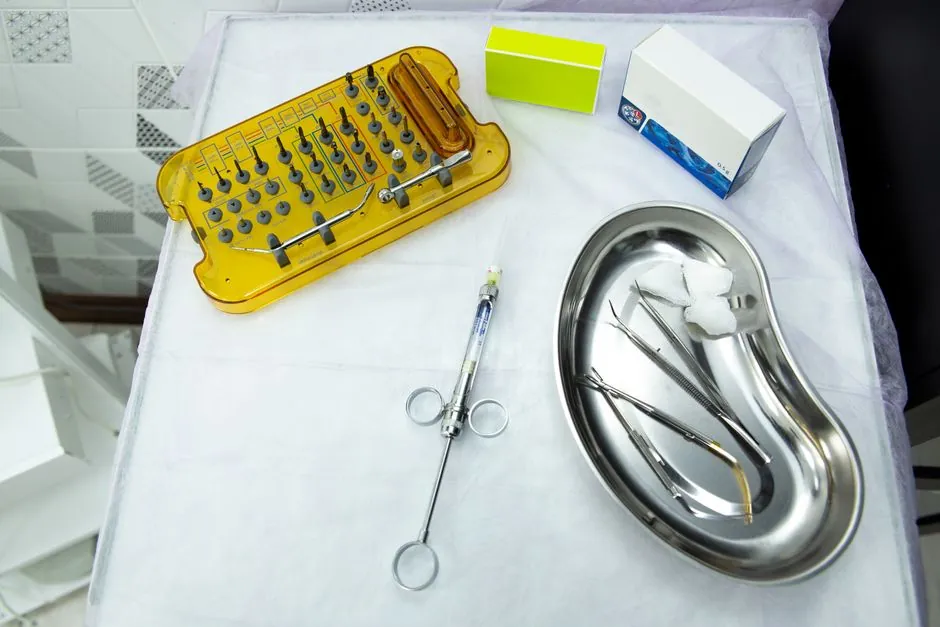
Within that metal majority, four alloy families carry the bulk of medical powder volume: commercially pure titanium and Ti-6Al-4V (Grade 5) / Ti-6Al-4V ELI (Grade 23), cobalt-chromium-molybdenum (ASTM F75, F799, F1537), austenitic stainless steels such as 316L (ASTM F138), and nickel-titanium (Nitinol) for shape-memory and superelastic applications [S1][S4][S6].
The selection logic is not driven by a single property. Engineers must cross-balance biocompatibility (ISO 10993), corrosion resistance in physiological chloride media, fatigue endurance under cyclic load, MRI compatibility, additive-manufacturability, and full material traceability from powder atomization to finished part [S2][S5]. A powder that prints beautifully on a Laser Powder Bed Fusion (LPBF) machine can still fail a regulatory submission if its chemistry certificate does not pin a recognized ASTM/ISO grade, and conversely a fully certified bar-stock alloy can fail to meet the fatigue life of a powder-bed lattice implant.
Why metals still dominate implant material share
Metals account for more than 80% of implantable device volume because the five required engineering attributes (high strength, high elasticity, high fracture toughness, combined high elasticity and stiffness, and high electrical conductivity) are difficult to reproduce together in ceramics or polymers [S1]. The FDA's framework for material safety treats biocompatibility as a risk-based evaluation against ISO 10993, with duration of body contact, tissue type, and fluid exposure dictating the testing matrix that each metal alloy must pass before clearance [S2][S5].
Austenitic stainless steels used for medical device parts contain 16 to 20% chromium and 6 to 14% nickel, the composition band that stabilizes the face-centered cubic phase and produces the passive Cr2O3 layer responsible for corrosion resistance in saline environments [S6]. Titanium and its alloys owe their biocompatibility to a similarly passive TiO2 surface film that spontaneously reforms within milliseconds if scratched, which is why cp-Ti and Ti-6Al-4V ELI are the default choices for orthopedic and craniofacial implants [S1][S4]. The reference data on metal powder consolidates how these alloy systems translate from wrought bar stock into atomized feedstocks.
The four medical powder alloy families and their grade identity
Selection begins by locking the ASTM or ISO grade, because the grade is what the regulator, the surgeon, and the sterilization process will all reference. The working shortlist for medical-device metal powder is: [S4]
Grade 23 ELI is the de facto powder choice for patient-matched LPBF cranial, spinal and acetabular cups because reduced oxygen improves ductility and fatigue life.
- Cobalt-chromium: ASTM F75 (cast Co-28Cr-6Mo for surgical implants), ASTM F799 (forged Co-28Cr-6Mo), ASTM F1537 (wrought Co-28Cr-6Mo and Co-35Ni-20Cr-10Mo). Cobalt alloys retain hardness and wear resistance above 500°C and are the standard for load-bearing articulating joint surfaces [S1][S4].
- Stainless steel: 316L (ASTM F138) for temporary implants such as bone plates, screws, and pins; 304 and 17-4 PH appear in surgical instruments and some instrument-grade components but are not the implant default [S6].
- Nitinol (Ni-Ti, ~55.8 wt% Ni): shape-memory and superelastic behavior, used for stents, orthodontic wire, and bone staples. Ni-ion release is a regulated risk; surface passivation (electropolishing, TiO2 coating) is mandatory for long-term implants [S1].
- Specialty implant grades: MP35N (Co-Ni-Cr-Mo, ~35% Ni, ~20% Cr) and L605 (Co-20Cr-15W-10Ni) for pacemaker leads, neurostimulation components and high-fatigue springs, both listed as medical-grade alloys by specialty metal strip and tube suppliers [S3].
The metal material encyclopedia page expands on how each family behaves under sterilization (autoclave, gamma, EtO) and aging in physiological media, two factors that can shift grade choice even when mechanical data looks equivalent on paper.
Particle specification: morphology, size, and oxygen control
LPBF and Electron Beam Melting (EBM) systems both demand spherical powder with controlled particle size distribution, high flowability, and low oxygen and nitrogen pickup; titanium alloys are especially sensitive because every 100 ppm of additional oxygen above the ASTM F136 ceiling embrittles the lattice and shortens fatigue life [S4].
Typical medical-grade LPBF powder windows:
- Ti-6Al-4V ELI: 15-45 µm or 15-53 µm PSD, sphericity > 0.9, Hall flow ≤ 30 s/50 g, oxygen ≤ 0.13 wt%, tapped density ≥ 2.5 g/cm³ [S4].
- 316L: 15-45 µm PSD, oxygen ≤ 0.05 wt%, primarily used in surgical instruments and some non-load-bearing implant prototypes [S4][S6].
- Co-Cr-Mo: 15-45 µm for LPBF, 45-105 µm for EBM, oxygen ≤ 0.05 wt% to preserve fatigue and impact toughness [S4].
Atomization routes divide into gas atomization (high sphericity, low satellite content, the default for titanium and Co-Cr medical powder) and plasma-atomized or plasma-rotating-electrode process (PREP) feeds for the cleanest, most spherical particles used in critical fatigue-loaded implants [S4]. The trade-off is cost: PREP powder typically prices 2-4x over equivalent gas-atomized lots, so it is reserved for spinal cages, acetabular cups and other implants where the FDA submission cites a specific powder lot's chemistry certificate.
Additive manufacturing vs. traditional forming: when powder is the right answer
Powder metallurgy and powder-bed additive manufacturing make economic sense for medical devices when any of three conditions hold: (1) the part has patient-specific geometry from CT/MRI segmentation (cranial plates, spinal cages, custom acetabular augments), (2) the part contains internal lattice or trabecular structures that cannot be machined, or (3) the part consolidates an assembly of 5+ components into a single build, reducing sterilization and validation overhead [S4][S5].
Surgical instruments, orthodontic wire, needles, and dental burs are still made from wrought and machined bar or wire; the powder route only dominates for implants and for the filter media inside ventilator and oxygenator housings [S3][S7].
The 3D-printing trend in 2024-2026 has moved medical LPBF capacity away from aerospace-grade Ti-6Al-4V toward Grade 23 ELI specifically because the lower oxygen ceiling aligns with both ASTM F136 and the FDA's increasing scrutiny of powder-lot chemistry certificates in 510(k) and PMA submissions [S2][S4]. The powder new material entry traces how this shift connects to the wider atomization-capacity expansion in specialty gas-atomized titanium.
Decision matrix: matching alloy to device class
Engineers in the field use a four-criterion filter. The table below summarizes the working consensus from the 2024-2026 medical materials literature [S1][S3][S4][S5][S6]:
- Load-bearing long-term orthopedic implant (hip stem, knee femoral component, spinal cage): Ti-6Al-4V ELI (Grade 23) or Co-28Cr-6Mo (ASTM F75/F799), LPBF or wrought, ISO 10993-5/-11 biocompatibility, fatigue endurance ≥ 10⁷ cycles at 550 MPa.
- Temporary fixation (bone plate, screw, pin): 316L (ASTM F138), machined bar stock, ISO 10993-5 biocompatibility, 16-20% Cr / 6-14% Ni composition verified per heat [S6].
- Stent, orthodontic wire, bone staple: Nitinol (~55.8 wt% Ni), shape-set or superelastic, electropolished, ISO 10993-5 plus nickel-ion leach testing per FDA guidance.
- Surgical instrument (forceps, scalpel, retractor): 304 or 316 stainless steel (instrument grade), wrought, repeated autoclave compatibility (≥ 134°C steam cycles, 18-30 min exposure) [S3][S6][S7].
- Implantable electronic housing, lead, connector: MP35N or L605 strip/wire per ASTM F562, gold-kovar-glass feedthroughs for hermetic seals [S3].
- Patient-matched cranial/craniofacial plate: Ti Grade 23 ELI powder, LPBF, with build parameters validated to ≥ 99.5% density and chemistry certificate tied to the exact powder lot [S4].
Regulatory and sourcing constraints that override technical preference
Three non-technical constraints routinely decide between two technically equivalent alloys: [S1]
1. Material traceability and powder-lot certification. The FDA biocompatibility framework requires manufacturers to document the formulation, processing route, and supplier of every material in the device; for powder-bed implants this means a per-lot chemistry certificate with the actual oxygen, nitrogen, hydrogen, iron and interstitial values, not a generic alloy data sheet [S2][S5]. Suppliers who can deliver this lot-level documentation at medical-grade prices narrow quickly to a short list of gas-atomization houses with AS9100/ISO 13485 quality systems.
2. MRI conditional labeling. Austenitic 316L and most Co-Cr alloys are non-ferromagnetic in the annealed condition, but cold-worked 316L can show measurable magnetic susceptibility. For devices labeled "MR Conditional" per ASTM F2503, selection frequently shifts from work-hardened 316L to titanium or to specifically solution-treated Co-Cr to avoid image artifact and magnetically induced displacement [S1][S3].
3. Nickel release in long-term contact. Surface passivation (electropolishing, TiO2 or diamond-like-carbon coating) is the standard mitigation and is now a near-mandatory step in any Nitinol implant specification [S1].
Cost, lead time, and supply chain signals to track
Powder pricing in 2025-2026 has stabilized after the 2022-2023 titanium supply shock, but medical-grade Ti-6Al-4V ELI powder still commands a 30-60% premium over industrial Grade 5 powder because of the tighter oxygen ceiling and the dedicated atomization campaigns that small medical lot sizes require [S4]. Co-Cr-Mo medical powder (ASTM F75 equivalent) is more abundant, with multiple qualified gas-atomization sources and lead times of 6-10 weeks for typical 500-2000 kg orders. 316L medical powder is the most commoditized and is often stocked by regional metal-powder distributors with 2-4 week lead times [S4][S6].
Two signals to watch over the next 12-18 months: (a) FDA guidance updates on powder-reuse limits in LPBF (current industry practice is to track oxygen pickup and PSD drift across reuse cycles, but a defined reuse ceiling in the next guidance revision would change powder cost-per-part calculations), and (b) capacity additions in gas-atomized Grade 23 ELI capacity, which have been the single biggest gating factor on patient-matched cranial and spinal implant throughput since 2024 [S2][S4]. For a wider alloy-by-alloy buying perspective that overlaps with construction and electronics use of the same powder families, the parallel selection logics in Construction Metal Powder Selection: Spec Map 2026 and the electronics-focused Metal Powder Selection for Electronics: Alloy, Particle, and Process Map give useful cross-market context on particle size and PSD trade-offs.