As of 2026-06-22, the made-in-China aggregate price band for industrial melting furnace listings sits between US$5,999 and US$79,999 per set, with 1-set MOQ common; premium aluminium and homogenizing lines reach US$103,000-258,000 for 1-2 sets [S5][S6].
The range is driven by three physical axes — heat source (electric, medium-frequency induction, gas regenerative), melt mass (1 kg silver laboratory crucible versus 20 t steel-scrap induction vessel), and maximum operating temperature (1,250 °C versus 1,600 °C in vacuum/inert chamber units) [S1]. Buyers who fix the alloy first and the capacity second typically see the tightest quotation spread.
Price Bands by Furnace Family (2026-06 spot data, FOB China)
Three live factory listings define the cost bands process engineers actually receive: a vertical aluminium melting unit at US$108,000 for 1-2 sets dropping to US$103,000 at 3+ sets, CE/ISO marked, Foshan origin [S5]; a homogenizing furnace at US$258,000 (1-2 sets) or US$253,000 (3+ sets), same Foshan vendor, 5 sets/month production capacity [S6]; and a 500 kg medium-frequency induction tilting steel-shell unit for iron/copper/aluminium/steel scrap at US$11,600-12,500 per piece.
The aggregate 2026 made-in-China index shows electric/professional units at US$5,999-79,999 per set and a broader "melting furnace price" category at US$7,500-11,800 per set for 1-20 t induction scrap melters. The 1-set MOQ remains dominant, so single-unit buyers do not enjoy volume breaks available to foundries ordering 3+ sets [S5][S6].
Selection Criteria Mapped to Cost
Specifying engineers anchor the order on four variables — heat source, capacity in kg/t, peak temperature, and atmosphere (air, inert, vacuum). A vacuum/inert chamber casting unit such as the TOPCAST TVCd-L series reaches 1,250 °C or 1,600 °C with 500-7,000 cm³ crucible volume, targeted at jewellery, dental and small aerospace ingot work [S1]. For ferrous and non-ferrous scrap at foundry scale, a 1-20 t medium-frequency induction furnace falls into the US$7,500-11,800 band.
Alloy dictates refractory and energy cost. Aluminium melting/homogenizing at 700-750 °C with regenerative burners lands at US$103,000-258,000 because of the regenerative burner system, dust collector, and charging machine that ship as an integrated line [S5][S6]. Medium-frequency induction for iron, copper and aluminium scrap at 500 kg is one-tenth that cost because the steel shell, water-cooled coil and tilting hydraulics are commodity items. A process-engineer field frame for ranking these options is laid out in Melting Furnace Selection Criteria: 2026 Process-Engineer Field Frame.
What Drives the Per-Ton Melted Cost
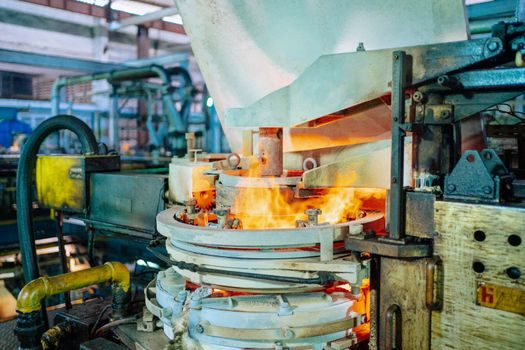
For induction scrap melters in the 500 kg-20 t range, the equipment FOB price corresponds to roughly US$15-25 per kg of nameplate charge weight at 1-set MOQ, falling to US$12-22 per kg at 3+ sets [S5]. Vacuum/inert chamber units carry a far higher per-kg ratio because crucible mass is in the 0.5-7 kg range, putting effective cost at US$200-1,000 per kg of melt capacity once chamber, vacuum pump and gas panel are integrated [S1].
Operating cost follows energy intensity: medium-frequency induction at mains frequency 50/60 Hz is the lowest-energy ferrous scrap route, while gas regenerative burners on aluminium holding/homogenizing furnaces recover waste-heat to trim gas consumption by a vendor-claimed 30-50% versus non-regenerative stacks, though the buyer must verify the burner's claimed turndown on the acceptance test [S4][S5]. Spare coils, crucibles and refractory linings are the recurring opex line; the long-life medium-frequency coil option from melt-furnaces.com is sold on "low noise, low power consumption, AC power supply, long durability" — language that maps to field acceptance criteria more than spec sheets [S4].
Comparison: Four Main Furnace Types on Buyer Decision Criteria
Buyers choosing between a small professional electric unit, a medium-frequency induction melter, an aluminium melting/homogenizing line, and a vacuum/inert chamber caster can line options against cost, capacity, alloy fit, and process envelope. The professional electric band US$5,999-20,500 suits 1-100 kg precious-metal and laboratory work with a 1,100-1,200 °C ceiling. The medium-frequency induction scrap melter at US$7,500-12,500 covers 500 kg-20 t iron, copper, aluminium and steel at 1,500-1,700 °C with fast melt and low noise. The aluminium melting/homogenizing integrated line at US$103,000-258,000 is purpose-built for 700-750 °C aluminium throughput, with regenerative burner and dust collector bundled [S5][S6]. The vacuum/inert chamber caster at US$ quoted on request for 1,250-1,600 °C with nitrogen or inert atmosphere targets 500-7,000 cm³ ingot production [S1].
Selection by alloy narrows the matrix quickly: steel and iron scrap ⇒ medium-frequency induction; aluminium billet and slab ⇒ regenerative aluminium melting + homogenizing; precious metal and dental alloy ⇒ small professional electric or vacuum chamber; cement/clinker pre-heat ⇒ integrated heating furnace at US$100,000 with low-noise custom design. Buyers specifying zinc or aluminium die-casting downstream will cross-reference Gravity Die Casting Machine 2026 Price and Cost Guide: Tonnage, Alloy and Automation for the next machine in the line.
Where Each Furnace Type Fits — and Where It Doesn't
Small electric/professional units in the US$5,999-20,500 band are built for foundries, jewellery shops, and R&D labs that need 1-100 kg melt batches with single-shift duty; they are the wrong tool for 24/7 ferrous scrap throughput because coil size and rectifier rating cap continuous melt rate. Medium-frequency induction scrap melters (US$7,500-12,500 for 500 kg-1 t; US$11,800 for 20 t) are the right tool for steel, iron, copper and aluminium scrap yards with 2-3 shift operation, but they are overkill for precious metal work and lack the inert atmosphere of vacuum chamber units. [S1]
Aluminium melting and homogenizing lines at US$103,000-258,000 fit secondary aluminium billet producers running 5-50 t/day, with bundled regenerative burner, dust collector, hot-top casting table and charging machine — they are the wrong tool for ferrous or vacuum work, and the 5 sets/month production capacity signals long lead-times at peak demand [S5][S6]. The gas aluminum melting furnace class sits inside this aluminium line band and shares the regenerative burner architecture. Vacuum/inert chamber units such as the TOPCAST TVCd-L are the only option for 1,250-1,600 °C vacuum casting of reactive alloys and dental ingots in 500-7,000 cm³ volumes, and are the wrong choice for any continuous foundry duty [S1]. For higher-throughput aluminium melting with crucible furnace construction, lead-time rather than unit price is the binding constraint.
Sourcing, Lead-Time and HS-Code Note
All factory-quoted prices in the 2026-06 window are FOB Chinese ports (Foshan, Ningbo, Luoyang, Jiangsu) with L/C and T/T terms, 1-set MOQ, and 5 sets/month typical OEM capacity for the premium aluminium line [S5][S6]. Standard 1-2 set production runs are quoted at higher unit prices versus 3+ set volumes, with the 3+ tier delivering US$5,000 lower unit price on the aluminium and homogenizing models [S5][S6].
China customs HS-code lookup for "melting-and-holding-furnace" returned no direct match on the 2026-05-01 query, signalling that import classification falls to the broader industrial furnace tariff lines and that buyers should confirm duty exposure with their broker before issuing L/C [S3]. Two trackable signals for the next planning window: whether the US$5,999-79,999 professional electric band softens below US$5,500 as more Zhejiang and Jiangsu vendors enter, and whether 5 sets/month Foshan capacity is expanded by Q4 2026 to absorb aluminium billet demand from the secondary smelting sector.