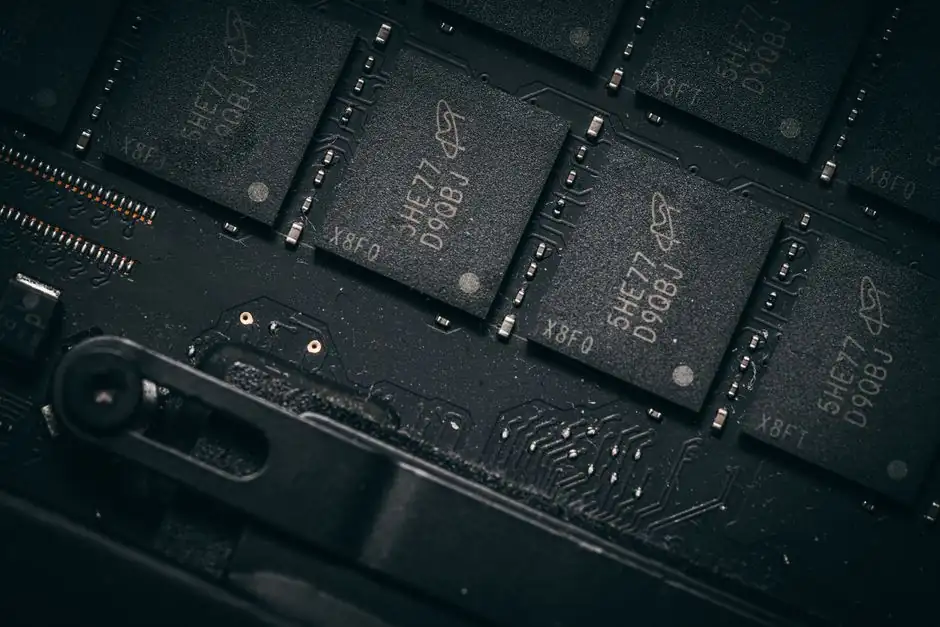
Memory supply cuts typically require at least 18 months before new fabrication capacity can materially ease shortages, and new plants can take years to build and qualify [S1][S2].
The relevant market includes DRAM, NAND flash, high-bandwidth memory, consumer RAM, and server memory, with industry forecasts extending a shortage through 2028 or 2030 [S3][S4].
What determines the recovery time
That lead time means a production cut does not create a self-correcting shortage within a few quarters. Suppliers must first reduce output, then rebuild utilization, add process capacity, and qualify products for demanding customers.
The supply response is also uneven because high-bandwidth memory, or HBM, can absorb production resources intended for conventional DRAM and NAND products [S1]. SK Hynix’s 12-layer HBM4 memory chips were on display at the SK AI Summit in Seoul on 3 November 2025 [S1]. This engineering density changes capacity planning because more wafer investment can be directed toward higher-margin AI products rather than commodity memory.
Price recovery therefore has two separate clocks. The first measures when production returns, with an 18-month minimum construction period. The second measures when supply matches demand, which can extend to 2028 or 2030 because new factories, newer process technology, and customer qualification must all progress together [S1][S4].
DRAM, NAND, HBM, and consumer RAM compared
DRAM and NAND are the broadest recovery variables because the shortage has produced 200–400% price increases in DRAM and NAND flash, while HBM is constrained by specialized stacking and AI accelerator demand [S4]. A direct comparison must separate production timing from demand exposure and structural barriers.
This comparison shows why an announcement of higher DRAM prices does not establish a recovery timetable. Consumer RAM depends on the residual supply left after high-value data-center demand, while HBM depends on packaging and qualification rather than simple wafer volume alone [S1][S2].
Why the historical cycle no longer gives a quick answer

Memory is highly cyclical, but a new fabrication plant now costs US$15 billion or more, and bringing one online takes at least 18 months [S1]. That investment threshold makes suppliers reluctant to add capacity outside strong demand cycles, which can leave the market undersupplied when artificial intelligence infrastructure expands rapidly.
A recovery began in late 2023 after severe industry production cuts, but that improvement did not resolve the later shortage driven by expanded generative AI services [S1][S4]. Samsung Electronics, SK Hynix, and Micron Technology had cut production after the 2022–2023 downturn, while AI demand subsequently redirected manufacturing toward HBM and related products [S4].
The mismatch is structural rather than a short logistics interruption. New fab construction requires more than 18 months, high-bandwidth stacks require advanced packaging, and buyers must validate memory for their specific systems [S1]. A nominal production increase can therefore fail to restore adequate supply if it lands in the wrong product mix.
Forecasts range from 2028 to 2030
An industry forecast expected the global memory shortage to last for at least another three years [S3]. These are not promises of a specific monthly price turning point. They are supply-balance judgments that place meaningful normalization between 2028 and 2030 under sustained AI demand.
No reliable publication sets an exact date for lower RAM prices because prices depend on the interaction of demand, inventory, production discipline, and new capacity [S2]. A useful planning assumption is therefore not “prices recover next quarter,” but that a production cut needs 18 months or more before new capacity can begin changing the balance [S1].
Who should plan for a long recovery

PC, phone, automotive, industrial-equipment, and server buyers need a procurement horizon of 18 months to several years if they depend on memory availability rather than only spot pricing [S1][S2]. Manufacturers already using HBM for AI products face a different constraint: qualified accelerator memory may remain structurally tight even after conventional DRAM supply improves.
Buyers who can redesign around a smaller memory bill, hold approved alternative components, or place orders before shortages become acute should not treat a forecast price fall as the only remedy. The relevant lead-time risk is especially large where one module, processor, or controller must be revalidated. Technical changes made solely to chase a lower contract price can therefore create more delay than the price saving.
For buyers, the practical trigger is not a public forecast but evidence of improving aggregate supply: sustained reductions in spot prices, broader allocation, longer lead-time normalization, and production increases in the required memory type. A price decrease in one DRAM category does not prove that NAND, HBM, or an automotive-qualified component has recovered.
Limits to the recovery forecast
A forecast extending to 2030 remains conditional on AI infrastructure demand continuing to absorb high-bandwidth memory and production capacity [S1][S4]. A material slowdown in AI investment could free capacity sooner, while faster accelerator deployment, packaging constraints, or additional production cuts could extend the shortage beyond the published estimates.
Price recovery can also lag physical supply. Memory markets have historically moved through boom-and-bust cycles, and increased output can depress prices after arriving well beyond the initial demand surge [S1]. Inventory accumulated by distributors or OEMs may also delay the pass-through of lower production costs to end buyers.
The most defensible conclusion is that memory supply cuts are not followed by a typical short squeeze. A minimum 18-month interval separates a cut from substantial new output, and market estimates place broader supply normalization between 2028 and 2030 [S1][S4].
Track two concrete signals for purchasing decisions: quarterly DRAM price movement, which rose 80 to 90 percent so far in the quarter cited on 2026-02-10, and supplier capacity guidance tied to 2028–2030 [S1][S4]. The related mechanics of How HBM Demand Squeezes Conventional DRAM Supply explain why an aggregate improvement in DRAM output may not translate directly into cheaper consumer modules.