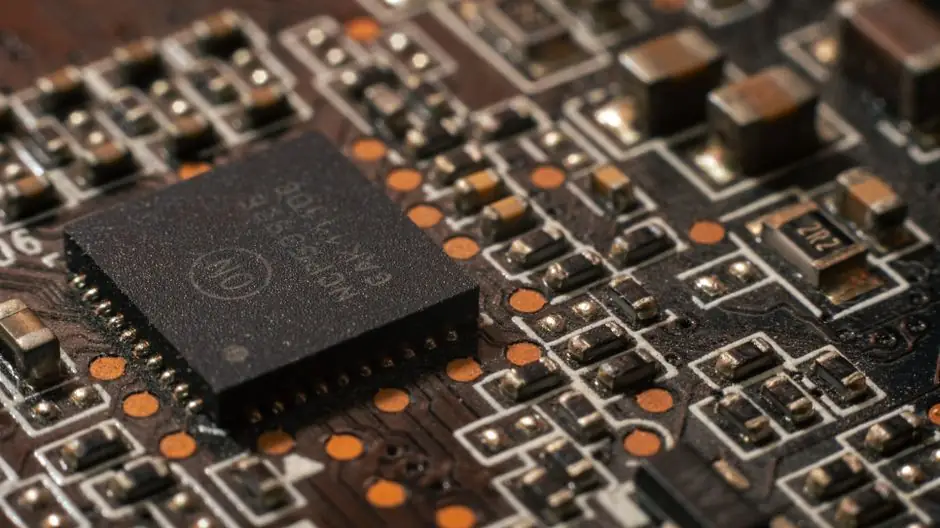
The MEMS sensors market reached USD 18.43 Billion in 2025 and is forecast to hit USD 49.12 Billion by 2035 at a 10.30% CAGR from 2026 to 2035, with North America leading regional share and Asia Pacific the fastest-growing region [S1].
Procurement teams now spec across three competing silicon platforms, two transduction families (capacitive and piezoresistive), and four core sensor classes, so a 2026 buyer's map has to be physics-first, package-second, and price-third, especially when one chip carries the MEMS structure and the control ASIC.
Traditional MEMS vs. NEMS-in-CMOS vs. Two-Chip Hybrid
Traditional MEMS is built on bespoke process lines, runs feature sizes of 1 µm or larger, and ships a two-chip package of roughly 2.6 mm³ that combines a MEMS die with a control ASIC [S2]. NEMS-in-CMOS uses the metal layers of a standard CMOS wafer to build the suspended structure, pushing feature sizes to 0.3 µm or less for a 100× area reduction and a single-chip package of 0.6 mm³, multiple of which can sit on one die [S2].
For procurement, the trade is cycle time and yield against integration density. Traditional MEMS lines take years to perfect, run lower yield than standard CMOS, and carry higher per-die cost, while NEMS-in-CMOS inherits giant-fab economies of scale but is currently served by a narrow supplier base, so dual-sourcing risk has to be on the scorecard. Buyers who need multi-axis IMUs in <2 mm² board area should score NEMS-in-CMOS first; buyers who need aerospace-qualified, long-lifecycle single-axis accelerometers should score qualified traditional MEMS first.
Sensor Class Map: Accelerometer, Gyroscope, Pressure, Vibration
MEMS accelerometers use a proof mass on suspension springs and read motion via differential comb capacitance, exposing a gravity vector for tilt and a dynamic force axis for linear acceleration [S4]. MEMS gyroscopes drive a resonant mass at 10–40 kHz and sense Coriolis force, which makes them inherently susceptible to drift and therefore always paired with an accelerometer in a fusion stack [S4]. MEMS barometric pressure sensors use a flexible silicon diaphragm against a reference vacuum cavity, in either capacitive or piezoresistive bridge form, and feed the sea-level hypsometric equation to deliver sub-2 cm vertical resolution when temperature-compensated [S4].
For industrial vibration monitoring, the deciding spec is operating environment, not data-sheet noise. Wired digital MEMS vibration sensors retained piezoelectric-class accuracy on validated vacuum-pump and gearbox tests while eliminating external analog-to-digital data conditioners, and they integrate with the fieldbus infrastructure factories already run [S3]. The case for wired is the 85°C battery limit and the EMI field density around heavy plant equipment, both of which wireless sensors cannot engineer around at present [S3].
Selection Criteria and Decision Thresholds

Four criteria separate a good MEMS buy from a failed one: noise floor, power budget, package volume, and supply-chain depth. On noise, MEMS accelerometers and gyroscopes publish Allan-variance curves and spectral noise density in µg/√Hz and °/s/√Hz respectively, and the procurement spec should pin a maximum at the application's bandwidth, not the headline [S4]. On power, wake-on-motion thresholds below 15 µA in low-power mode and FIFO watermark interrupts that let the MCU sleep between bursts are now table stakes for battery-operated IoT, and they should be contractual, not aspirational [S4].
On package volume, a 0.6 mm³ NEMS-in-CMOS die [S2] is a step change against a 2.6 mm³ two-chip traditional MEMS package [S2], and the BOM savings multiply when several sensors share one ASIC. On supply chain, the September 2024 Bosch Sensortec and Pirelli joint development agreement on tyre-integrated MEMS shows that automotive tier-1s are locking multi-year sensor capacity, so industrial buyers should not assume last-minute spot availability from the same fabs [S1]. The same logic that drives automotive content per vehicle (rising with ADAS penetration) constrains allocation for everyone else [S1].
Wired vs. Wireless: A Comparison
Wireless MEMS sensors promise cable-free installs and direct cloud uplink, but two hard physical limits disqualify them in many plants. Battery cells cannot safely operate above 85°C, while large rotating equipment routinely runs above 100°C, and EMI from high-power machinery makes Wi-Fi and 5G unreliable in defined plant zones [S3]. Wired digital MEMS sensors, terminated at an IoT gateway, sidestep both constraints and still deliver piezoelectric-comparable accuracy on vacuum pumps and industrial gearboxes [S3].
Use wireless only where ambient stays below 85°C, where EMI surveys show clean RF, and where cable routing cost exceeds gateway cost. Use wired everywhere else, and run the gateway on Power over Ethernet to keep the cabinet-side architecture simple. A short verbatim line from a vendor CTO frames the trend: MEMS vibration sensors are "intrinsically smaller, low power, and digital," and that is the architecture industrial plants are converging on [S3].
Integration Constraints and Failure Modes
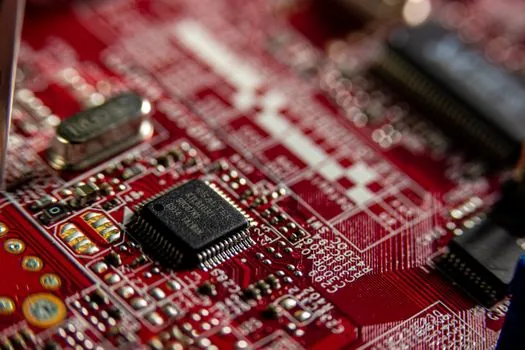
MEMS devices are fragile to PCB mechanical stress and to acoustic resonance coupling, so a 9–30 kHz keep-out band is normal on the layout, and stress-isolation pads should be specified on the mechanical BOM [S4]. Sensor fusion deserves equal weight with sensor selection: a complementary filter handles simple tilt, a Madgwick quaternion AHRS handles drones and robotics, and an Extended Kalman Filter is the right tool when a barometric pressure channel must close the Z-axis altitude loop [S4]. A high-pass filter on the gyroscope rate path plus a low-pass filter on the accelerometer tilt path is the minimum fusion layer; without it, gyro drift dominates within minutes.
Noise and thermal drift remain the two failure modes most often missed at procurement. Parasitic capacitance in a wire-bonded or above-CMOS MEMS structure sits around 1 pF, while a MEMS-in-CMOS approach drives parasitic capacitance down by an order of magnitude or more, directly improving signal-to-noise ratio [S2]. Buyers should ask vendors for parasitic capacitance on the analog front-end, not just the noise-density number, because the two together set the real resolution floor.
Use Cases and Sourcing Signals
Automotive ADAS, wearable continuous health monitors, and emerging MEMS chemical sensors for air quality are the high-growth end markets identified in the 2026 outlook, and each pulls a different sensor mix (multi-axis IMUs, low-power pressure, and metal-oxide or electrochemical gas cells respectively) [S1]. MEMS microphones are also migrating from audio capture into voice recognition, acoustic analysis, and biometric authentication, so any audio-BOM line in 2026 should re-spec SNR and AOP together, not separately [S1]. On the supplier side, the Tronics Microsystems (TDK Group) track record of several million MEMS accelerometers shipped to several hundred aerospace and energy customers over two decades is a useful longevity benchmark when audit teams ask for field history [S3].
Track these signals over the next two quarters: allocation notices from automotive tier-1s that consume shared CMOS fabs, second-source announcements for NEMS-in-CMOS process nodes, and the first industrial gateway vendors offering PoE-plus-fieldbus bundles for wired digital MEMS vibration chains. Related reading on related silicon procurement mechanics is in Silicon Wafer Procurement 2026: Spec Bands, Supplier Tiers and Sourcing Gates and Sourcing PCBs from China: Spec-First Buyer's Map for 2026. For the displacement and flow sensor categories that increasingly share MEMS process lines, the displacement sensor, flow sensor, and capacitive sensor reference pages lay out the adjacent spec envelopes. Standards governing hazardous-area and EMC compliance for any wired plant deployment should be checked against the current IEC 60079 series and the EMC directive applicable to the installation country before signing the PO.