
A controlled LIMS-MES integration can connect batch context, sample information, specifications, analytical results, and QC statuses [S6].
The scope spans pharmaceutical, biopharmaceutical, and chemical operations, where MES manages production execution while LIMS controls sample lifecycles, analytical workflows, instrument records, and laboratory approvals.
Why MES and LIMS Must Exchange Context
A manufacturing execution system normally manages production schedules, work orders, work in progress, equipment status, material lots, and production genealogy, while LIMS controls samples from receipt through testing, review, approval, reporting, and disposal [S2][S4]. The practical requirement is not simply two-way connectivity, but a shared transaction context that preserves sample identity, batch identity, timestamps, test status, and result disposition.
A standardized interface between LIMS and PAS-X MES can significantly reduce the effort and risk involved in integration [S5]. This workflow suits pharmaceutical operations where a release decision depends on both manufacturing history and laboratory evidence.
Chemical plants face a broader analytical context, including process samples, incoming raw materials, intermediates, finished products, and stability samples. A LIMS can manage reagents, consumables, and instrument-maintenance schedules [S4]. MES-LIMS integration keeps those records connected to the production order and material genealogy instead of leaving laboratory evidence in a separate environment.
Selection Criteria: Fit the Process, Not the Product Name
Selection should begin with the transaction types that must work across systems: sample requests, sample confirmations, specification checks, analytical results, QC reviews, deviations, and release status. A controlled integration can connect batch context, sample information, specifications, analytical results, and QC statuses [S6], which makes these fields more useful selection criteria than a generic feature checklist.
Three criteria deserve priority. First, identify the system of record for each field. MES should remain authoritative for production execution and batch genealogy, while LIMS should retain laboratory sample and result records. Second, define failure handling for an unavailable system, an expired test, an out-of-specification result, or a delayed release. Third, establish whether the interface supports bidirectional transactions, interface services, API calls, or a combination suitable for the installed platform [S1][S10].
Implementation governance matters as much as connectivity.
Where Integration Is Useful, and Where It Is Not

MES-LIMS integration is suited to batch manufacturing, quality-control laboratories, product release, continuous process improvement, and regulated production environments where laboratory results must remain attached to manufacturing history [S3][S10]. MES and LIMS implementations can support globally consistent procedures and traceability [S3].
It is not a substitute for a LIMS in laboratories requiring controlled sample handling, analyst qualification records, reagent and instrument management, specification-based result review, or laboratory reporting [S2]. An MES plus quality-management module can sometimes perform LIMS-like functions, including in battery quality assurance, but that does not automatically reproduce the complete laboratory record set [S2].
If MES schedules are incomplete, material genealogy is weak, or laboratory workflows are inconsistent, transferring bad context between systems will reproduce the defect electronically. Successful long-term MES and LIMS implementation depends on integration into the existing process and system landscape, with cooperation between the business side and IT [S3].
Architecture Options Compared by Control and Complexity
The comparison below ranks them by administrative control, implementation complexity, and suitability for regulated batch release rather than by product branding. [S3]
A standardized interface reduced integration effort and risk for the PAS-X MES and LabWare combination, while the partner program also helped identify LIMS suppliers compatible with PAS-X MES [S5]. API and interface services are useful where automated data flow is required across ERP, MES, and LIMS [S10].
For an MES-centered view of electronic records and deployment controls, see Electronic Batch Records in Pharma MES: 2026 Selection and Deployment Reference.
Core Data Exchanges Across the Product Lifecycle
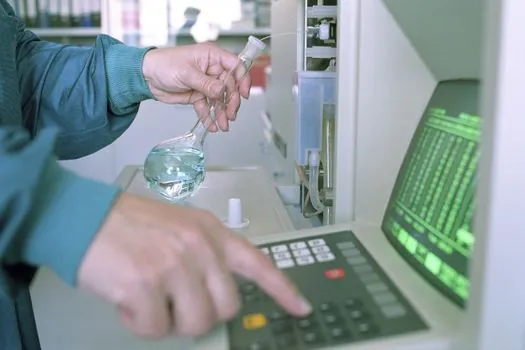
The first exchange is the sample request. MES supplies the production order, batch or material context, requested test, sample point, timing, and associated identifiers. The LIMS creates or confirms the sample record and returns information needed for labeling and collection [S5]. The second exchange is collection confirmation, where MES reports that the sample has been collected and provides QC-relevant information [S5].
The third exchange carries analytical results. LIMS captures instrument or analyst results, compares them with specifications, and manages review and approval. Its approved status and result details then return to MES for batch disposition or further processing [S2][S5]. A fourth path handles deviations and out-of-specification outcomes. Such events need explicit ownership, status, timestamps, and audit history rather than being represented only as a failed result flag.
The fifth exchange supports traceability from final material back to production history and laboratory evidence. MES contributes material lots, equipment status, process execution, and genealogy; LIMS contributes sample lineage, test records, calibrations, and qualified personnel records [S2]. This combined record supports investigation of a quality event and provides evidence for batch release or deviation assessment.
Validation, Compliance, and Failure Control
An MES-LIMS interface changes how regulated records move, so validation must cover both functional correctness and the failure path. The project should test transaction completeness, duplicate handling, timestamp consistency, authorization, audit trails, result-status mapping, and recovery after one system becomes unavailable. Electronic records and electronic signatures must be assessed against 21 CFR Part 11 and EU GMP Annex 11 where applicable, while ISA-95 supports enterprise-to-control-system integration and GAMP 5.2 supports computerized-system implementation [S3].
Three failure modes deserve explicit tests. A sample request may create a record in LIMS without reaching MES, producing conflicting identity data. A result may pass its laboratory review while the MES update remains pending, leaving release status incomplete. A repeated transmission may create duplicate requests or duplicate result events if the interface lacks idempotency and transaction identifiers.
Migration is a separate controlled activity. Projects may begin with paper documentation, a software upgrade, migration between systems, or a multi-site rollout, and each starting point requires different reconciliation and training work [S3]. A useful comparison point is How Many MES Integrations Does a Typical Plant Need?, because a LIMS connection becomes one governed interface within a larger plant integration architecture rather than an isolated software connection.
Deployment Sequence That Protects Batch Release

A controlled deployment starts by mapping the sample-to-release transaction chain across MES, LIMS, QMS, instruments, and ERP. The next step assigns data ownership, defines status mappings, and specifies exception handling. Only then should teams configure interfaces, migrate active data, execute performance and regression tests, train operators, and complete validation [S3][S8].
Parallel pilot execution should use representative batch numbers, sample types, specifications, failed tests, and pending-release conditions. Reconciliation must compare MES batch history, LIMS sample records, instrument outputs, and approved quality records. A go-live decision should require no unexplained identifier mismatch, no duplicate sample or result transaction, and a tested route for every release-blocking status.
Track two signals after deployment: the percentage of batch-release decisions supported by matched LIMS results and MES batch context, and the number of manual transcriptions or unexplained interface retries per release cycle. These measures expose whether the architecture is actually controlling laboratory quality data rather than merely enabling connectivity.