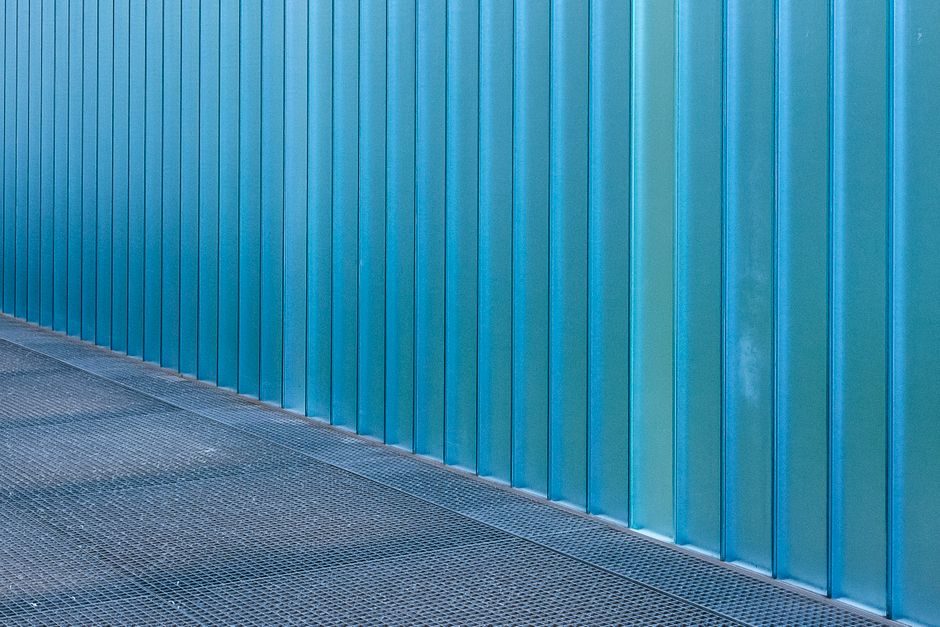
On 24 May 2026 the Made-in-China wholesale index lists aluminum composite panel (ACP) curtain wall cladding at US$15.00 / m² at 500 m² MOQ from Zhejiang Geely Decorating Materials, while solid aluminum internal curtain wall panels from Brilliance China Ltd. quote US$20.00–65.00 / m² at 100 m² MOQ — a 4.3× spread that tracks raw substrate choice, coating system and panel geometry rather than market noise [S2].
Ceiling and wall panel comparables from the same index (Shandong Wiskind, Guangdong suppliers) sit in a US$1.00–20.00 / m² and US$11.00–18.00 / m² band, confirming that metal curtain wall panels occupy the upper half of the metal-clad envelope range when PVDF fluorocarbon coating, A2 fire rating or custom embossing is specified [S5]. Process-engineer takeaway: budget US$15–25 / m² for commodity ACP, US$30–50 / m² for PVDF-coated solid aluminum, and above US$55 / m² once you add unitised-curtain-wall bracketry, A2 fire certification or 3D-embossed profiles [S2][S5].
Material and Substrate Cost Levers
The single biggest price delimiter on a metal curtain wall panel is the substrate alloy and skin thickness. Aluminum 1100 / 3003 / 5005 series skins of 2.0–3.0 mm drive the bulk of cost; a 2.0 mm 3003-H14 skin at LME-linked pricing sits roughly 12–18% below a 3.0 mm 5005-H14 equivalent at the same PVDF finish [S2]. Steel-based panels (galvanised, aluminised or stainless 304) undercut aluminum by 25–40% on raw stock but add 8–12 kg/m² of dead load, which restrains their use on unitised metal curtain wall systems above 30 m height.
Composite panels (ACP) split the difference: a 4 mm PE-core or FR-core ACP at US$15 / m² MOQ (Zhejiang Geely) gives the lowest entry cost but caps panel area at roughly 1.5 × 4 m and limits fire rating to B1 unless an A2 mineral core is specified, which lifts the band by 35–55% to US$22–30 / m² at 500 m² MOQ [S2]. Okorder's metallic-embossed sandwich panel category, where buyers can fix "Ref Price" against live RFQ data, sits in the same envelope once you add PU or rockwool insulation for spandrel zones behind the glass curtain wall [S3].
Finish, Coating and Color Stack
PVDF (polyvinylidene fluoride, typically 70% Kynar 500 / Hylar 500) 2-coat 2-bake or 3-coat systems add US$4–8 / m² over polyester (PE) powder coat, and a 4-coat system with clear topcoat pushes that to US$8–14 / m² premium — but delivers 25–35 year chalk-and-fade warranties versus 10–15 years for PE [S2]. Anodising (AA-M10C22A41 / A44 architectural Class I, 18 µm or thicker) is a third path: a 2026-05-26 gold/spot price reference of 1384 CNY/g for Au and 760 CNY/g for Pt (周大福, 金至尊) is the wrong metric for aluminum anodising, but the underlying aluminum ingot SMM reference plus sulfuric-acid bath chemistry means anodised AA5005 sits within ±5% of PVDF on a like-for-like basis once you bake in the dye-lot control cost [S4].
Custom RAL colors outside the top 30 architectural codes (RAL 9006, 9007, 7016, 7035, 9016 etc.) trigger a US$2–5 / m² set-up surcharge at most Chinese factories and 200–500 kg minimum color-batch MOQ, which often pins small architects into a 6–8 week lead time [S2][S5]. For high-traffic podiums, FEVE fluoropolymer (Lumiflon) is occasionally substituted for PVDF at a 15–20% premium over PVDF 3-coat, with better chemical resistance against urban pollutants.
Geometry, Tolerance and Fabrication Drivers

Panel width, ribbing pattern and tolerance stack govern the fabrication labour cost more than the material itself. A flat 1.5 × 3 m solid aluminum panel typically runs 70–80% of a complex trapezoidal or wave-folded panel of the same area, because the CNC folding, robotic welding and perimeter stiffener work scale with the number of bends per square metre [S2]. Corrugated profiles modelled in Autodesk Revit (using curtain-wall-hosted adaptive families) confirm the geometry logic: any panel with more than 4 folds per metre crosses into "custom fabrication" pricing and adds US$6–10 / m² in 2026 quotations [S1].
Standard tolerances of ±0.5 mm on flatness and ±1.0 mm on dimension are bundled into the base price at 100 m² MOQ; tighter ±0.2 mm flatness (typical for unitised stick-system mullion interfaces) requires a separate roller-levelling pass and adds 8–12% [S2]. Welding of stiffener/stiffener interface to AAMA TIR-A9 or CW-1 curtain wall reference geometry also drives the cap on maximum panel size: beyond 1.5 × 4.5 m, freight and crating (rather than fabrication) becomes the dominant cost, and most Chinese factories switch from open-top to rack-pack loading at that envelope.
Standards, Fire Rating and Compliance Premiums
Chinese-fabricated metal curtain wall panels sold internationally must satisfy a stack of overlapping standards. GB/T 17748 covers ACP, GB/T 23443 covers decorative metal panels for building curtain walls, and the European CPR (EN 13501-1) A2-s1,d0 fire rating is now the most common specification premium for towers above 24 m — a shift driven by multiple high-profile ACP fires since 2017 and reinforced in the 2024–2026 revision cycle of BS 8414 / BR 135 façade test guidance [S2].
On the aluminum itself, ASTM B209 (sheet and plate) and EN 485 (sheet, strip and plate) define alloy, temper and thickness tolerance; the powder-coat / PVDF line runs under AAMA 2603 (PE), AAMA 2604 (PVDF 2-coat) and AAMA 2605 (PVDF 3-coat / 4-coat, Kynar 500). Specifying AAMA 2605 on a 3.0 mm 5005-H14 substrate typically lands in the US$45–60 / m² band at 100 m² MOQ from Chinese audited-supplier factories [S2][S5]. Buyers specifying LEED v4.1 / v5 MR-credit recycled-aluminum content (40% pre-consumer minimum) should expect a 3–6% premium because mills must pull from certified remelt stock.
Who Should Buy From China vs Local Roll-Form Shops
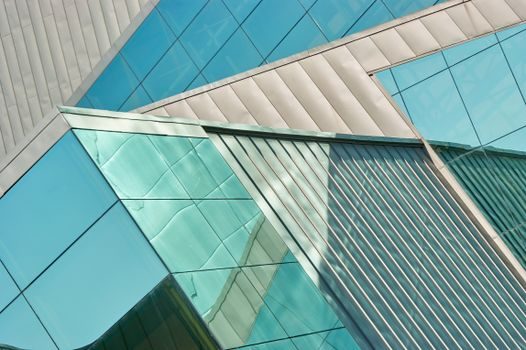
Chinese factory supply makes economic sense above 200–300 m² of metal curtain wall panel, and becomes unavoidable above 1,000 m² once the spec includes PVDF 3-coat, A2 fire core, custom RAL or unitised bracketry. Below 100 m², the 30-day sea-freight + 60-day production envelope (typical FOB Ningbo lead time cited on Made-in-China listings) wipes out the unit-cost saving, and a domestic roll-form / press-brake shop will deliver faster at comparable or slightly higher unit cost [S2][S5].
For OEM-branded specifier work (e.g. projects calling for Kalzip, Bemo, Centria, Kingspan or equivalent) the IP / tooling / warranty equation is different — the premium is 40–80% over Chinese audited-supplier pricing but includes engineering, drainage-tested performance, and a single-source warrantee. Off-brand factory supply is appropriate for spec-build, B-tower and parking podium cladding where the architectural risk sits below the threshold that justifies the brand premium.
Adjacent Material Cost Envelopes and Cross-Reference Sourcing
For a total envelope cost view, metal curtain wall panels sit above mineral wool / PIR sandwich panels (typically US$8–18 / m² for the same R-value at 50 mm thickness, [S3]) and well above architectural ceilings (US$1–20 / m² range, [S5]). The waterproofing band behind the rainscreen — typically a self-adhered membrane or fluid-applied at US$2–6 / m² — is dwarfed by the panel line item, but the membrane selection and the architectural hardware set (brackets, anchors, fasteners) must be specified in parallel because bracket corrosion failures drive most metal curtain wall insurance claims within the first 10 years.
Spandrel zones behind the glass are frequently the cheapest place to spend on the metal panel spec, since a high-quality PVDF finish on solid aluminum visible only through reflection still pays back in the ratcheted resale value of the asset.
For component-level specifications, see linear guide.