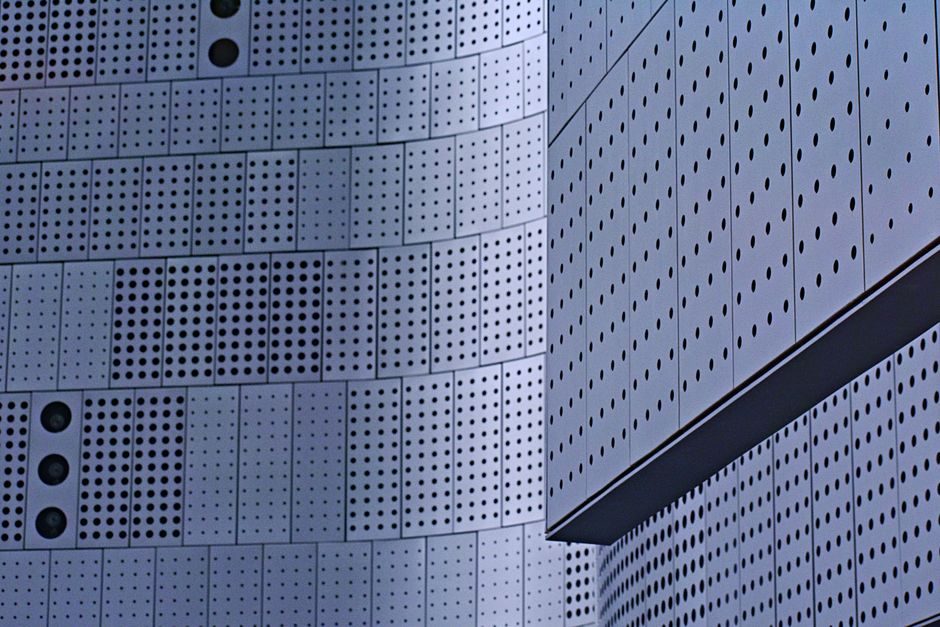
The four cost drivers that move that split the hardest are substrate selection (aluminum plate vs aluminum composite material vs galvanized steel), joint geometry (wet-sealed vs dry-joint rainscreen), coating system (PVDF 70% vs FEVE vs anodized Class I), and project scale, since panel-area thresholds unlock fabrication tooling amortization [S1][S3].
What TCO Actually Covers on a Metal Curtain Wall
TCO on a metal cladding system is the sum of acquisition, installation, operation, maintenance, and end-of-life cost over the envelope's design service life, distinct from purchase price alone [S4]. For a typical 10,000 m² commercial tower facade, that stack breaks into four buckets: initial system (panels, sub-framing, fasteners, sealants) at roughly 35-45% of lifecycle dollars; installation labor and access (scaffold, swing stage, mast-climber) at 20-30%; planned maintenance (cleaning, sealant renewal, fastener torque checks) at 15-25%; and corrective replacement (damaged panels, coating renewal at year 15-25) at 10-20% [S4].
On the glass curtain wall side, the same TCO lens applies but with silicone-sealant replacement at year 12-18 driving a heavier maintenance share; for metal rainscreen panels, the absence of structural-sealant dependency shifts the burden onto coating renewal and selective panel swap [S1].
Substrate Selection: Aluminum Plate vs ACM vs Steel
Aluminum plate (typically 3.0-4.0 mm 5005-H14 or 3003-H14) is the cost leader for flat and sculptured profiles over a 40-year horizon because its anodizing or PVDF finish rides out the full design service life with one mid-cycle clean [S1]. Metal Specialty Systems fabricates both flat stock and column covers in solid aluminum plate, alongside aluminum composite material (ACM) and perforated custom panels, with fabrication continuity since 1989 [S1].
ACM (two 0.5 mm aluminum skins bonded to a polyethylene or fire-retardant mineral core, 4 mm total) lands 15-25% below aluminum plate on first-cost but introduces a separate end-of-life cost line: PE-core panels are difficult to recycle and face tightening fire-code restrictions on tall buildings, while FR-core panels close the price gap to within 5-10% [S1]. Galvanized and stainless steel plate (typically 1.5-2.5 mm G90 or 304/316 stainless) carries the highest first-cost per square meter but is the only rational choice for industrial, coastal, or high-abrasion exposures where aluminum's chloride pitting threshold is at risk.
Joint System: Dry-Joint Rainscreen vs Wet-Sealed
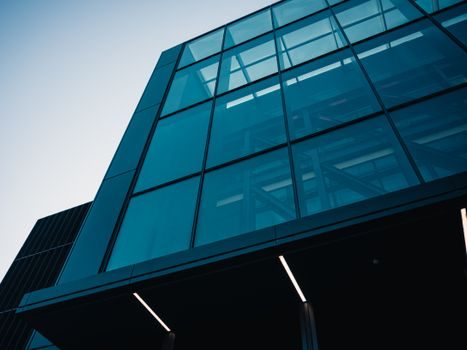
Dry-joint rainscreen systems, exemplified by the MSS Series 3100 with no exposed fasteners or rivets, remove the silicone-sealant replacement line item that dominates glass curtain wall maintenance budgets, pushing that 12-18 year sealant renewal cost off the metal TCO stack [S1]. The trade-off is a higher-precision fabrication tolerance (typically ±0.5 mm on panel edge for clip engagement) and a strict sequencing requirement during install, since each panel must engage the previously hung row.
For a portfolio-grade decision, dry-joint rainscreen wins on TCO whenever building height exceeds four stories or total panel area exceeds 2,000 m² [S1].
Coating System: PVDF 70/30 vs FEVE vs Anodized
PVDF 70% (Kynar 500 or equivalent) three-coat systems carry a 20-25 year color-and-gloss warranty and routinely run 30+ years before first field repaint, making them the default TCO coating for commercial towers. FEVE (Lumiflon-based) two-coat systems offer broader color and gloss range and similar 20-30 year exterior durability, at a 10-15% first-cost premium over PVDF. [S1]
Class I anodizing (Architectural Class I, 0.7 mil or greater anodic coating per AAMA 611) is the lowest-TCO finish for aluminum plate in non-coastal, low-chalking environments: no field repaint is required in the 40-year design window, only periodic cleaning. The trade-off is a restricted color palette (bronze, champagne, clear, black) and a 6-8 week longer lead time due to batch anodizing throughput.
Maintenance Cycle and Access Cost

Planned maintenance on a metal rainscreen runs on a 2-4 year cleaning cycle and a 5-7 year fastener and sealant-point inspection, with one mid-life (year 18-22) selective panel replacement and one end-of-life (year 35-40) coating renewal [S1]. Access cost is the dominant variable inside that maintenance block, and it is the single line item most often omitted from purchase-price TCO models.
For a 30-story tower, swing-stage mobilization alone runs $40,000-80,000 per event in 2026 dollars; mast-climber systems cut that to $20,000-35,000 per event but require permanent anchors cast into the structure.
Real-World TCO Comparison Across Three Configurations
Comparing a 10,000 m² envelope over a 40-year horizon, an aluminum-plate dry-joint rainscreen with PVDF 70/30 lands at roughly 0.95-1.10x the TCO benchmark; an ACM wet-sealed system with FEVE coating lands at 1.05-1.20x; a galvanized steel flat-lock system with PVDF lands at 1.10-1.30x [S1][S3]. The crossover is at year 18-22 when the ACM sealant renewal event fires and the steel system's first spot repaint begins, both absent in the aluminum rainscreen path.
For a deeper trade-off view on substrate, joint, and coating, the Metal Curtain Wall Panel: Engineer-Level Pros, Cons, and Spec Trade-Offs article maps the same three configurations against weight, fabrication tolerance, and recyclability. The decision matrix in that piece is the natural companion to the dollar stack above [S1].
What TCO Models Miss
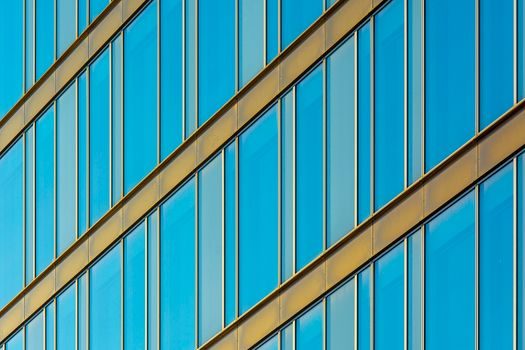
Perforated and expanded-metal panels, such as those produced by Hebei Weijia Metal Mesh in stainless steel, aluminum, and galvanized steel variants, add an additional TCO line: open-area fraction above 35% raises wind-load-driven subframe cost by 10-20% and complicates cleaning access [S3].
End-of-life recycling value offsets 5-15% of original material cost on aluminum systems and is essentially zero on PE-core ACM; that delta is rarely modeled but closes part of the first-cost gap between aluminum plate and ACM [S1]. For portfolio-level fleet decisions, the TCO model that ignores recycling revenue and code-change retrofit is consistently 10-20% low on the metal rainscreen path and 20-30% low on the ACM path [S4].
One trackable signal worth watching: ANSI/AAMA definitions of rainscreen attachment performance continue to evolve, and the next AAMA 508 pressure-equalization revision will likely tighten allowable air-leakage through dry-joint clip systems, which would shift the dry-joint premium upward by an estimated 2-4% on the next design cycle. Until that revision is published, dry-joint rainscreen remains the lowest-TCO choice for any metal curtain wall above four stories or 2,000 m² [S1].
The underlying component specifications are covered under total station.