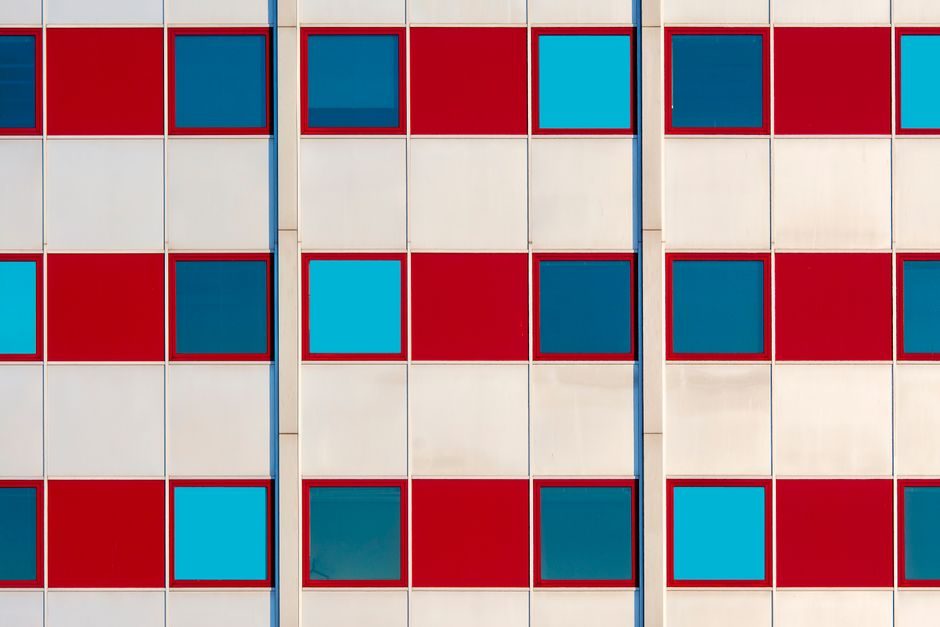
Metal curtain wall panels split into five principal families used across commercial envelopes: aluminum composite panels (ACP), single-sheet aluminum (often referred to alongside metal curtain wall panel families), steel systems (stainless, galvanized, corten), aluminum honeycomb sandwich panels, and zinc or copper standing-seam/rainscreen cladding. The classification is driven by substrate alloy, core construction, and how the panel is mechanically fixed to the mullion or rail behind it.
Wholesale catalog data from 24 May 2026 lists FOB pricing for the same envelope on very different substrates: exterior aluminum metal curtain wall panels at USD 5.00-15.00 per square metre with a 100 m² MOQ and 100,000 m² annual supply capacity [S3], while aluminum composite panel (ACP) curtain-wall façade cladding from Zhejiang Geely Decorating Materials starts at USD 15.00 per square metre at a 500 m² MOQ [S6]. The price gap is structural, not cosmetic, and tracks panel type, core chemistry, and fire-rating path.
Aluminum Composite Panels (ACP) and Metal Composite Panels (MCP)
ACP/MCP panels are two thin aluminum skins (commonly 0.5 mm AA3003 or AA5005) bonded to a thermoplastic or mineral-filled core; total panel thickness typically lands at 3 mm, 4 mm, or 6 mm with panel widths of 1,000-1,575 mm and lengths cut to project requirements [S2][S3]. ACP is the default low-rise commercial cladding because it is light (~5.5 kg/m² for a 4 mm panel), flat, and forms around complex returns using routing-and-folding fabrication.
Fire-rated variants replace the original polyethylene (PE) core with a mineral-filled, halogen-free, flame-retardant core (commonly designated FR or A2) to meet the reaction-to-fire classes that tall buildings require. Selection must reference the project's governing building code and the local classification (e.g. Euroclass B-s1,d0 versus A2-s1,d0 in Europe) rather than the generic "fireproof" label that catalogues use; the core chemistry, not the aluminum skin, decides the rating.
Wholesale-market signals reinforce the volume tier: ACP/façade panels dominate the Made-in-China "Metal Curtain Wall Panels" search page in 2026-05 with auditable suppliers, L/C and T/T terms, and Diamond Member status [S6]. Buyers specifying ACP should request core test reports (EN 13501-1 or ASTM E84), skin alloy certificates, and a coating warranty tied to PVDF or FEVE resin systems rather than PE paint.
Single-Sheet Aluminum Panels (Single-Piece Aluminum, Cassette Panels)
Single-sheet aluminum panels are stamped or folded from one piece of sheet (commonly 2.0-3.0 mm AA3003, AA5005, or AA5052) into a tray or cassette shape and hung on the mullion with brackets or hook-and-slot details [S2]. With no polymer core, the panel is 100% metal and is normally specified where the design team wants non-combustible cladding, full recyclability, and the option of perforated or 3-D sculpted faces.
The trade-off is stiffness-to-weight: a 3 mm single aluminum panel needs a deeper fold depth (typically 25-50 mm) or internal stiffeners to stay flat across a 600-900 mm module, and the cassette flanges are the principal path for thermal bridging if insulation is not detailed correctly. Single-sheet panels are heavier than ACP (roughly 5.4-8.1 kg/m² for a 2-3 mm panel), which raises dead-load and bracket design loads on the supporting structure.
Selection gates for single-sheet aluminum are alloy temper (H14/H24 vs H44 for higher formability), surface treatment (anodized vs PVDF coil-coated), and joint geometry (open rainscreen with ventilated cavity vs sealed silicone joint). Where the building code requires non-combustible cladding on a high-rise, single-sheet aluminum is the conservative specification; ACP should be a non-PE-core, A2-rated product only.
Steel Curtain Wall Systems: Stainless, Galvanized, Corten
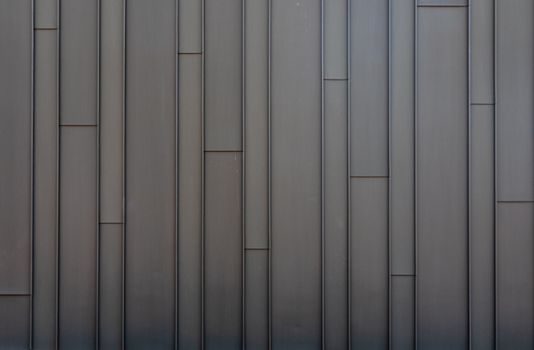
Steel curtain wall panels split into three sub-families with very different durability and aesthetic behaviour. Jiangsu WLS's imported steel curtain wall system (4F system) is built around European-fabricated profiles with project-level customisation, and is paired with a multi-functional superimposed steel system for high-end commercial façades [S1]. Stainless steel (typically 304 or 316) is used for premium architectural envelopes and coastal sites where chloride resistance matters; corten (weathering) steel is used where the patina finish is desired; hot-dip galvanized (HDG) carbon steel sits in the cost-driven tier.
WLS's product news log is explicit on the supply chain: in 2011 the company introduced Swiss FORSTER high-grade steel door and window products, and participated in the 2014 Nanjing corten Steel Special Exhibition [S1]. That history matters for procurement because FORSTER-branded steel profiles, corten coil, and HDG steel each carry different fabrication tolerances, weld-prep practices, and surface-passivation procedures — a single "steel panel" submittal that mixes the three will fail aesthetic and corrosion review.
Steel panels are heavier than aluminum (a 2 mm stainless panel is ~16 kg/m²), so structural framing and bracket counts must be sized accordingly. Compared against glass curtain wall systems, opaque steel panels reduce cooling load but raise dead load and complicate service-bay integration; specification should be co-ordinated with structural and MEP early in design.
Aluminum Honeycomb Sandwich Panels
Aluminum honeycomb panels use two aluminum face sheets (typically 0.7-1.0 mm AA3003) bonded to a honeycomb core made from AA3003 or AA5052 foil (commonly 6-25 mm cell size, 0.04-0.08 mm foil thickness); total panel thickness runs 6 mm to 100+ mm for architectural applications [S3]. Beijing Mascei New Materials Technology Co., Ltd. lists aluminum honeycomb panels among its main products alongside metal ceiling panels, interior wall panels, perforated panels, sandwich panels, and metal composite panels [S3].
The honeycomb geometry gives a stiffness-to-weight ratio that single-sheet aluminum cannot match: a 25 mm honeycomb panel with 1.0 mm skins approaches the bending stiffness of a 6 mm solid aluminum panel at roughly one-third the weight. This makes honeycomb the standard for large-format curtain-wall panels (1.5 m × 4 m and larger) where flatness under wind load and low dead load both matter.
Trade-offs: honeycomb panels cost more per m² than ACP or single-sheet aluminum, the edge-closure detail is critical (open cells at panel edges absorb water and degrade the skin-to-core bond), and field repairs are harder because the skin cannot be re-formed like a single sheet. Fire performance depends on the adhesive; specify a structural-grade adhesive with documented fire test data, and require edge-closure details on the shop drawing submittal.
Zinc, Copper, and Other Non-Ferrous Standing-Seam / Rainscreen Panels
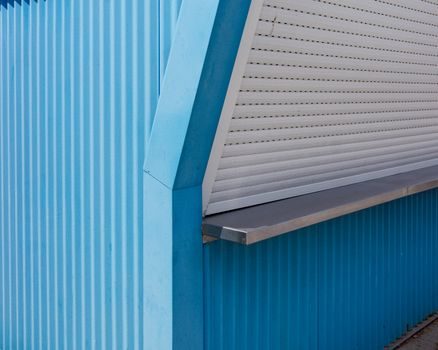
Zinc and copper panels (often titanium-zinc such as Rheinzink or VMZinc; copper as cold-rolled sheet or coil) are typically installed as a standing-seam or flat-lock rainscreen rather than as a unitized curtain-wall cassette. The reference catalog notes that "metal curtain wall" is "one type of decorative wire mesh, aluminum alloy, brass, copper or other alloy materials" used for architectural wire-mesh and metal-cladding applications [S2].
Zinc and copper are the longest-lifecycle metals on a façade: titanium-zinc weathers over decades, copper over a century, and both are 100% recyclable. They are also the softest panel metals, so impact resistance is the gating constraint in ground-floor or transit-zone applications, and panel thickness typically runs 0.7-1.0 mm zinc, 0.6-1.0 mm copper. The substrate behind must be a compatible breather membrane, drainage mat, or ventilated cavity, because direct contact with dissimilar metals (copper against galvanized steel, for example) drives galvanic corrosion.
Selection between ACP, single-sheet aluminum, steel, honeycomb, and zinc/copper is therefore not a style decision: it is a substrate-alloy decision (AA3003 vs AA5005 vs 304 stainless vs zinc), a core-construction decision (PE vs FR vs A2 vs none vs honeycomb), a fire-rating decision tied to the local building code, and a thermal-bridge decision that must be detailed against the supporting structure. Song et al. (2016) showed that selected thermal-bridge reduction alternatives for steel-truss metal-panel curtain walls significantly cut total winter heat loss, which means the cheapest panel can be the most expensive wall once heating load is amortised [S9].
Modelling and Detailing in BIM: Curtain-Wall vs Wall-Panel Family
Revit practitioners regularly run into the modelling question of whether a corrugated or trapezoidal metal panel belongs in a curtain-wall family or a wall-panel family. The Autodesk Community thread (07 May 2025) reports that modelling the corrugated profile as mullions inside a curtain-wall family gives a consistent, repeatable corrugation pattern that the curtain-wall template otherwise struggles to repeat cleanly [S4]. An earlier thread (2019) also confirms that the curtain-wall family is widely used as a carrier for non-glass panel geometries when alternating sequence patterns are needed [S5].
For procurement and shop-drawing submittals, the implication is that "metal curtain wall panel" can be a curtain-wall-hosted unit (cassette hung on a rail) or a wall-panel family item (tray screwed to a girt); the two paths have different thermal-bridge implications. Where the panel is a rainscreen over a continuous insulation layer, the wall-panel family is the conservative model; where the panel is a unitized cassette with integrated gasket and structural silicone joint, the curtain-wall family is the better host.
Detailing should lock down four items on every submittal: substrate alloy and temper, panel thickness, coating system (PVDF vs FEVE vs anodized vs mill finish), and edge-closure / joint geometry. Without those four locked, comparing bids between ACP, single-sheet aluminum, and honeycomb suppliers becomes meaningless because the same nominal "metal curtain wall panel" can hide a PE-core, an FR-core, or a non-combustible A2-core in a catalogue entry. For buyers comparing the metal curtain wall panel category against metal powder coating lines or ALC panel alternatives, the same four-data-point rule applies.
Track the next node when EN 13501-1 / EN 1716 test reports for FR and A2 cores are requested with every ACP submittal (catalogue entries do not replace project-level test data), and when zinc and copper coil lead times are quoted separately from the standing-seam fabrication lead time. The other verifiable signal is whether the supplier provides a coating warranty tied to PVDF resin (≥ 70% Kynar 500 / Hylar 500) or to FEVE — these are the two coating systems that consistently clear 20-30 year coastal exposure.
Background reading: Inductive Sensor vs Load Cell Module: Specs, Selection Map, and Real Failure Modes.