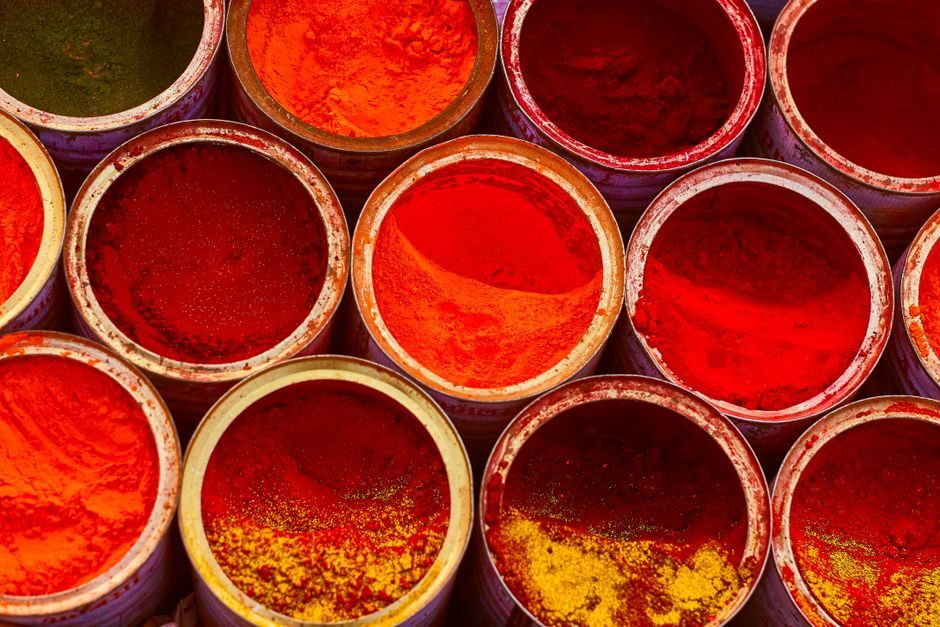
Metal powder cost is set first by atomization route, second by chemistry, third by lot size. Water-atomized iron and steel powders for press-and-sinter PM parts cluster in the low single-digit USD/kg range, while gas-atomized (GA) and plasma-rotating-electrode (PREP) grades for additive manufacturing run from roughly $20/kg for stainless and tool-steel up to $60–100/kg for nickel superalloys, with cobalt-bearing and refractory metal powders (WC, Mo, W) routinely clearing $200/kg in 2026 [S1][S3].
For context on how metal powder behaves in downstream forming, the metal powder encyclopedia entry covers morphology, flow rate and apparent density limits per MPIF Standard 05 / ASTM B212.
Atomization Method Sets the Price Tier
Water atomization dominates ferrous structural-powder volume worldwide and produces the cheapest lots — irregular, high-surface-area particles that press well but limit flow and density. Iron and pre-alloyed steel powder for sintering typically trades around $2.80–4.50/kg in tonnage, while sponge-iron variants from mill-scale reduction sit lower, around $2.00–3.00/kg, but require extra annealing [S3].
Gas atomization (N₂, Ar) with higher-pressure close-coupled nozzles gives the spherical morphology and Hall flow >25 s/50 g that laser powder-bed fusion (LPBF) and directed-energy deposition (DED) demand; the gas and yield penalty push stainless 316L to ~$15–25/kg and Inconel 718 to $40–60/kg at 2026 spot quotes from Chinese export suppliers [S1][S3]. Plasma atomization and PREP climb further — titanium grade 23/5 (ELI) commonly $250–400/kg, driven by feedstock titanium sponge cost and low yield [S1]. For comparison on how adjacent raw-material costs (Cu, Ni) are trending, the copper material 2026 price guide tracks cathode-to-powder multipliers, and the nickel alloy selection guide walks through Ni-base superalloy grade splits.
Chemistry Bands by Alloy Family (2026 spot ranges, USD/kg)
For iron-based powders (Fe, Fe-Cu, Fe-Mo prealloys, 316L/430L stainless) the spot band is roughly $3–6/kg for water-atomized structural grades and $15–25/kg for GA 316L/17-4PH, with high-purity sponge Fe at the floor ($2.00–3.00/kg) [S1][S3]. Copper and copper-alloy powders (Cu, Cu-Sn, Cu-Zn brass) sit at $7–12/kg for dendritic electrolytic grades and $15–25/kg for spherical GA bronze used in cold-spray and binder-jetting [S3].
Nickel and Ni-base superalloy powders — pure Ni, Ni-Cr, Inconel 625/718, Hastelloy C276 — range from $25 to $60/kg for standard GA, with sub-45 µm AM cut above $60/kg and lots below 250 kg carrying a 15–30% small-batch surcharge [S1][S3]. Cobalt, tungsten and molybdenum-based powders sit in the $200–500/kg band, with WC-Co cemented-carbide precursors in the $30–80/kg range as a mid-tier option [S3]. Titanium, aluminium and magnesium powders sit outside the ferrous-copper-nickel grid — Ti-6Al-4V ELI at $250–400/kg, AlSi10Mg at $25–50/kg, Mg alloy powders at $80–200/kg under argon-purged packaging [S1]. For an adjacent process-material perspective the silicon steel price guide covers CRGO/CRNGO electrical-steel feedstock, which competes with PM soft-magnetic grades for motor-lamination sourcing.
Comparison: Sourcing Options Side by Side
For a process engineer picking a supply route, four decision axes cut the market clearly: cost per kg, minimum order quantity (MOQ), lead time, and chemistry/atomization control. Chinese export mills (e.g. CNPC-class suppliers) dominate volume for Fe/Cu/Ni-base powders with MOQs of 100–500 kg and 15–30 day lead times on stock grades [S1][S3]. Trading-platform listings on Made-in-China aggregate finished and semi-finished powder-part orders at 1-piece MOQ but for finished parts, not raw powder, so they are not a true powder spot reference [S1].
Western premium atomizers (Carpenter, Sandvik, Höganäs, Praxair/Oerlikon) command 20–60% premiums for tighter chemistry, lower O/N content (<100 ppm), and PSD control (e.g. -45+15 µm cut) — critical for LPBF in aerospace and medical where ASTM F3055/F3301 powder-lot certification is required [S3]. On cost-sensitive structural-PM routes (sintered gears, bushings, soft-magnetic cores), water-atomized iron with MPIF Std 35 traceability remains the economic baseline at $2.80–4.50/kg [S3]. For R&D or small-batch AM where MOQ <100 kg is needed, gas-atomized lots are available from Chinese export suppliers at +15–30% but with no aerospace-grade melt-traceability paperwork [S1][S3].
Specification Levers That Move Price
Particle-size distribution is the single largest spec-driven cost lever: a -45 µm cut yields typically 35–55% of the atomized bulk, and 15–53 µm AM-spec cut falls to 20–40%, which is why AM-grade powder can cost 1.5–2.5× the price of the same alloy in a -150 µm press-grade cut [S1][S3]. Hall flow rate and apparent density thresholds (e.g. >25 s/50 g for LPBF, ASTM B212 >2.5 g/cm³ apparent) require GA/PREP routes; the same alloy in irregular water-atomized morphology will fail these tests and sells at a 30–60% discount for non-AM uses [S3].
Trace chemistry (O, N, S, P) and inclusion control also move price: LPBF-grade Inconel 718 with O <100 ppm commonly lists at $50–60/kg, while a standard GA lot at 200–400 ppm O sits at $30–40/kg [S1]. Packaging matters too — argon-purged sealed cans for titanium, aluminium and reactive alloys add ~5–10% versus standard drum packaging, and 25 kg lots are the norm in export; 5–10 kg vacuum-packs add 15–25% [S1][S3].
Standards, Documentation and Hidden Costs
For structural-PM parts, MPIF Standard 35 sets the material-spec baseline that most Chinese and Western suppliers reference; PM lots shipped under this scheme include chemistry, flow rate, apparent density and compressibility data sheets at no extra charge [S3].
For aerospace and medical buyers the powder is often qualified under AMS 7000-series (e.g. AMS 7011 for Ti-6Al-4V) and the supplier's quality system audited to AS9100D; small-lot re-screening and laser-diffraction PSD re-certification at the buyer's lab typically adds 2–5% to the landed cost and 5–10 days of lead time [S1][S3]. Freight is non-trivial: most export lots are quoted FOB Chinese port, with sea-freight to US/EU at $1–3/kg and air-freight for small AM lots at $8–20/kg — frequently larger than the freight surcharge is the customs HS-code split (HS 7205 for Fe powder, 7504 for Ni, 8108 for Ti), which affects duty exposure (2.5–8% depending on destination) [S1]. The engineering plastic price guide gives a parallel view of HS-code and MOQ multipliers for resin lots, useful when comparing total landed cost across metal-powder vs feedstock-pellet AM routes.
Failure Modes and Sourcing Pitfalls
Three pitfalls dominate metal-powder sourcing failures in 2026. First, mistaking water-atomized irregular powder for gas-atomized spherical — suppliers will ship irregular Fe powder at half the AM-grade price, and a buyer with no Hall-flow or apparent-density QC step will only discover the problem at the LPBF machine [S3]. Second, lot-to-lot chemistry drift in pre-alloyed grades — Inconel 718 chemistry control (Nb, Mo, Ti, Al ratios) is tighter from Western mills and looser from lower-tier Chinese atomizers, with measurable yield losses downstream [S1][S3]. Third, oxygen pick-up during packaging and transport — moisture ingress on Al, Ti and reactive alloys inflates gas-content, voids pores after build, and is the most common root cause of AM-part rejection [S1].
Mitigations are straightforward: demand Hall flow, apparent density and laser-diffraction PSD data per lot (not just catalogue values), require sealed-argon-pack photos and a packing-date stamp under 60 days, and route all AM-grade Ti/Al lots via air-freight with desiccant to keep the moisture window tight. For non-critical structural-PM parts, water-atomized Fe at $2.80–4.50/kg remains the value play as long as compressibility and green-strength specs are met [S1][S3]. The industrial rubber selection guide is a useful reference for cross-material hardness/MOQ thinking when the same engineering team is buying both metal powder and elastomer lots.
Where the Market Is Heading (2026 H2 signals)
Three trackable signals define the next 6–12 months for buyers. Watch CN-class export mill list prices for GA 316L — these have been drifting down on Chinese capacity additions and currently anchor the stainless-AM powder floor; further moves below $15/kg would compress Western mill margins and reset the price band [S1][S3]. Watch Ti-6Al-4V ELI spot — sponge-Ti feedstock cost and the Ukrainian/Russian titanium supply chain still set the floor, and any relaxation of export controls will move the $250–400/kg band sharply [S1]. Watch ASTM F3604 / F3635 drafts for powder-life and reuse limits in LPBF; revised reuse-cycle caps directly affect effective powder cost per printed part, and the public-comment windows are the cleanest signal on coming spec changes [S1].
For now, the cheapest defensible lot for general structural-PM work is water-atomized Fe in 500–1000 kg drum lots at $2.80–4.50/kg, the cheapest AM-grade lot is Chinese-export GA 316L in 100–250 kg argon-purged drums at $15–25/kg, and the most expensive predictable lot is aerospace-grade Ti-6Al-4V ELI at $250–400/kg with AS9100D paperwork [S1][S3].
For component-level specifications, see linear guide, and crossed roller guide.