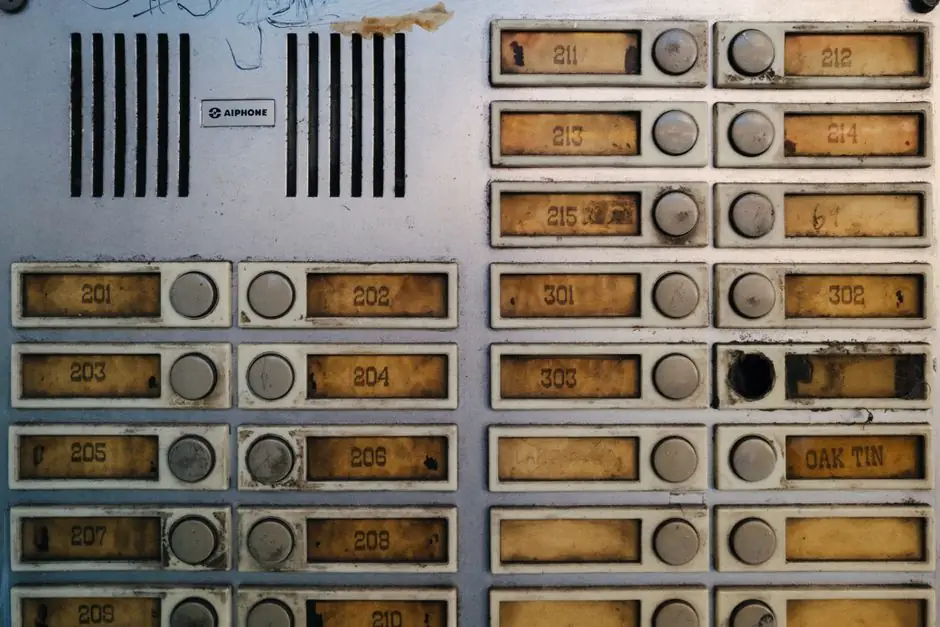
Lab access control is the discipline of restricting entry to controlled spaces using electronic credentials, zone-based policy, and access-event logging, layered with door position monitoring and video [S3]. The core decision is not "which lock" but which combination of credential, reader, controller, and policy matches the hazard class of the room and the audit trail regulators expect.
Scope of this guide: BSL 2/3/4 research labs, vivarium rooms, pharmaceutical R&D, clinical and academic laboratories, and select-agent facilities. The benchmark is the US CDC's 2002 MMWR guidance, which still anchors the "control access to areas where select agents are used or stored" language widely cited in facility security plans [S1].
Credential technologies compared: proximity, smart card, mobile, biometric
Four credential families dominate 2026 lab tenders: 125 kHz proximity, 13.56 MHz smart card (MIFARE DESFire EV2/EV3), mobile credential (BLE/NFC), and fingerprint or multi-modal biometric [S3][S5]. Proximity cards remain the most deployed because readers are cheap (typically USD 50-150 per door) and the cards tolerate glove wear and chemical exposure common in wet labs [S3]. MIFARE DESFire adds AES-128 encryption and mutual authentication, which is the minimum most pharmaceutical QA auditors now accept for controlled-substance storage rooms [S3].
Biometric readers, almost always fingerprint, are specified when non-transferable identity is a contractual or regulatory requirement: the credential is the person, not a token that can be handed over [S5]. The known weakness in labs is degraded fingerprints from solvents, latex gloves, and repetitive abrasion; vendor literature and integrators consistently flag this as the leading cause of false reject in chemical and analytical labs [S5]. Mitigation is multi-modal readers (fingerprint + PIN, or fingerprint + card) and finger-guide hardware rated for glove-on use. Mobile credentials (BLE/NFC via phone) are a fast-growing segment but require the reader to be inside the secure side of the door and a managed device policy, otherwise a lost or stolen enrolled phone becomes a master key.
Selection rule: 125 kHz proximity is fine for general corridors and BSL 2 space; MIFARE DESFire or equivalent AES smart card for BSL 2 chemical storage, BSL 3 anteroom, and any select-agent suite; biometric or biometric+PIN for high-value rooms where card-pass-back or tailgating must be provably eliminated [S3][S5].
Zone policy, anti-passback, and the four vulnerabilities integrators keep finding
Credential choice is only half the spec; the other half is zone policy, the per-door rule that defines who may enter when, with whom, and under what pairing rule. The most common lab failures are not cryptographic, they are procedural: propped doors, shared cards, uncontrolled after-hours access, and unrestricted storage rooms with the same credential as the main lobby [S3].
Standard mitigations baked into modern controllers: door position switches with local sounder, request-to-exit (REX) sensors, anti-passback (a card cannot be reused to re-enter until the same credential has exited, eliminating card-pass-back between two people), two-person rule for BSL 3 and select-agent vaults, and timed anti-tailgating (mantrap or virtual corridor with sensor pair) [S3]. For 24/7 labs, schedules should split day, evening, and night windows with different role sets, and a separate, narrower schedule for weekends, with contractor escort logging tied to the visitor management system.
Reader and controller hardware: ratings, wiring, and the OSDP shift
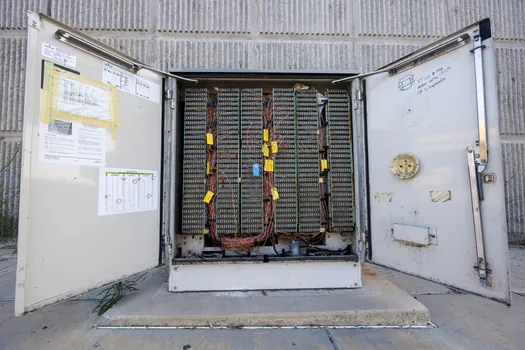
Readers in lab service should carry an IP65 or higher ingress rating (splash and chemical wipe-down) and a documented operating temperature of roughly -20 to +70 °C for cold rooms and autoclave-adjacent installations. The dominant field-bus shift on 2026 retrofits is Wiegand-to-OSDP (Open Supervised Device Protocol) replacement: OSDP adds 128-bit AES between reader and controller, supervised line monitoring (the panel knows if a cable is cut), and lets one RS-485 run serve two readers, halving home-run cable count on a typical 8-door lab fit-out [S3].
Controllers are usually panel-based (1-2 doors per board) with encrypted RS-485 to sub-panels, PoE+ powered where possible to reduce 24 V DC wiring. For a small BSL 2 lab (1 main door, 1 cold room, 2 chemical storage rooms, 1 instrument room), a single 4-door panel plus 4 OSDP readers is the typical baseline. For a vivarium suite with 12+ animal rooms, expect a 2-panel, 8-sub-panel topology with badge issue stations at the suite entry. The control cabinet and control cable selections should be specified together with the access system, not after, because OSDP cable runs and reader power budgets drive the cabinet layout.
Compliance overlay: select agents, BMBL, and the audit trail
CDC's MMWR RR-19 (Richmond and Nesby-O'Dell, 2002) remains the reference for select-agent labs: it lists "access controls to laboratory and animal areas" as one of nine mandatory elements of a facility risk assessment, alongside inventory, employee security, data security, and emergency response, with the plan reviewed at least annually [S1]. The same document frames access control as one component of a layered security program, not a standalone fix.
For clinical and pharmaceutical labs, the audit trail is the deliverable regulators actually audit. The access control system must export per-event logs (credential ID, reader ID, timestamp, granted/denied, anti-passback state) to a SIEM or validated log archive with a defined retention window, commonly 5 years for GLP/GMP paper-bound records and longer for select-agent inventory events. Integration with video is increasingly required: a denied read at a BSL 3 anteroom must produce a tagged video clip within a defined SLA, typically 30 seconds.
Decision matrix: which tier for which lab room

Tier 1, general corridors and BSL 2 lab entry: 125 kHz or basic MIFARE proximity reader, OSDP, single-factor authentication, schedule 06:00-22:00 weekdays, audit log to central server. Tier 2, BSL 2 chemical storage and instrument rooms: MIFARE DESFire (AES-128) credential, OSDP, anti-passback enabled, two-person rule optional, 24/7 schedule restricted to trained role list. Tier 3, BSL 3 anteroom and select-agent storage: DESFire + PIN, anti-passback on, two-person rule, door position switch with local alarm, video cross-check, mantrap or virtual corridor, validated audit trail. Tier 4, vivarium barrier and select-agent vaults: biometric (fingerprint+PIN) or DESFire+PIN with two-person rule, full mantrap, biometric template stored on encrypted smart card rather than central server to limit biometric data exposure [S3][S5].
This maps directly onto CDC's nine-element risk assessment, where each tier's policy set becomes a row in the access-control section of the facility security plan [S1].
Failure modes and procurement pitfalls
Four failure modes recur in lab access projects. First, specifying a biometric reader without a finger-quality survey of the actual workforce; latex glove use, acetone wipe-down, and dermatitis will defeat a low-cost optical sensor. Second, mixing Wiegand and OSDP on the same panel, which forces the integrator to keep the older, less supervised bus and gives an attacker a downgrade path. Third, running access cabling and control cable for HVAC and control valve actuators in the same conduit without segregation, causing inductive noise and OSDP CRC errors. Fourth, omitting a documented card-issuance and revocation workflow, so ex-employee badges stay live for days because no one owns the HR-to-badge feed. [S1]
On the supplier side, prefer vendors that publish a written OSDP v2.2 conformance statement, a MIFARE DESFire EV2 or later implementation guide, and a tamper-evident audit log format (signed events or chained hash) rather than a flat CSV export. For BSL 3 and select-agent work, insist on a validated deployment: factory acceptance test (FAT) at the staging bench, site acceptance test (SAT) with anti-passback and two-person rule exercised, and a 12-month warranty with defined RMA turnaround on readers and sub-panels.
Sourcing and standards to anchor the spec
Anchor the credential security claim on ISO/IEC 14443 (contactless smart card) and ISO/IEC 15693 (vicinity card), with MIFARE DESFire as the named application layer. Reference ONVIF Profile A or C for video cross-check, and OSDP v2.2 for reader-controller supervision. For US select-agent work, cite CDC MMWR RR-19 (2002) and the current BMBL section on facility security; for EU labs, the equivalent anchor is the local biosafety officer's risk assessment and any region-specific select-agent rules [S1][S3].
Two practical procurement signals to track over the next 6-12 months: vendor migration announcements from Wiegand to OSDP-only readers, and any published updates to OSDP v2.2 Secure Channel profiles, because both determine whether retrofits can reuse legacy cable. For a deeper cross-reference on spec-driven equipment selection logic, see the spec-first map approach used in anti-static equipment selection for firefighting, where standards and material grades anchor each tier.