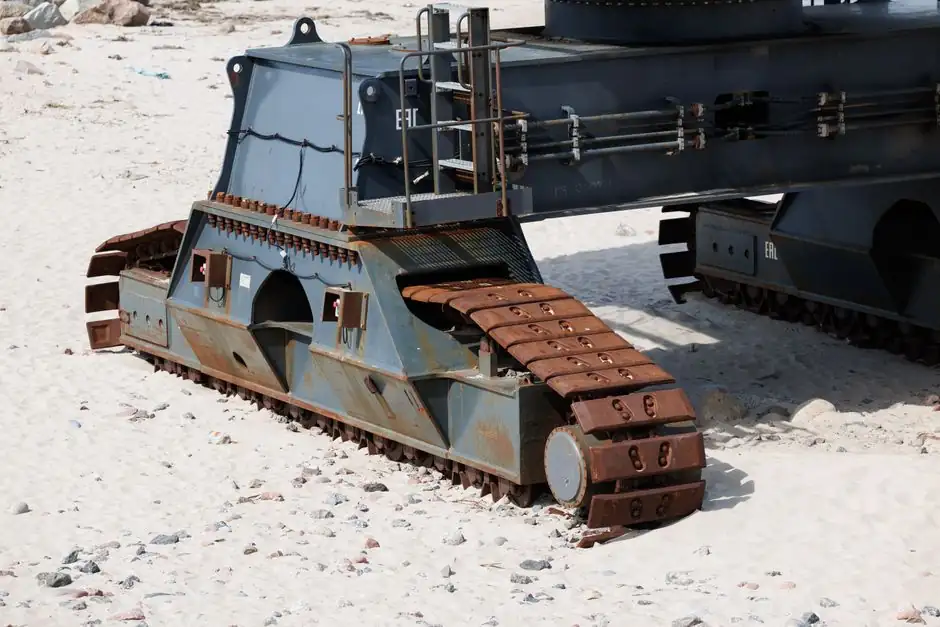
Marine engineering metal powder selection is dominated by three alloy families in 2026: 316L stainless steel, commercially pure titanium and Ti-6Al-4V, and emerging high-entropy alloy (HEA) compositions, each tied to a specific chloride-corrosion and fatigue role [S1][S2][S8].
Selection logic is driven less by brand and more by powder chemistry, particle size distribution (typically 10-63 µm for laser powder bed fusion), and documented compliance with marine service standards such as NACE MR0175 for sour service and ASTM B348 for titanium grades [S2][S6].
Alloy Family Comparison for Offshore Service
316L stainless steel powder is the marine-AM baseline, with molybdenum content around 2-3 wt% and PREN (pitting resistance equivalent number) values commonly above 25 that resist chloride pitting in ambient-temperature splash zones [S2]. Titanium grades, including CP-Ti and Ti-6Al-4V, push the operating envelope into oxidising and low-pH seawater service, where passive TiO2 film stability is the deciding factor [S1][S8]. HEA powders sit at the top of the corrosion-fatigue pyramid, marketed for combined high strength and seawater resistance but with limited long-track marine data [S1].
A practical marine powder comparison lines up against four criteria: corrosion resistance, density after processing, specific strength, and cost per kg. 316L delivers the lowest cost and the densest as-printed builds (often >99.5% via LPBF), but trails titanium on strength-to-weight by roughly a factor of two. Ti-6Al-4V reaches tensile strength around 895-930 MPa in HIPed AM builds versus 480-550 MPa for 316L, with a density near 4.43 g/cm³ against 7.9-8.0 g/cm³ for the steel [S2][S8]. HEA powders exceed both on specific strength, but published data sheets still lean on coupon-level testing rather than full-scale component certification [S1].
Selection Criteria Engineers Should Lock First
Chemistry is the first gate, not particle size: alloy specification, impurity ceilings (O, N, H for titanium; S, P for stainless), and inclusion limits must be fixed before morphology is discussed, per standard AM powder selection guidance [S7]. For marine 316L, specifying ASTM A276/A479 chemistry plus a maximum oxygen content around 0.03 wt% is a common procurement line; for titanium, ASTM B348 Grade 2 or Grade 5 with hydrogen below 0.015 wt% is the typical floor [S1][S6].
Particle size distribution and morphology follow. Gas-atomized spherical powder in the 15-45 µm range is the default for LPBF; coarser 45-105 µm fractions feed DED and MIM binder routes [S2][S4]. Tap density above ~4.5 g/cm³ for titanium and above ~5.0 g/cm³ for 316L is a practical flowability proxy, with Hall flow rates commonly below 30 s/50 g for premium grades [S2][S5]. For conventional PM routes, water-atomized irregular powders below 10 µm are used in metal injection moulding feedstock for complex marine fittings [S6].
Process Route Map: AM, MIM, and Conventional PM
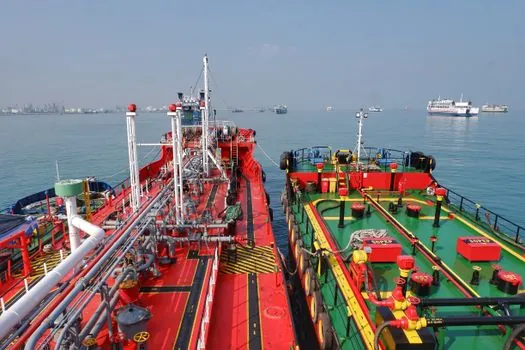
Laser powder bed fusion (LPBF) and electron beam melting (EBM) consume the highest-grade spherical powder, where defects from satellites or hollow particles translate directly into lack-of-fusion voids in marine service [S2][S7]. Directed energy deposition accepts coarser, less spherical cuts because the melt pool is larger, and is the standard route for repairing propeller blades and shaft overlays onshore [S2].
Metal injection moulding uses fine, often irregular powder below 22 µm bound in a wax-polymer feedstock, then sintered to near-net shape, which suits small marine fittings and valve internals where machining from bar would waste 60-80% of input material [S4][S6]. Conventional press-and-sinter PM, by contrast, leans on coarser iron and stainless powders plus graphite or copper infiltration, and is reserved for less critical brackets, mounts, and balance components on board [S4].
Who This Powder Path Is For, and Who Should Walk Away
This route is for shipyards, offshore fabricators, and naval specifiers buying AM or MIM feedstock for parts that face continuous seawater exposure, splash-zone fatigue, or sour-service downhole tooling, where titanium or 316L chemistry is already approved by class [S1][S2]. It is also for plants consolidating machined-from-bar fittings into a single MIM or LPBF cell, where buy-to-fly ratios above 5:1 justify the powder premium [S4][S6].
It is not for general structural shipboard brackets, cable trays, or handrails, where conventional carbon-steel fabrication is cheaper and field-repairable. Procurement teams buying in lots below a few hundred kilograms of 316L, or under tens of kilograms of titanium, will face premiums that no current AM economics recover; for those volumes, bar stock plus CNC machining is still the lower-risk path [S2][S4].
Standards, Specifications, and Traceability
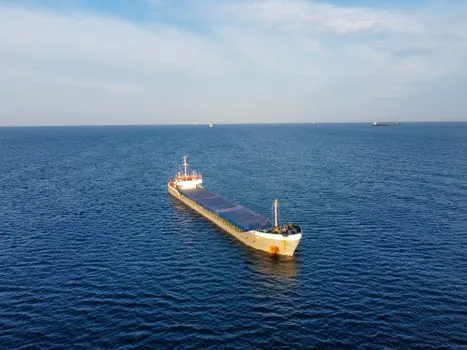
Marine-powder orders should reference ASTM B348 for titanium, ASTM A276/A479 or A240 for 316L chemistry, and ISO 9001 / AS9100-accredited atomization with batch-level certificates covering chemistry, PSD, flow, and tap density, which is the minimum evidence pack most class societies will accept for new builds [S1][S2][S6]. For sour-service components, NACE MR0175 compliance of the finished part, not the powder, is the binding rule, and powder suppliers typically provide ISO 22489 or similar test reports as supporting evidence [S2].
ASME and class-specific weld-procedure qualifications still apply when AM parts are joined to conventional fabrications, so powder traceability sheets must travel with the part through any post-process HIP or solution-anneal step. Skipping the certificate review at the powder quotation stage is the most common cause of marine AM parts being rejected at the shop floor or, worse, in service [S2][S7].
Limitations and Common Failure Modes
Salt-spray and chloride pitting are the headline failure modes for 316L when molybdenum drifts below ~2 wt% or when oxygen pickup during atomization pushes oxide inclusions above the spec ceiling, both of which lower pitting resistance in long-term immersion [S2][S7]. Hydrogen embrittlement is the equivalent silent killer for titanium AM parts, where H content above 0.015 wt% combined with residual stress from lack-of-fusion voids can drive sub-surface cracking under cyclic load [S1][S8].
For HEA powders, the open issue is long-term galvanic compatibility with adjacent 316L or Cu-Ni components, since the published corrosion data is dominated by short-term immersion testing and few fleet-aged references exist [S1]. Process-related failure modes, such as porosity above 0.5 vol% in LPBF builds, spatter contamination in EBM, and binder residue cracking in MIM, all reduce effective fatigue life and need to be tracked per build rather than per lot [S2][S7].
Sourcing and Cross-Reference for the Specifier
Specifiers should treat metal powder chemistry, PSD, and morphology as three separate line items in the RFQ, not a single "316L powder" line, because that is where marine AM and PM specifications most often get diluted during procurement. A useful adjacent reference for material-grade logic and the metal material selection chain is the broader category page, which frames how powder alloys sit inside a wider marine material strategy [S2][S5].
For teams new to additive procurement, the workflow overlaps with spec-driven material selection for 3D-printed medical devices, where chemistry-first and lot-traceability discipline are the same control points. Where marine parts also touch architecture or outfitting, decisions on metal curtain wall panels for shoreside facilities use a different but parallel spec-first logic. Trackable next signals: class-society position papers on AM propeller and valve components during 2026, and any revision of ASTM F3301 (powder bed fusion process specification) covering feedstock acceptance criteria.