
Mold and die shops now specify metal powder the same way they specify tool steel bar stock: by grade designation, particle size distribution, and oxygen content, not by generic material family [S3].
Three powder routes feed tool and die production in 2026: laser powder bed fusion (LPBF) for conformal-cooled inserts, metal injection molding (MIM) for small complex mold components, and continuous-casting mold flux powders for steel-mill casting molds. Each route has its own powder spec window, and crossing them is the most common procurement mistake [S2][S3].
LPBF and DED Powders for Tool Steel Inserts
H13 tool steel powder and maraging 18Ni300 (also marketed as M300) are the two workhorse grades for LPBF mold inserts and die components, with 18Ni300 favored where post-build aging hardness above 50 HRC is required [S3].
Particle size distribution for LPBF is typically 15 to 45 micrometers, with a median near 30 micrometers; flow rate is verified by Hall funnel, and sphericity above 0.9 is the practical floor for repeatable layer spreading [S3]. Oxygen content must stay below 0.1 wt% for H13 and below 0.05 wt% for titanium-bearing grades to avoid lack-of-fusion defects, since titanium aluminides and Ti-6Al-4V powders show sharp drops in ductility once interstitial oxygen climbs past that band [S3]. Production is dominated by gas atomization, which yields the spherical morphology LPBF recoaters demand, and a re-use cycle of 5 to 10 build cycles is normal before the powder's Hall flow rate degrades below spec [S3].
MIM Feedstock for Small Mold Inserts and Wear Parts
Metal injection molding consolidates fine metal powder with a polymer binder into a pelletized feedstock, injects it into a mold, debinds the binder, and sinters the part to near-full density [S2][S5].
MIM powder is finer than LPBF powder, typically below 22 micrometers, because the binder vehicle cannot transport coarser particles through thin mold features [S2]. Pre-alloyed stainless steels (316L, 17-4PH), low-alloy steels, and titanium dominate the MIM powder catalog, with material flexibility cited as the main reason MIM beats die casting for small complex mold hardware like ejector pins, thread inserts, and micro-gear segments [S4][S5]. The tradeoff is part weight: MIM is generally specified for components under 100 g, while die casting scales effectively to 10 to 15 lb castings, so the powder-route decision is set by part mass and alloy demand before geometry is discussed [S5].
Continuous-Casting Mold Powders: A Separate Material Class
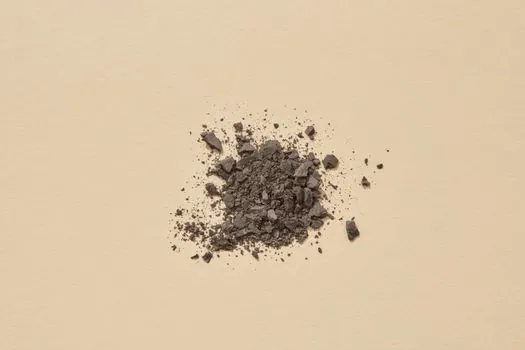
Mold powder in continuous steel casting is a slag-forming granular flux poured on top of the molten steel in the mold, not a metal feedstock, and its selection is driven by casting speed, steel grade, and mold oscillation parameters [S1].
The flux must melt at a controlled rate, form a lubricating film between the solidifying steel shell and the copper mold wall, and absorb inclusions rising from the melt, which makes its softening temperature, viscosity at 1300 to 1500 degrees C, and crystallization behavior the binding specs [S1]. Misclassification of mold flux as a metal powder is a recurring sourcing error because both arrive in granular form, but their selection logic and test methods diverge completely [S1].
Selection Criteria: Matching Powder to Process
Particle size, alloy family, and feedstock format set three gates that any mold or die powder must clear before economics enter the decision. [S5]
A direct comparison of the main options on the criteria a buyer actually screens against:
LPBF H13 or 18Ni300: particle size 15 to 45 micrometers, oxygen below 0.1 wt% (below 0.05 wt% for Ti grades), Hall flow rate per ASTM B213 typical acceptance 25 to 35 s/50 g, ideal for conformal-cooled insert cores and die sections rebuilt by directed energy deposition [S3]. MIM 316L or 17-4PH: particle size below 22 micrometers, binder content 4 to 8 vol%, sintering temperature 1200 to 1400 degrees C, ideal for small complex mold hardware under 100 g [S2][S5]. Continuous-casting mold flux: granular slag former, viscosity and softening point matched to casting speed, not a metal powder at all despite the shared name [S1]. Powder-metallurgy press-and-sinter, which is the older route covered in standard material selection guides for stainless, copper, nickel, and iron powders, sits between MIM and LPBF in part size and is still common for simple bushings and structural mold bases [S8].
How Powder Choice Compares Against Die Casting
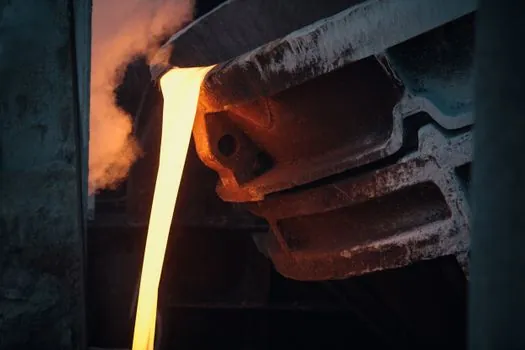
When the question is powder route versus melt route, MIM is the powder-side answer and die casting is the melt-side answer for similar geometries, and the spec split is sharp. [S5]
Die casting runs molten aluminum, zinc, or magnesium into a steel die, so its powder needs are zero; MIM runs a powder-binder feedstock through a plastic-injection machine, then debinds and sinters, which is why MIM can reach high-melting ferrous alloys that die casting cannot touch [S4][S5]. Die casting wins on cycle time and on parts from 0.5 to 15 lb, which is why lighting fixture, pump-valve, and agricultural-machinery hardware is almost universally die-cast rather than MIM or LPBF; the relevant tooling and machine guides for those segments are in the aluminum die casting machine selection for lighting fixtures and aluminum die casting machine selection for pump and valve bodies reference paths. Where a mold insert needs internal lattice cooling, titanium grade strength, or a maraging steel hardness profile, LPBF powder wins decisively over any melt route [S3].
Standards, Testing, and Failure Modes
Three test families govern metal powder acceptance for tool and die work: particle size distribution by laser diffraction (commonly ASTM B822), Hall flow rate per ASTM B213, and oxygen/nitrogen by inert gas fusion per ASTM E1409 [S3].
The dominant failure mode on the LPBF side is lack-of-fusion porosity from a coarsened powder bed, which is why reused powder is re-sieved at 45 micrometers and re-tested for Hall flow before re-introduction; on the MIM side, binder residue from incomplete debinding leaves carbon that inflates final hardness and embrittles the sintered part, and feedstock moisture above 0.05 wt% drives steam voids during sintering [S2][S3]. For the mold base itself, the choice between a powder-built insert and a conventionally machined tool steel block trades build height limits (typically 400 to 500 mm for commercial LPBF systems) against the design freedom of internal cooling channels that no milling strategy can produce [S3].
When to Use Which Route
LPBF powder is for mold and die shops that need conformal cooling, lattice inserts, or maraging-steel hardness in geometry that 5-axis milling cannot reach, and the budget supports powder atomization, sieving, and a controlled-atmosphere build chamber [S3].
MIM powder is for high-volume runs of small, complex mold hardware where the alloy must be stainless, low-alloy steel, or titanium and the part mass sits below 100 g, accepting the debind-sinter cycle cost in exchange for material flexibility [S2][S4][S5]. Powder-metallurgy press-and-sinter sits below both for simple structural components where metal material cost matters more than feature density [S7][S8]. Continuous-casting mold flux belongs in steel-mill procurement, not in a tool-room stockroom, despite the shared name [S1].
Trackable next signals for mold and die powder buyers: published atomization capacity additions from major gas-atomization suppliers, revision activity on ASTM B213 and B822 acceptance windows, and any new maraging-steel or hot-work tool-steel powders qualified for the 45 to 53 micrometer LPBF band that several machine builders are pushing as a productivity play [S3].