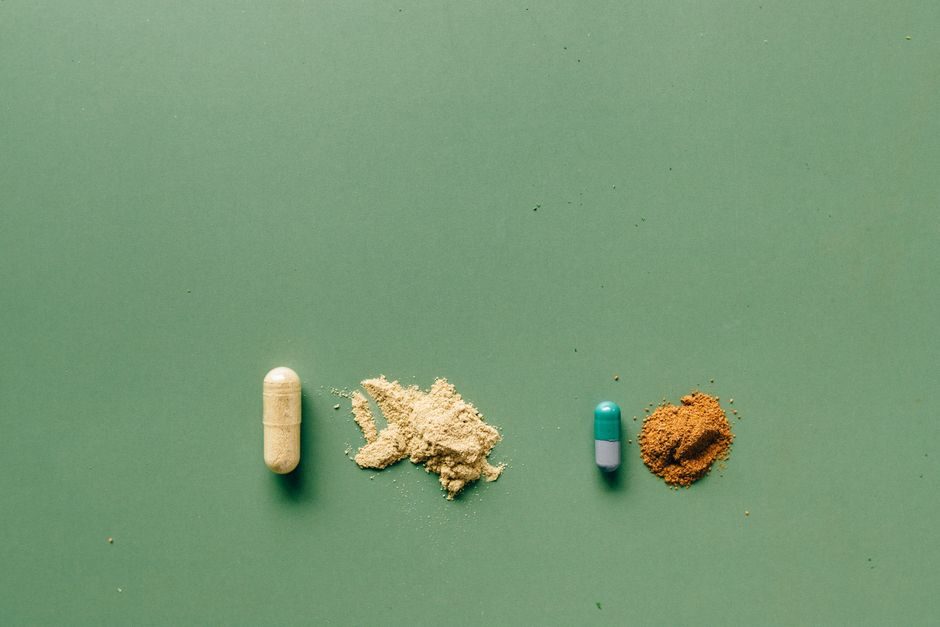
Metal powder and sputtering targets look alike on a receiving dock — both arrive as bagged or canned metal — but they sit at opposite ends of the materials spectrum: powder is a bulk feedstock engineered for melting, sintering or atomization, while a sputtering target is a dense, high-purity solid (planar disc or rotary tube) optimized to be ion-bombarded into a thin film [S7].
Across the supply chain surveyed between 2026-05-03 and 2026-07-02, the powder side is dominated by long-cycle European and Chinese atomizers (Sandvik, Makin Metal Powders, Hunan Ultra Minor Metal) [S1][S2][S4], while the target side is held by specialty chemical houses (FUNCMATER, Ultra Minor Metal) listing In2O3-SnO2, MoS2, Yb, SiO, HfO2 rotary and planar grades [S4][S7].
Form Factor, Purity Band and Dimensional Spec
Bulk metal powder for AM, MIM and PM typically ships at 99.0–99.9% metallic purity with particle size distributions from 5–45 µm for laser-bed AM and 10–150 µm for MIM, and tap densities in the 4.0–5.5 g/cm³ range for spherical gas-atomized grades [S2].
Sputtering targets are specified as 99.99% (4N) to 99.9999% (6N) metallic or compound purity, with relative density ≥ 95% (often ≥ 99% for planar semiconductor targets) and a bonded backing plate (Cu, Mo, SS) when water-cooled; rotary targets add a stainless or titanium sleeve and are run at 5–25 kW per cathode [S7].
One decisive number: Sandvik's Osprey GRCop-42 launch is positioned as a Cu-4 at.% Cr-2 at.% Nb alloy with full cradle-to-gate traceability for additively manufactured space propulsion hardware [S2] — a powder specification; the same chemistry as a sputter cathode would require 5N+ purity and a bonded Cu backing.
Production Method and Microstructure
Gas atomization (Sandvik Osprey line, 50+ years of in-house process data) yields spherical, high-flowability powder suited to laser powder-bed fusion and binder jetting [S2]; Makin Metal Powders (UK, 70-year copper-powder heritage) and Hunan Ultra Minor combine water-atomized irregular morphologies for sintered parts and bronze infiltrants with gas-atomized lots for thermal-management AM [S1][S4].
Metalysis promotes a solid-state electrochemical reduction route it claims delivers metal and alloy powders at lower cost and with a smaller process footprint than incumbent atomization, targeting titanium, tantalum and rare-earth feedstocks that are difficult to melt-atomize cleanly [S6].
Targets are made by hot pressing, cold pressing + sintering, hot isostatic pressing (HIP) or vacuum casting; FUNCMATER lists In2O3-SnO2 rotary, Yb rotary, MoS2 planar and HfO2 pellet formats in parallel, illustrating that a single supplier typically runs three or more consolidation routes [S7].
Selection Criteria: Decision Matrix

For a process engineer choosing between the two, the four criteria that matter are: end-use (bulk part vs thin film), required purity (99.5% vs 4N–6N), form factor (loose powder, bar, wire, disc, tube) and unit cost per usable unit (kg of finished part vs kg of deposited film). [S1]
On cost, commodity Cu and Fe powders sit in the $5–15/kg band from Makin, Sandvik and the Hunan trade hub [S1][S2][S4]; aluminum powder listings on go4worldbusiness are quoted $1–$1 per ton (CIF) for non-prime grades, an outlier that signals how far off-spec lots can drag the floor [S3].
On purity, scandium metal from ECHEMI (CAS 7440-20-2, atomic weight 45) is offered as a grey powder at rare-earth purity levels — the same scandium as a 4N–5N sputter target costs one to two orders of magnitude more per kg, because consolidation and bond-line QC add the premium [S5].
Application Fit and Mis-Fit
Metal powder is the correct answer for: laser-bed and binder-jet AM, metal injection moulding (MIM), press-and-sinter PM, brazing pastes, thermal-spray feedstock, and bronze infiltration of iron PM skeletons [S1][S2].
Sputtering targets are the correct answer for: semiconductor interconnects (Cu, Ta, W, Co, Ru, TiN), transparent conductive oxides (ITO / In2O3-SnO2 on display and PV glass), photovoltaic absorbers (CIGS precursors via selenide co-sputtering from MoS2 or In2Se3 cathodes), and tribological or catalytic coatings (MoS2 rotary for hard-disk and aerospace lubrication) [S4][S7].
The mis-fit cases that cost real money: using 99.9% gas-atomized Al in a PVD chamber sputters but will arc-strike and poison films because of trapped gas and irregular surface area; conversely, dropping a $4,000/kg 5N planar target into a vibratory bowl-feeder for MIM is specification nonsense — the wrong form, the wrong purity, the wrong cost basis.
Standards, Supply Map and Risk Bands

Most reputable powder suppliers hold ISO 9001; Makin Metal Powders publishes ISO 9001 + ISO 14001 + ISO 45001 + Modern Slavery Act 2015 compliance on its home page [S1]; Sandvik positions the Osprey line with material-expert pedigree and traceability documentation suitable for AS9100-tier buyers [S2]; Metalysis markets its process as lower-cost and lower-carbon, a claim buyers should pressure-test on energy-per-kg and recycled-content figures [S6].
On the target side, FUNCMATER's catalogue of ITO rotary, Yb rotary, MoS2 planar, HfO2 pellet and In2Se3 powder grades in a single product list [S7] reflects a tier of compound-semiconductor suppliers competing on chemistry range rather than atomization scale; Hunan Ultra Minor's storefront mixes metal powder, precious metal and metal sputtering target on the same trading-card [S4], useful for one-stop RFQs but a flag for buyers to separate the QC documentation of each line.
For engineers cross-checking cost drivers against other commodity inputs, the nickel alloy cost guide and the copper material selection map frame Cu-, Ni- and Cr-bearing feedstocks in the same cost-band language; for ceramic sputter targets the SiC vs ZrO2 spec cut and the industrial ceramic vs carbon fiber selection map cover the ceramic-side comparisons buyers run when HfO2 or SiO cathodes are under review.
Three signals to track in the next buying cycle: (1) whether Metalysis' solid-state route books commercial tonnage in Ti or Ta by end-2026 — a confirmed order would re-base powder pricing, (2) Sandvik's GRCop-42 dual-qualification in aerospace and defense supply chains — acceptance there sets the bar for AM copper alloy powder, (3) any move by Chinese compound-semiconductor suppliers to publish 6N rotary ITO datasheets with verified grain-size and bonding data, which would compress the current EU/Japan/Korea price premium on display-grade targets.
For component-level specifications, see metal curtain wall panel.