
Food and beverage metering pumps should deliver repeatable doses at the required flow and pressure while keeping product-contact surfaces sanitary, chemically compatible, and cleanable.
This guide covers diaphragm, piston-plunger, and hygienic positive-displacement metering pumps for ingredients, flavorings, preservatives, acids, and other liquid additions.
Define the dosing duty before choosing a pump type
A metering pump is a positive-displacement device that meters a defined liquid volume per stroke or per unit time; flow can be adjusted through stroke length, stroke frequency, or both [S3]. For food and beverage service, the required dose should be expressed in the process unit used by the plant, such as litres per hour, millilitres per minute, or kilograms per batch.
The process definition must include maximum expected flow, minimum dosing rate, suction and discharge pressure, fluid temperature, viscosity, solids content, chemical formulation, and the required control signal. A practical sizing target is to set maximum expected flow at 90% of pump capacity [S2]. Do not size from nominal batch volume alone, because dilution ratios, recipe changes, line losses, and temporary rate changes can change the real duty.
For batch dosing, compare the pump output with the batch volume and permitted dosing time. For continuous injection, specify the normal rate and the maximum rate required during startup or upset. A pump that meets average flow but cannot deliver the required rate against system pressure is undersized.
Compare the main metering pump configurations
Diaphragm pumps isolate the liquid from the drive and use a flexible diaphragm to displace fluid, which reduces leakage and limits contact with moving seals; they are common for corrosive, abrasive, or hazardous liquids [S3]. Piston-plunger pumps use a reciprocating piston and are favored where higher pressure capability and tight metering accuracy are required, although seal maintenance can be more demanding [S3].
For low-flow ingredient dosing, diaphragm construction is often the safer default because the fluid path excludes rotating internals and sliding seal contact [S3]. For high-pressure injection, compare the piston-plunger pressure rating and accuracy against the full system pressure, not just the downstream line nameplate.
Set flow, pressure, and viscosity limits
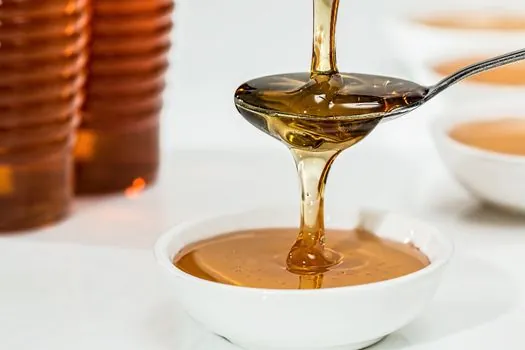
Standard metering-pump liquid ends generally cover clear liquids from water-like viscosity to approximately 1,500 cP. Products approaching 5,000 cP or containing light suspensions may require a special liquid end; products up to approximately 20,000 cP or containing up to 10% solids may require special diaphragms [S5].
Pressure must be specified at the pump discharge under the worst operating case. Include injection quill restriction, line friction, static head, fittings, valves, and any backpressure device. A pump selected at its nameplate flow with no allowance for discharge pressure may underdose even though its laboratory rating appears adequate.
Viscosity changes the pumping effort and can affect accuracy. Provide the fluid viscosity at the intended operating temperature, not only at ambient temperature. For beverages, specify whether the product is cold, ambient, or heated, because temperature changes both viscosity and the acceptable elastomer limits.
The comparison is straightforward: a diaphragm pump gives strong product isolation at normal and high viscosity only with the correct liquid end; a piston-plunger pump can suit higher-pressure duties but introduces seal and wear-part considerations; a sanitary pump prioritizes cleanability and hygienic construction, which must be balanced against pulsation and pressure capability [S3][S5].
Select food-grade materials and construction
Wetted materials should be selected from the complete formulation, including water, acid, alkali, solvent, flavor compounds, cleaning chemicals, and sanitizing agents. Common metering-pump construction materials include 316 stainless steel, C-20 stainless steel, PVC, and Kynar, but the material must be checked against corrosion, erosion, and solvent attack rather than selected from a generic food-contact list [S5].
For liquid ingredients, specify the exposed parts, including the liquid end, diaphragm or plunger, seals, gaskets, ports, fasteners, and any valve components. Stainless steel is commonly used where corrosion resistance is required, while polymer components can suit certain non-solvent formulations but may fail in aggressive service if the chemical compatibility data does not cover the concentration and temperature [S5].
Food-grade selection is more than a material label. The pump should be drainable, avoid dead legs and crevices where practical, and be arranged for cleaning without leaving product behind. For applications involving fresh milk, juices, fruit drinks, fruit pulps, or chocolate, the manufacturer must confirm that the selected configuration is suitable for the specific product and its solids behavior [S4].
Match controls, pulsation, and installation conditions
Electronic controls can adjust metering output and synchronize dosing with plant sensors or a batch sequence; metering-pump operation may also be coordinated through stroke-length or stroke-frequency adjustment [S3]. Specify the control signal, local controls, alarm requirements, power supply, and whether the pump must stop safely during a vessel-full or power-failure condition.
Positive-displacement metering pumps can produce pulsating flow, especially at low stroke rates or high viscosity. The installation should therefore include adequate suction and discharge conditions, a pulsation-damping arrangement where required, and protection against cavitation, dry running, and excessive inlet pressure.
For batch operations, validate the dose over the complete batch cycle rather than accepting an instantaneous flow reading. For continuous dosing, compare the actual delivered mass or volume with the recipe target after accounting for fluid density and temperature. A pump that meets average flow but shows unacceptable cyclic variation may still produce an unacceptable ingredient mix.
Food and beverage applications have different constraints
Flavoring, preservative, nutrient, acid, and water dosing are high-visibility uses for metering pumps because repeatable addition is needed to maintain product consistency [S3]. Low-volume flavor dosing favors a small positive-displacement unit with accurate adjustment and hygienic wetted parts. Higher-volume juice or beverage fortification requires enough capacity to feed the process without excessive oversized equipment.
Milk, juice, fruit drink, fruit pulp, and chocolate applications can involve solids, shear sensitivity, or viscosity changes. A hygienic pump may be necessary, but solids handling and pulsation must be reviewed before accepting the configuration [S4]. Pumps intended for bulk transfer should be assessed separately from precision dosing, since general transfer capacity does not establish ingredient dosing accuracy.
The mainstream diaphragm metering pump should not be selected where the duty requires very high pressure, sustained solid-laden flow, or a specific sanitary configuration that the manufacturer has not validated. Conversely, a piston-plunger pump should not be selected solely for maximum pressure if seal material, cleaning access, or product-contact requirements are unresolved.
Build a measurable procurement specification

A purchasable specification should state maximum and minimum flow in the process units, discharge pressure, suction conditions, fluid temperature, viscosity at that temperature, solids percentage, fluid density, chemical names and concentrations, wetted materials, control signal, duty cycle, and required clean-in-place procedure. The document should also identify the required accuracy and how it will be verified. [S3]
For a 100% process flow requirement, select a pump whose verified capacity is approximately 111–118% of that requirement, because 85–90% sizing maps to 100% of capacity divided by 0.85–0.90 [S2][S5]. This is a sizing rule, not a universal accuracy guarantee; the final acceptance test must use the actual fluid or a documented test fluid with suitable viscosity.
Compare quotation documents on operating flow at the specified discharge pressure, minimum stable rate, adjustment range, capacity turndown, accuracy method, duty-cycle limits, diaphragm or seal life, motor and gearbox details, sanitary certificates, wetted-part documentation, and available parts. For a related process comparison, see Metering Pump Selection for Chemical Processing.
Validate cleanability and dosage performance
Factory testing should verify flow at the specified pressure, not at zero-discharge or maximum unrestricted flow. Acceptance criteria can include measured output in litres per hour or millilitres per minute, deviation from the setpoint, stable suction, leakage inspection, and confirmation of control functions [S1][S3].
After installation, conduct a water or product-based verification that matches the intended fluid. Record the fluid temperature, viscosity, pressure, pump speed or stroke setting, and measured output. For food-grade service, add an inspection for product residue, drainability, and access for routine cleaning before release for production.
The strongest shortlist is the pump that meets maximum flow at 85–90% of capacity, remains stable at minimum turndown, handles the measured viscosity and solids content, uses verified compatible product-contact materials, and can be cleaned and maintained under the plant’s actual sanitary regime. The final decision should follow a documented test of those four variables: capacity, pressure, compatibility, and cleanability [S1][S2][S5].