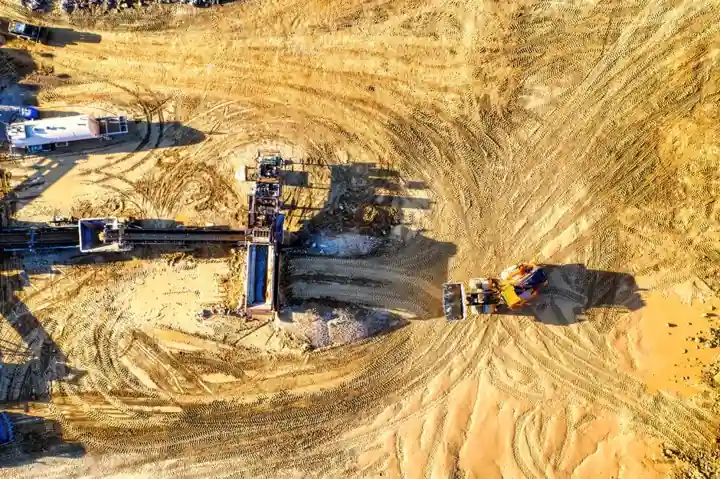
Field instruments on a 2026 haul-truck shovel circuit now have to survive shock loads above 10 g, dust ingress classified to IP6X, and ambient swings from −40 to +85°C, which is why most mining-grade suppliers split their catalogues into a heavy-mobile tier and a fixed-plant tier [S4][S5].
Process control in mining spans four layers: level, pressure, flow and gas detection on the slurry and process-water side; vibration and temperature on crushers, screens and mills; GPS/load monitoring on mining dump trucks; and a supervisory layer that links both into the plant process control network [S1][S2].
Two spec tiers, two price points
Tier 1 (fixed plant) draws heavily on standard process-control catalogues: 4–20 mA plus HART pressure and differential-pressure transmitters, Coriolis or magnetic flowmeters on slurry lines, and guided-wave radar level probes on leach tanks, with calibration traceable to ISO/IEC 17025 labs [S1][S2].
Tier 2 (mobile, high-shock) is engineered around rebuildable assemblies, hardened sensor mounts, and on-condition diagnostics: Boundary Equipment, for example, packages undercarriage systems, cylinder rebuilds and gearbox rebuilds as integrated reliability blocks for rope shovels, hydraulic shovels, drills and speciality tooling [S4]. The boundary between the two tiers is set by shock, vibration and ingress, not by the measurement principle itself.
Selection criteria that actually move a vendor off the shortlist
Three questions filter the field: (1) Is the instrument rated to the local hazardous-area classification, typically ATEX zone 1/2 or IECEx equivalent for methane and coal dust, with the certificate referenced on the datasheet, not just in marketing copy? (2) Can it communicate over the existing plant backbone, whether that is HART on 4–20 mA, Foundation Fieldbus, PROFIBUS PA, or Ethernet-APL on greenfield builds? (3) Is calibration traceable, with the certificate number reproducible on the serial-number plate? [S1][S2][S3].
Weschler Instruments, in operation for over 80 years and serving mining and metals alongside power, oil and gas, and water, groups its offering into instrument transformers, panel meters, power and energy management, signal conditioners, and a broad sensors and transducers line, an architecture that maps cleanly onto a crusher or mill MCC room [S1]. On the greenfield side, Streat Control, now under AMS Instrumentation and Calibration ownership since 19 May 2023, distributes AMETEK 3050-series quartz-crystal moisture analysers, Dimetix laser distance sensors, and McMenon FPD320 flow nozzles to Australasian mining and process clients [S2].
Comparison: fixed-plant vs heavy-mobile instrumentation
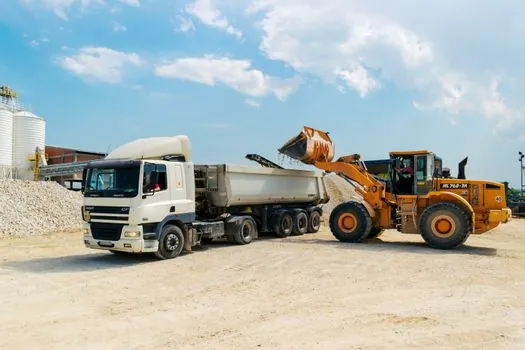
On cost, fixed-plant transmitters are cheaper per loop, but the cabling, junction boxes and I.S. barriers can push installed cost 2–4× the instrument price; on shock and vibration, mobile equipment demands >10 g survival and rebuildable mechanical assemblies, which is outside the scope of most process-control catalogues; on ingress, fixed-plant instrumentation typically targets IP66/IP67, while mobile gear commonly specifies IP6X plus dust-sealed connectors; on service model, fixed-plant runs on annual process calibration cycles, while mobile heavy equipment runs on component-rebuild programmes with full strip-and-rebuild at 20,000–40,000 hour intervals [S3][S4].
Where it is specified, and where it is not
This stack is appropriate for hard-rock and oil-sand operators running mixed fixed-plant and mobile fleets: the fixed plant needs traceable process control for slurry density, leach-tank level, and reagent dosing, while the mobile fleet needs load monitoring, cycle-time telemetry, and on-condition vibration [S4][S5]. It is less appropriate for purely residential or commercial sites, where intrinsically safe ratings, dust-proof enclosures and rebuild programmes are overspec; and for deep-sea or subsea fields, where the governing standard set shifts to API 6A/17D and hypersaline materials, not ATEX/IECEx for coal-mine methane.
Integration with non-destructive testing and lighting
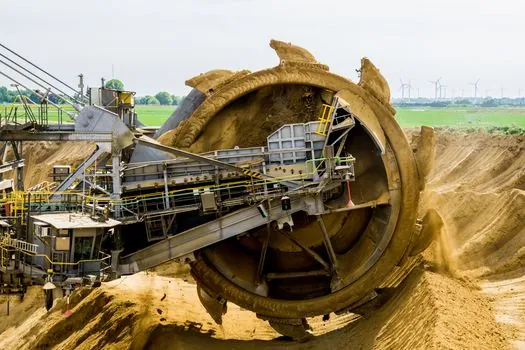
On-condition maintenance in mining increasingly pulls in NDT equipment for structural-health monitoring of shovel booms, truck frames, and mill shells, and pairs that with the same vibration sensors used for process control. Underground, lighting equipment and electric lamps on mobile equipment are increasingly linked to the same DC bus and telematics gateway as the instrumentation, which lets a single dashboard track machine health, payload and operator visibility. For dust-prone transfer points, anti-static equipment such as grounding straps and ionising bars is specified alongside the level and flow loops to keep measurement and personnel safety on the same engineering basis. [S1]
Supply-chain signals worth tracking
Three signals are worth watching into late 2026: the share of new builds specifying Ethernet-APL over HART, the regional roll-out of IECEx certification bodies in Africa and South America where mining is expanding, and the depth of distributor-led calibration networks outside tier-1 mining markets such as Canada, Australia, Chile and South Africa [S2][S3][S4]. Buyers comparing the 2026 supplier map against their own fleet should cross-check the Mining Equipment Manufacturing 2026 Spec Map against their shortlist, since the heavy-mobile and process-instrumentation tiers now share more suppliers than five years ago.