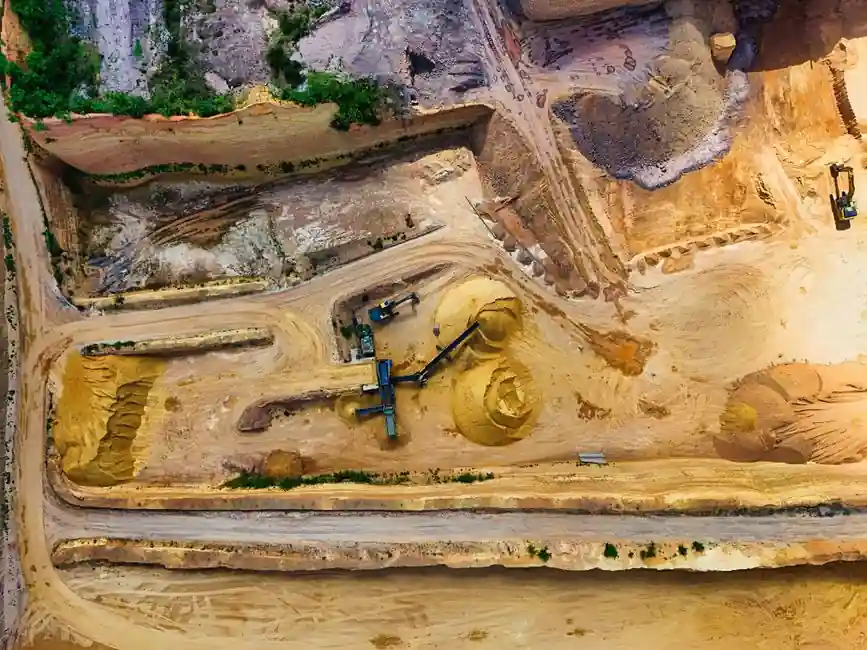
Fire doors in mine applications must be specified as full assemblies, with the door's fire rating matched to the wall or fire barrier into which it is set; a higher wall rating paired with a lower door rating compromises the compartment, so the labelled protective opening governs [S1].
Selection covers three distinct operating environments: underground hard-rock and coal workings, surface ventilation portals, and large equipment bays that need oversized fabric hangar-style doors, each with different rating, sealing, and structural demands [S1][S2][S4].
Rating Classes and What the Numbers Buy You
South African Firelab-tested mining fire doors have been issued a "Class C or D rating without insulation" with a fire resistance of 120 minutes at just over 1000 °C, a benchmark for uninsulated steel sliding sets used in conveyor entries and shaft stations [S2]. For U.S. plants, the operational gate is annual drop testing and certification of rolling and sliding fire doors to NFPA 80, performed by certified technicians, with the inspection record becoming the proof of compliance for the authority having jurisdiction [S3].
For comparison, the typical envelopes engineers see on tender sheets look like: 60-minute/90-minute/120-minute integrity on uninsulated steel sets; 120-minute integrity with insulation where hydrocarbon fires are credible; and fabric hangar doors that are not fire-rated but are specified for blast, wind, and thermal cycling at mining ventilation portals [S2][S4]. A door whose rating is below the wall it sits in should be rejected at the spec gate, because the entire zone is compromised during a fire if the assembly does not match the barrier [S1].
Underground Installation Gates: Frame, Anchor, Seal
The frame is only as stable as the substrate; inspectors must check density at anchor points, clean dust and debris, and confirm no crumbling concrete before mechanical anchors or fire-stopping materials are placed, because anchor failure in a fire precedes door failure [S1]. Frame squareness is non-negotiable, since continuous equipment vibration in mines shifts the frame over time, changing seal compression and letting smoke into adjacent compartments [S1].
Sealing is a separate spec line: intumescent strips and smoke seals must be installed exactly as specified, with perimeter gaps filled with certified fire-stopping material, because even small leaks compromise the mining fire protection system [S1]. The three most common installation failures underground are frame misalignment, improper anchoring for vibration, and poor perimeter fire-stopping, with a fourth recurring issue of mixing non-approved hardware into a labelled assembly [S1].
Self-Closing and Positive Latch: the Functional Test
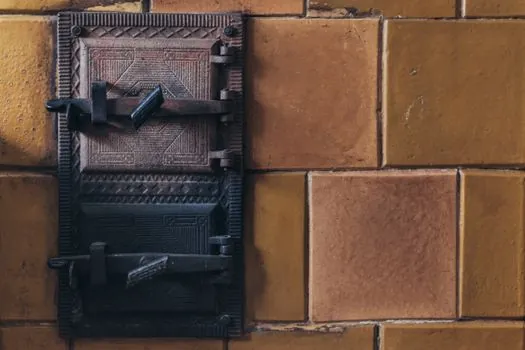
Every mine fire door must close fully and positively latch on its own; a door that does not self-close and latch cannot be relied on as a protective opening, regardless of how it was anchored or sealed [S1]. The field test is straightforward: open fully, release from different angles, confirm the latch engages without manual assistance, observe airflow, and adjust closers without exceeding the rated specifications [S1].
This functional check is the practical counterpart to the annual drop test required for rolling and sliding doors under NFPA 80, where trained technicians verify that the door drops under its own power, the fusible link or detector releases at the rated temperature, and the curtain seats in the guides [S3]. A fire-rated door that fails self-closing in a daily walk-through fails the same way a rolling door that fails the drop test fails: the assembly is no longer a labelled protective opening, and the wall rating it sits in is effectively downgraded.
Oversized Doors for Ventilation Portals and Equipment Bays
Where the opening is too large for a conventional fire-rated steel set, the procurement question shifts from rating to structural and environmental performance, and fabric hangar doors from suppliers such as ASSA ABLOY Megadoor are custom-built to widths over 50 m and heights over 30 m for mine ventilation portals and large equipment bays [S4]. These doors are PVC-coated fabric panels running between horizontal metal beams, lifted by hoist units on steel cables in a vertical folding configuration, and they require no side room or ground tracks, which matters on uneven mine benches [S4].
Environmental envelopes quoted for these fabric sets are operating temperatures from -35 °C to +70 °C as standard, with arctic fabric available for lower limits, and patented safety arrestors that prohibit uncontrolled descent or sudden drop [S4]. Wind and dust resistance is built in, including a patented wind-lock system rated for gale-force conditions, and the panels are translucent to lift interior lighting on equipment-bay floors [S4]. Independent lab testing has run these fabric doors to over one million high-frequency open/close cycles in dusty, harsh environments, which is the durability signal procurement should require in writing rather than rely on marketing copy [S4]. A standard fire door is not a substitute here: the application is not compartmentation but weather-tight, large-span access.
Compliance Documentation: What the AHJ Will Ask For
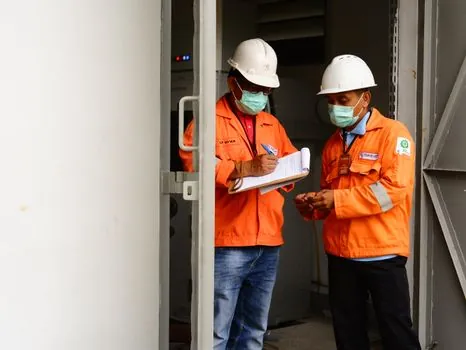
Documentation is the part that actually decides whether a fire door is "in service" or "deficient" on inspection day. For rolling and sliding fire doors in U.S. facilities, the deliverable is the inspection, testing, and certification package meeting NFPA 80 requirements, performed by certified trained technicians, with labels and official reports kept on file [S3]. For South African and African mining operations, the comparable artefact is the Firelab test report and Class C or D rating certificate issued for the specific assembly [S2].
For underground hard-rock and coal installations, the site record should also include the original frame squareness check, anchor torque values, fire-stopping product data sheets, and the functional self-close/latch test log, since these are exactly the failure points the AHJ returns to when a door is challenged after an incident [S1]. Replacing a defective hinge, broken handle, or faulty locking mechanism is straightforward field work, but doing it on a door that has lost its label is not the same as restoring the labelled protective opening [S3].
Selection Criteria vs Door Type
For spec sheets, the main door types line up against decision criteria as follows. Uninsulated steel sliding or roller fire doors, 60-120 minute integrity, no insulation credit, lowest cost, suited to conveyor crossings and shaft stations where hydrocarbon fires are not the dominant risk [S2]. Insulated steel fire-rated sets, 120-minute integrity with insulation, higher cost and weight, suited to diesel stores, power distribution rooms, and any zone where the fire risk analysis demands a fire door that also limits heat transfer [S1]. Fabric vertical-folding hangar doors, no fire rating, oversized spans to 50+ m wide and 30+ m high, suited to ventilation portals and equipment bays where the gate is wind, dust, and thermal cycling rather than compartmentation [S4].
Common selection failure modes are predictable: specifying a fire door below the wall rating, anchoring a frame to a substrate that has not been density-checked, omitting the intumescent strip or smoke seal to save install time, mixing non-approved hardware into a labelled assembly, and skipping the annual drop test or functional self-close test on the assumption that a heavy steel set will close itself [S1][S3]. Mining ventilation and conveyor systems are also covered in adjacent spec work, including VSD selection for mining, where hazardous-area classification and motor duty drive the same kind of evidence-based gate.
The next nodes to track are the mine's risk-zone map (which areas are compartmented and to what wall rating), the certified test report on file for each labelled assembly, and the annual drop-test or self-close log that proves the door still works as a system, not just as a piece of steel on a frame [S1][S3].
For component-level specifications, see mining dump truck.