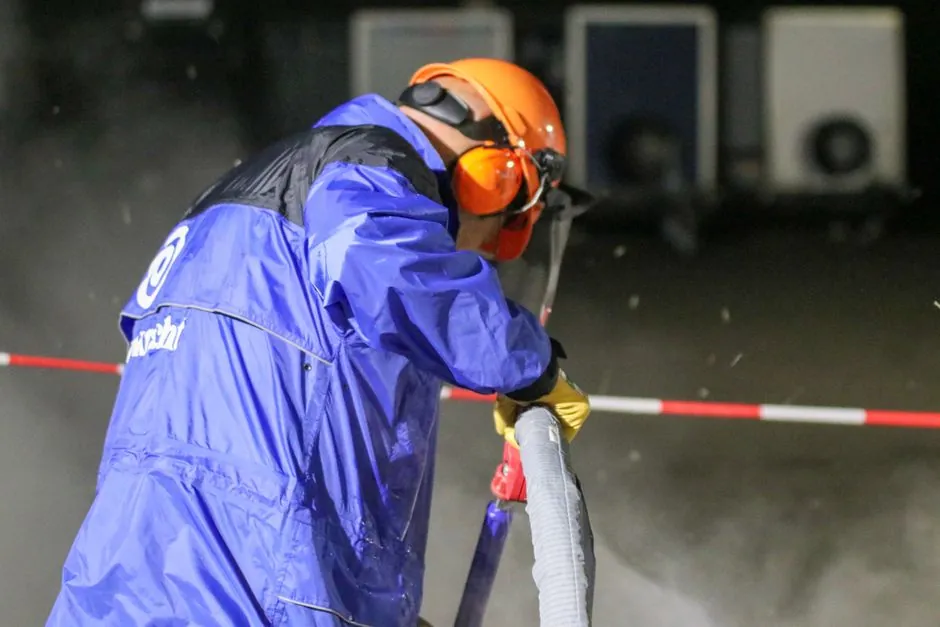
Underground hard-rock and coal operations, surface open-pit work, and tunneling each require a different head-protection profile, and the dominant decision gates in 2026 remain the same three: the applicable standard (MSHA, ANSI/ISEA Z89.1, IS 2925, or EN 397), the type/class combination (Type I vs Type II, Class G/E/C), and the accessory stack (chinstrap, lamp bracket, visor, slots for earmuffs) [S1][S3][S4].
Mining consistently ranks among the highest-risk occupations for traumatic head injury, and 2025 industry guidance from Protective Industrial Products (PIP) lists hard hats as mandatory across all mining operations, with a growing shift toward ANSI Z89.1 Type II helmets that add lateral impact protection rather than only top-impact resistance [S3]. For background on the broader head-protection taxonomy used across industries, the safety helmet encyclopedia entry lays out the same Type I/II and Class G/E/C vocabulary that governs every mining specification.
Governing standards and the regulatory split
MSHA enforces its own PPE rule at 30 CFR 77.1710, with paragraph (d) specifying that hard hats and other protective devices must be provided and worn where falling objects or other head hazards exist, and the rule is administered alongside the Federal Mine Safety and Health Act of 1977 and the MINER Act of 2006 [S4]. The parallel Indian standard, IS 2925 (1984, second revision, reaffirmed 2010), covers material, construction, finish, and performance requirements for helmets used in mining, tunnelling, quarrying, ship-building, and similar heavy industry, and its scope is explicitly written around the falling-object hazard that defines most mining head-injury events [S2].
Where MSHA does not prescribe a specific Z89.1 class, site safety officers default to ANSI/ISEA Z89.1-2014 (the current U.S. consensus standard referenced by 2025 mining-PPE guides), which splits helmets into Type I (top impact only) and Type II (top + lateral impact), then subdivides by electrical class: Class G (up to 2,200 V), Class E (up to 20,000 V, formerly Class B), and Class C (no electrical protection) [S3][S6]. For operations that also generate arc-flash exposure, safety gloves and arc-rated garments are typically specified in the same PPE matrix as the helmet, since the same NFPA 70E hazard category dictates both.
Type I vs Type II: when lateral impact decides it
Type II helmets have become the default ask in 2025 mining-PPE literature because modern underground drifts, low-back stopes, and mobile-equipment cabs can deliver side-on impacts from rib spall, scaling bar rebound, or a swung hose, none of which a Type I shell is designed to absorb [S3][S6]. The trade is weight and ventilation: Type II shells run a few hundred grams heavier than a basic Type I cap and tend to trap more heat in the deep-mine environment, so a vented shell is often paired with Type II in dry, non-electrical headings [S3].
For surface operations where the dominant hazard is a falling tool from a haul-truck box or a highwall bench, a Type I Class E or G cap is usually sufficient and is lighter, cheaper, and easier to fit with a full-brim sunshade, an important comfort factor on 12-hour open-pit shifts [S3][S6]. Decision rule used by most spec writers: specify Type II for any worker who enters a heading with sidewall exposure within arm's reach, or who rides in an enclosed equipment cab, and Type I for open-pit, stockpile, and mill-yard roles where overhead falling objects dominate the risk picture.
Electrical class and dielectric rating
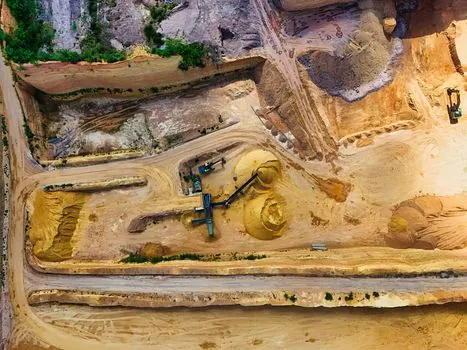
Class E (electrical, up to 20,000 V) is the typical minimum around energized trolley haulage, 480 V to 4,160 V substation gear, and trailing-cable couplers, while Class G (general, up to 2,200 V) is acceptable for low-voltage service trucks and lighting circuits [S3][S6]. Class C helmets carry no dielectric rating and should only be specified where no contact with energized conductors is possible; they are commonly used in confined-space tank work, not in live switchgear rooms or in headings with trolley wire. Note that vented Type II shells almost always carry a lower dielectric rating or are explicitly Class C, because the vents create a deliberate path to the head; verify the printed class on the shell before approving a vented model in an electrical zone [S1][S3].
Shell material, temperature range, and durability
PC/ABS (polycarbonate/acrylonitrile-butadiene-styrene) blends have become the dominant material in the 2024–2025 generation of Type II mining helmets, with the Honeywell Fibre Metal Safety Helmet datasheet rating its PC/ABS shell for -30°C to +50°C (-22°F to +122°F) continuous service and pairing the shell with a six-point ratchet suspension for impact distribution [S1]. Traditional materials still in service include high-density polyethylene (HDPE) for low-cost Type I caps, fiberglass (GRP) for high-heat smelter-adjacent work, and phenolic for legacy coal mines; HDPE and PC/ABS cover the vast majority of mainstream mining volume [S1][S2].
IS 2925 (1984) classifies shells by construction types such as rigid shells with a suspension harness inside, and prescribes impact and penetration tests that any mining-spec helmet must satisfy, regardless of which polymer or composite the manufacturer chose [S2]. For procurement, a useful engineering check is the printed temperature range on the datasheet: a shell rated only to +45°C is not the same tool as one rated to +50°C in a deep-level gold mine stope where wet-bulb temperatures routinely approach the upper limit.
Suspension, chinstrap, and fit system
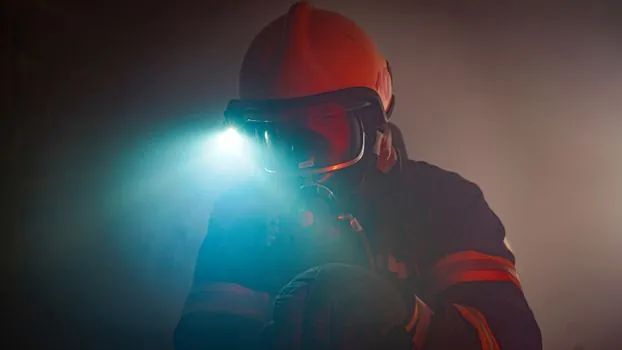
Six-point ratchet suspensions have displaced the older four-point pin-lock in every modern Type II reference design, because the extra load paths reduce peak force transmitted to the skull and let the ratchet wheel tune headsize on the fly without removing the helmet [S1]. A three-point chinstrap is the second non-negotiable for mining, since a helmet that survives an impact but tumbles off during the rebound is a failure mode the standard tests do not cover, and 2025 PIP guidance lists chinstraps as a popular factory-installed option specifically because a fall should not equal an unhelmeted head [S1][S3].
Accessory integration matters in real operations: miner’s lamp brackets (cap-lamp clips), slots for earmuff attachment, side slots for visor or mesh face screens, and goggle retainer clips are all common mining-specific requirements, and they are easiest to fit on a modern industrial helmet than on a generic Type I cap [S3]. For workers who also need eye protection, the standard pattern is a safety glasses insert plus a removable polycarbonate visor, both of which the Honeywell datasheet lists as the certified accessory stack on its PC/ABS shell [S1].
Comparison: helmet options lined up against decision criteria
Four candidate helmet profiles cover the bulk of mining specifications, and they line up as follows against the criteria a safety officer actually uses: [S3]
- Type I Class E HDPE cap: lowest cost, lightest weight, top-impact only, dielectric to 20 kV, suited to surface haulage and stockpile work where overhead is the dominant hazard [S3][S6].
- Type I Class G HDPE full-brim: adds a brim for sun and drip protection, dielectric to 2.2 kV, suited to open-pit drillers and survey crews working around low-voltage service power [S3].
- Type II Class E PC/ABS with six-point ratchet and chinstrap: lateral impact rated, dielectric to 20 kV, -30°C to +50°C service, suited to underground hard-rock and tunneling crews, with cap-lamp bracket and earmuff slots [S1][S3].
- Type II vented PC/ABS: lateral impact rated, typically Class C (no dielectric), lightest Type II option, suited to dry, non-electrical headings where heat stress outweighs shock risk [S1][S3].
Accessories, communications, and the emerging smart-helmet layer
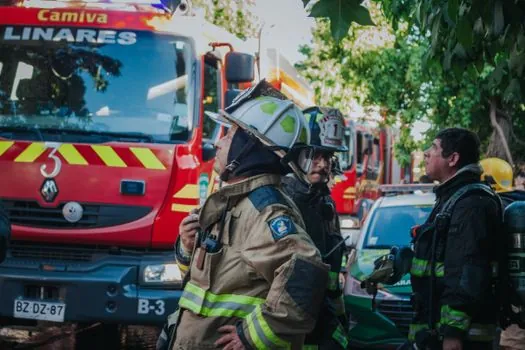
2025 academic work on miner helmets describes infrared-based proximity sensing and environmental alerting modules that integrate into the shell, with the explicit goal of warning the wearer about poor visibility, nearby collisions, and gas anomalies in low-light headings [S5]. The same research paper flags helmet-mounted gas and proximity modules as a real engineering direction, although as of 2025 these are still in research and pilot scale rather than standard issue at any major operator. The cross-industry reference for this trend is the type-class-fit matrix used by oil and gas specs, and the parallel article Oil and Gas Safety Helmet Spec Map walks through the same Type/Class/fit gates in a different hazard setting.
For routine surface mining, the practical accessory stack is a cap-lamp bracket, a chinstrap, slot-mounted earmuffs with the appropriate SNR/NRR for the noise map, a mesh or polycarbonate visor, and a high-visibility reflective decal set, all of which PIP's 2025 mining catalog and the Honeywell datasheet treat as the default rather than the premium configuration [S1][S3]. Where a site also issues respirators for silica or diesel particulate, fit-testing is faster when the helmet suspension is ratchet-adjustable, because the respirator strap can be seated first and the helmet dialed in second.
Inspection, replacement, and common failure modes
The most common mine-side failure is UV-driven embrittlement of HDPE shells left in direct sun on equipment decks, which is why most operators enforce a 2–5 year service life on HDPE caps regardless of visible damage, with a hard cut at any shell that has taken a major impact [S3]. PC/ABS shells are more UV-tolerant but fail by stress-cracking around accessory slots when the worker frequently clips and unclips cap-lamp cables, so the inspection walk should always include the slot edges and the chinstrap anchor points, not just the crown. Sizing-related failures show up as a helmet that rocks back on the head when the wearer looks up, which usually means a wrong-size shell rather than a worn suspension, and a six-point ratchet is the cheapest fix.
Two decision gates are worth tracking through 2026: any site that still issues only Type I caps in headings with rib-spall exposure should be moving to Type II Class E PC/ABS as standard, and any site that issues vented Type II in proximity to trolley wire or 4 kV cable couplers should verify the printed dielectric class before the next cap-lamp replacement cycle. Cross-referencing the broader construction-site helmet selection guide helps safety engineers avoid the common error of specifying a construction cap into a coal heading where MSHA dielectric and flame-resistance requirements are stricter.