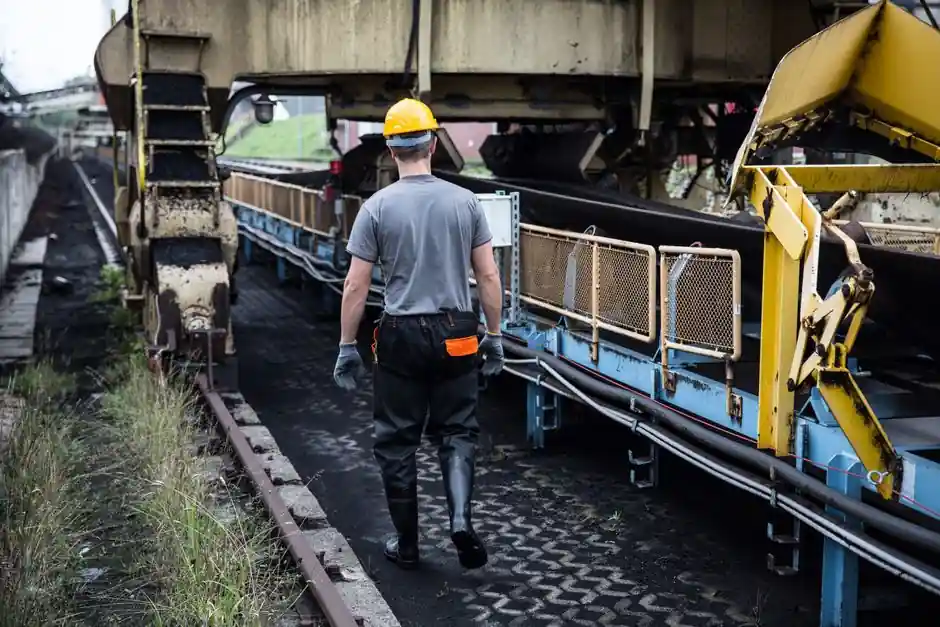
Chemical plants require Type II head protection with chin strap, chemical-resistant shell (HDPE or glass-reinforced nylon), and Class E electrical proofing to 20,000 V as a baseline specification for indoor process units, per OSHA SHIB 3-6-2024 [S1].
Selection on a chemical site is governed by three overlaid risks: impact from falling objects and pipework, splash from corrosive or solvent chemicals, and incidental contact with live conductors. A specification that fails any one of these three fails the job, regardless of price or comfort.
Type I vs Type II: Where the Impact Energy Lands
ANSI Z89.1 splits industrial helmets into Type I (top-of-head impact only) and Type II (top and lateral impact) per OSHA SHIB 3-6-2024 [S1]. Chemical plants with congested pipe racks, valve manifolds, and overhead utilities expose the side of the head to struck-by hazards, which is why Type II is the operational default on process units.
OSHA's oil and gas guidance, which chemically overlaps with chemical plant duty, explicitly recommends Type II head protection with integrated eye and face protection, such as face shields and goggles, for sites with chemical exposure and severe impact risk [S1]. Type I remains acceptable in low-clearance warehousing or open tank farms where lateral strikes are unlikely, but it is not the conservative choice for indoor process blocks.
Class G, E, and C: Choosing the Electrical Rating
Class G (General) helmets are proof-tested at 2,200 V phase-to-ground, Class E (Electrical) at 20,000 V phase-to-ground, and Class C (Conductive) provides no electrical protection, all defined under ANSI Z89.1 as referenced by OSHA SHIB 3-6-2024 [S1]. For chemical plants with 480 V motor control centers, 4,160 V distribution, and outdoor substations, Class E is the typical specification.
Class G is acceptable for low-voltage instrumentation rooms and control buildings, but only after a documented hazard assessment confirms no exposure above 2,200 V. Class C is restricted to locations where static discharge is the dominant concern, for example, during transfer of certain solvents, and is paired with separate earthing via a wrist or heel strap rather than relying on the helmet.
Shell Materials: HDPE vs Glass-Reinforced Nylon vs ABS

ANSI/ISEA Z89.1-compliant helmets use shell materials ranging from high-density polyethylene (HDPE) to glass-reinforced nylon, per OSHA SHIB 3-6-2024 [S1]. HDPE offers good chemical resistance to acids, alkalis, and many solvents at a low unit cost, which is why it dominates bulk purchase orders for general process workers.
Glass-reinforced nylon shells tolerate higher continuous temperatures (often rated above 150 °C) and provide better dimensional stability under chemical attack, which is preferred for operators working near reactors, dryers, or hot utility lines. ABS shells are common in construction hard hats but show poor resistance to ketones, esters, and chlorinated solvents, so they are a poor fit for chemical plants. When chemical splash is the dominant risk, the spec should call out the shell, suspension, and accessory face shield as a system, not three independent items.
EN 397, IS 2925, and Optional Performance Add-Ons
European plants typically cite EN 397 for industrial safety helmets, with optional tests for very low temperature (-30 °C or -40 °C), electrical insulation at 440 V, lateral deformation, and molten metal splash, per the EN 397 test menu [S5]. Indian process plants often reference IS 2925 (1984), which explicitly states that chemical, oil, and other special hazards require supplementary requirements beyond the base standard [S2].
That IS 2925 clause (0.4) matters: it means a procurement order that cites only IS 2925 with no chemical addendum is not actually fit for purpose on a chemical site. The same logic applies under EN 397, where the optional chemical resistance and molten metal tests must be invoked explicitly in the purchase spec, since the base standard does not require them. The OSHA SHIB also lists chin straps as effective for keeping the helmet on during slips or falls, and recommends them for all head protection in elevated or awkward work [S1].
Suspension, Chin Strap, and Accessory Integration
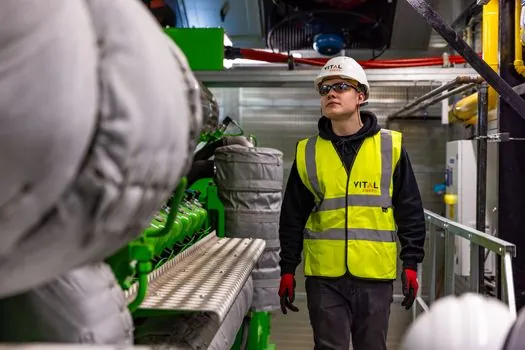
The internal suspension (typically a 6-point or 8-point webbing or ratchet system) controls how impact energy is distributed to the head, while the chin strap keeps the helmet on during a slip or fall, per OSHA SHIB 3-6-2024 [S1]. A 4-point suspension is acceptable for Type I ground-level work, but a 6-point or 8-point suspension is preferred for Type II process units to reduce rotational force on oblique impacts.
Accessory integration is where most chemical plant specs fail in practice. Face shields rated for chemical splash (typically to EN 166 or ANSI Z87.1) must be mounted on the helmet shell, not on a separate headband, so the operator does not have to choose between head and eye protection. Add-on ear muffs, communication systems, and impact indicator strips for concussion awareness are listed as available options under the same OSHA SHIB [S1]. For the chemical environment, the priority ordering is: Type II > Class E > chemical-resistant shell > 6-point suspension > chin strap > clip-on face shield.
Comparison Table: Helmet Build by Chemical-Plant Role
Role-by-role selection for chemical plants can be lined up against three decision criteria: impact type (I vs II), electrical class (G, E, C), and chemical-resistant shell material. An indoor process operator handling acids and solvents typically gets Type II / Class E / HDPE or glass-reinforced nylon; an instrumentation technician in a control room runs Type I / Class G / HDPE; a maintenance worker near live 4,160 V switchgear steps up to Type II / Class E / glass-reinforced nylon with arc-rated face shield; and a solvent transfer operator on an open tank farm drops to Class C for static control, paired with a separate earthing strap. [S4]
These are typical, not universal: the hazard assessment drives the final spec, and a documented risk register is the audit trail. The oil and gas safety helmet spec map covers an adjacent duty profile with overlapping chemical and electrical hazards, useful for plants that run both oil and gas and chemical assets on the same site.
Inspection, Service Life, and Disposal Triggers

OSHA requires employers to ensure head protection is in sanitary and reliable condition, which means a documented inspection regime: shell for cracks, crazing, or chemical attack; suspension for torn webbing, broken stitching, or deformed plastic; and accessories for clouding or chemical degradation of the face shield. Helmets exposed to a major impact, even without visible damage, must be removed from service because the energy-absorbing capacity of the shell and suspension is depleted on the first strike. [S1]
UV exposure, repeated chemical contact, and thermal cycling shorten service life well below the manufacturer's nominal 5-year shelf life, and field data from chemical operators typically caps working life at 2-3 years. IS 2925 also recommends periodic sterilization testing at suitable intervals where biological contamination is a concern, which applies to pharmaceutical, agrochemical, and food-grade chemical plants [S2]. For routine petrochemical and bulk chemical units, the working assumption is replacement on impact or on visible degradation, whichever comes first.
Common Specification Errors and Sourcing Traps
Three procurement failures recur on chemical plant helmet orders. First, specifying a Class G helmet as a cost saving on a site with confirmed 4,160 V exposure; the unit price gap to Class E is small, and the liability cost of an under-spec is not. Second, omitting the chin strap from the line item, then discovering that operators working at height or near rotating equipment are losing helmets during slips. Third, accepting a general-purpose ABS shell where HDPE or glass-reinforced nylon is required for chemical resistance; ABS fails fast on ketones and aromatics. [S1]
When sourcing, the spec should reference the governing standard by number (ANSI Z89.1, EN 397, IS 2925), the required type and class, the shell material, the suspension points, and the accessory interface. Pneumatic and rotating equipment adjacent to chemical reactors adds struck-by and entanglement risk that pushes the recommendation further toward Type II with chin strap and integrated face shield, consistent with OSHA's oil and gas guidance [S1]. Related reading on adjacent process equipment selection is available in the bucket elevator selection for chemical shipping spec map and the submersible pump selection for chemical processing spec map, which cover material and process interfaces that typically share the same plant risk register as head protection.
Trackable signals for the next review cycle: any revision to ANSI Z89.1 impacting Type II lateral impact thresholds, EN 397 updates to the chemical resistance optional test, and field reports of helmet shell degradation on specific solvent exposures. A safety helmet specification that documents type, class, shell, suspension, chin strap, and accessories in one line item is auditable, repeatable, and defensible after an incident.
The underlying component specifications are covered under chemical anchor, and chemical reagent.