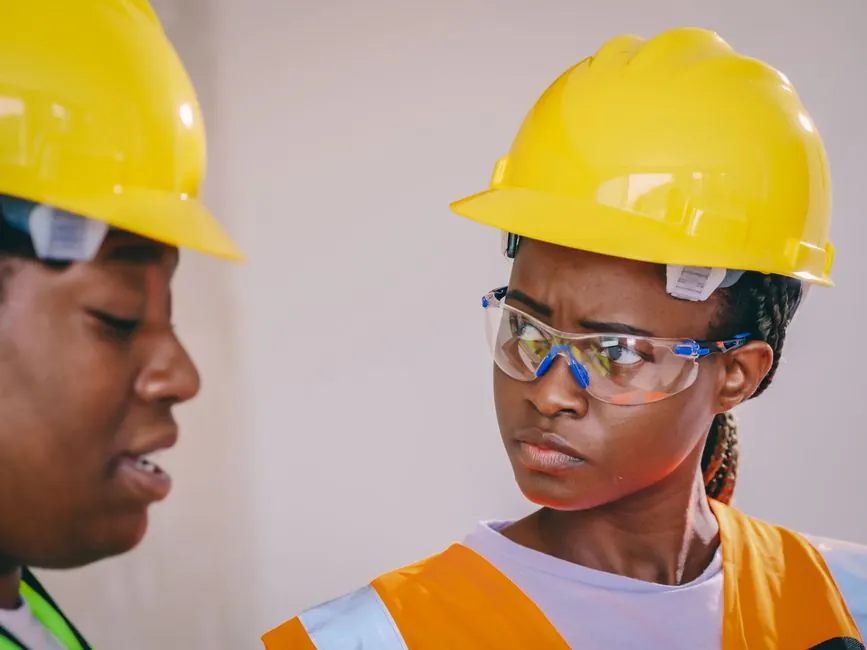
Selection of head protection for construction is driven by three variables: ANSI Z89.1 type (Type I top-impact vs Type II top + lateral), electrical class (Class G, E, or C), and retention style (traditional brim vs chin-strap climbing helmet), as defined under 29 CFR 1926.100 and the consensus standards OSHA lists as compliant [S3][S4].
OSHA does not certify or approve any brand of helmet; compliance is met when the helmet satisfies one of the listed consensus standards and the employer matches the rating to the documented jobsite hazard inventory (impact, falling or flying objects, electrical shock and burns) [S3][S4].
Type I vs Type II: Direction of Impact Protection
Under ANSI Z89.1, Type I helmets are tested and rated for impacts to the top of the head only, with no lateral component in the certification test, which makes them the default for general construction, road and highway work, and material handling where the dominant hazard is a vertical falling object [S2].
Type II helmets are evaluated for front, back, and side impact in addition to top impact, and are increasingly specified on sites with moving equipment, elevated work, struck-by exposure, or documented slip/trip/fall risk, where the head-strike vector is not purely vertical [S2].
In 2023 OSHA announced it is replacing traditional hard hats worn by its own employees with modern safety helmets to improve protection from side impacts, slips, and falls, an agency-level signal that the regulator views Type II and climbing-style retention as the higher-protection option, while employer compliance requirements continue to be hazard-based rather than brand-based [S2]. A useful cross-reference is the broader safety helmet entry, which covers shell materials, suspension geometry, and accessory slots that the type and class ratings do not capture.
Class G, Class E, and Class C: Electrical Performance
ANSI Z89.1 electrical class is independent of type: Class G (general) is rated to 2,200 volts, Class E (electrical, formerly Class B) is rated to 20,000 volts, and Class C (conductive) provides no electrical insulation and explicitly excludes any conductive metal parts from the shell [S2][S4].
For work near energized overhead lines, switchgear rooms, or live panel work, Class E is the conservative default because of the 20 kV dielectric rating, while Class C should be restricted to sites where the electrical hazard has been formally excluded and the helmet is being chosen for impact only [S2].
Class G and Class E helmets both insulate, but a Class C shell with vented slots (and any user-added metal accessory brackets) defeats that protection, so a written hazard assessment is required before a Class C shell is issued, not just a preference for weight or ventilation [S2][S4].
Climbing-Style Safety Helmets vs Traditional Hard Hats
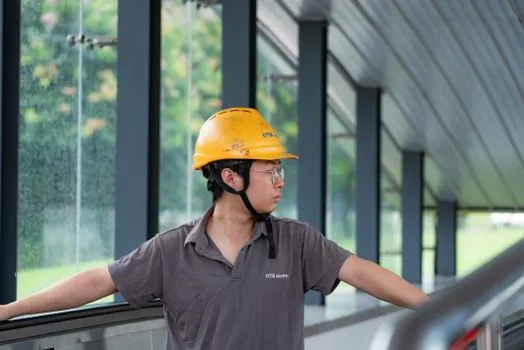
Climbing-style industrial safety helmets, the category often labelled OSHA safety helmets, are distinguished by a chin strap and a foam impact liner so the shell stays on the head during a fall, slip, or swing event, which is the failure mode that causes a hard hat to be off-head precisely when the impact occurs [S2].
These helmets are typically used in steel erection, utility work, elevated or climbing tasks, and confined-space construction, where retention under dynamic load is part of the risk model, not just impact attenuation at the crown [S2].
OSHA's own replacement of agency-issued hard hats with this style in 2023 was driven by side-impact and slip/fall data, and the design intent is that a chin-strap retention system tolerates a fall from elevation without the shell rotating off the head, the exact failure mode a Type I or Type II traditional brim hat cannot prevent [S2]. For sites where head protection must coexist with eye protection, the safety glasses article documents how chin-strap geometry interacts with spectacle temples and side shields.
Mandatory Wear Triggers and Employer Duties
29 CFR 1926.100(a) requires protective helmets for employees working in areas where there is a possible danger of head injury from impact, falling or flying objects, or electrical shock and burns, and 1926.100(b) requires the helmet to meet the listed consensus standards [S3].
Hong Kong's Construction Sites (Safety) Regulations, regulation 48, impose an equivalent duty on the contractor responsible for the site to provide each workman with a suitable safety helmet and to ensure that no workman remains on the site unless wearing one, illustrating that the rule is site-wide, not task-by-task, in major construction jurisdictions [S1].
Selection must be hazard-based across the documented inventory: falling or flying objects, overhead work, fixed-object head strike, electrical exposure, and slip/trip/fall, which is the same checklist OSHA references when defining "possible danger" under 1926.100(a) [S3][S4].
When a Traditional Type I Hard Hat is Still the Right Call
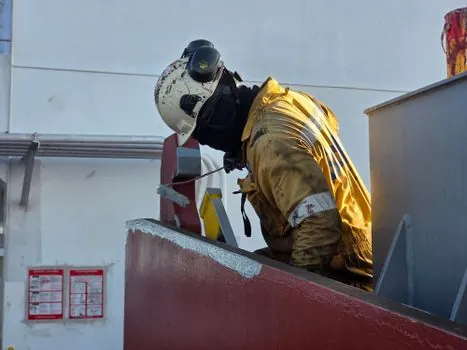
Type I hard hats introduced over a century ago remain ubiquitous because their lightweight shell, simple four- or six-point suspension, and low unit cost fit the dominant hazard on most general construction sites: a single object falling vertically onto the crown [S6].
For low-rise framing, scaffolding tasks where the worker is anchored and the dominant object hazard is overhead, and indoor fit-out work with no live electrical exposure, the Type I rating is the cost-effective match and the chin-strap, foam-liner geometry of a climbing-style helmet is not justified by the documented risk [S2][S6].
NAHB coverage of the JSI adoption study notes that traditional hard hats remain the baseline because they are affordable and lightweight, even as Type II and climbing-style designs expand into the elevated-work and struck-by sub-segments where the failure mode is no longer purely vertical [S6].
Rotational Impact and Mips-Style Liners
Mips and similar low-friction layers inside the helmet are engineered for the angled-impact case, which research from Mips describes as the majority of fall and collision events, where the head strikes the ground or an object off-axis and the brain experiences harmful rotational motion even when the linear peak-g limit is met [S5].
For high-risk construction trades, tower work, scaffold erection, and any process where a fall-to-ground is a credible event, a Mips-equipped safety helmet addresses the rotational vector that a standard foam liner does not, at a unit-cost premium over a basic Type I shell [S5].
This is an additive feature, not a substitute for type and class: a Mips-equipped climbing-style helmet must still be ANSI Z89.1 Type II Class E or G to satisfy the regulatory baseline, and the low-friction layer is documented as reducing rotational kinematics, not as a replacement for the impact-attenuation rating itself [S2][S5].
Decision Matrix: Type, Class, and Retention by Hazard
For a vertical-only object hazard with no electrical exposure, the baseline is Type I Class G or Class C with a traditional suspension, which is the lowest-cost, OSHA-compliant configuration under 1926.100 [S3][S4].
For side-impact, struck-by, or moving-equipment exposure, step up to Type II Class G, because the test now includes front, back, and side impacts and the helmet has to survive off-axis loading at the same energy level [S2].
For work above 1.8 m (6 ft) with credible fall risk, or for utility and steel erection, specify a climbing-style chin-strap helmet, ideally Type II Class E if overhead conductors are present, because retention is the dominant failure mode in a fall event and the 20 kV Class E rating covers incidental contact [S2].
For pure impact-only, no-fall, no-electrical work where weight and heat stress dominate (interior mechanical rooms in summer, for example), Class C vented shells are acceptable, but the user must verify that no metal accessories have been added that would re-introduce a conductive path [S2][S4].
Inspection, Service Life, and Disposal Cues
OSHA's selection criteria and the supporting consensus standards require helmets to be inspected before each use, and any shell showing cracks, dents, brittleness, or UV chalking must be removed from service regardless of calendar age, because the suspension can pass the visual test while the shell has lost impact strength [S3][S4].
Most manufacturers stamp a shell with a date code and a service-life window (commonly five years for the shell and two to three years for the suspension in hard-hat service), but those numbers are only valid if the helmet has not been exposed to chemicals, paint, or a documented impact event, all of which force retirement of the unit [S3][S4].
For crews that share helmets across shifts, a logged check-out system tied to the shell serial number is the practical way to enforce both the inspection duty and the replacement interval, and it creates the audit trail an OSHA inspector will ask for under 1926.100 [S3][S4].
Common Failure Modes and Limits of Compliance-Only Selection
Compliance with 29 CFR 1926.100 is a floor, not a ceiling: a site can be fully compliant with a fleet of Type I Class G hard hats and still record struck-by head injuries in the lateral-impact and slip/fall categories, which is the failure mode OSHA's 2023 transition to agency-issued safety helmets is explicitly designed to close [S2][S3].
Chin-strap retention, foam liners, and Mips-style low-friction layers do not appear on the regulatory checklist, so a procurement spec that only references 1926.100 will under-specify on retention and rotational protection for elevated work, where the dominant failure is a fall, not an overhead object [S2][S5].
Pairing a climbing-style helmet with the wrong class, for example Class C with a metal accessory bracket, or Class G on a 480 V panel job, is also a documented failure mode, so the type/class/retention trio has to be written into the hazard assessment, not picked off the shelf [S2][S4].
Track the next regulatory node as OSHA's agency-wide transition from traditional hard hats to safety helmets rolls through field offices, and watch the ANSI Z89.1 working group output for any revision that re-scopes the Type II test or the Class E dielectric limit, both of which would shift the spec baseline for elevated-work crews.
Component reference pages worth checking: safety barrier.
Background reading: Skid Steer Loader Selection for Demolition: ROC, Hydraulics, and Frame Size Map.