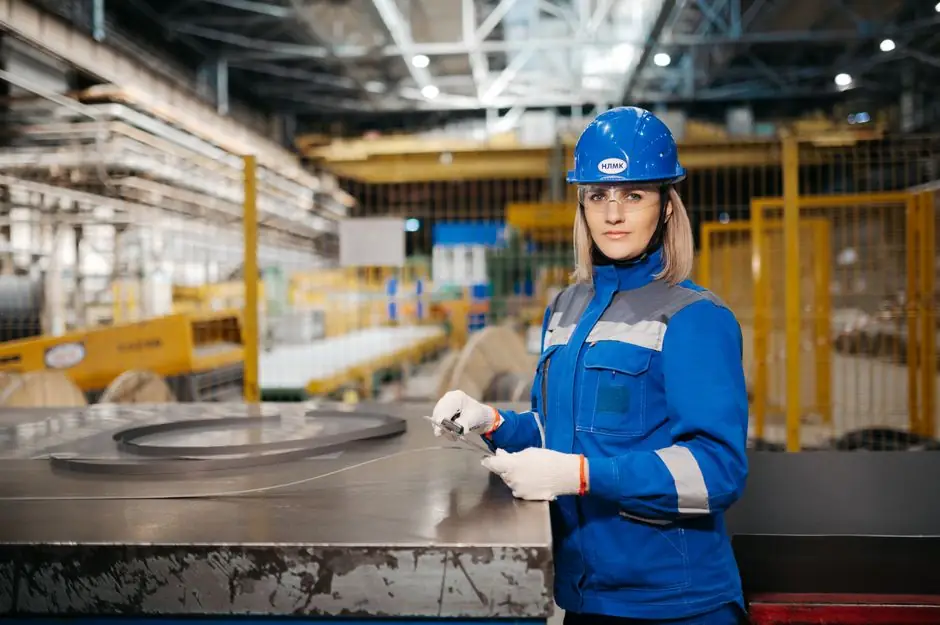
Specifying head protection for upstream and midstream oil and gas work starts with ANSI/ISEA Z89.1-2014, which defines two impact types and three electrical classes, and OSHA's SHIB 3-6-2024 explicitly flags Type II helmets with chin straps as the recommended configuration for oil and gas, chemical-exposure, and working-at-heights tasks. [S1]
For procurement, that translates into four binding decisions: Type I vs Type II, Class G/E/C, vented vs non-vented shell, and accessory stack (chin strap, face shield, safety glasses, hearing protection). OSHA's compliance pathway accepts Z89.1-2009, 2003, or 1997 editions, so legacy inventory remains defensible as long as the marked standard is one of those three. [S1]
Type I vs Type II Impact Protection
Type I helmets in ANSI/ISEA Z89.1-2014 are tested only against blows to the top of the head, while Type II adds lateral impact testing against the front, rear, and sides, a profile that matches oil and gas worksites where swinging tools, side-flying debris from pressure venting, and snagged lines are routine. [S1]
OSHA's SHIB 3-6-2024 recommends Type II for oil and gas crews, chemical-exposed workers, and any task where the wearer works from heights; the same document notes chin straps should be considered on all head protection, not just elevated work, because a standard suspension lets a cap tumble off during a slip or fall. [S1]
Material choice sits on top of the type selection: shells range from high-density polyethylene (HDPE) to glass-reinforced nylon and PC/ABS blends, with the Honeywell Fibre Metal Safety Helmet rated across -30°C to +50°C (-22°F to +122°F) ambient, a band that covers onshore desert rigs, North Sea platforms, and Permian winter operations without a special-order SKU. [S1][S3]
Electrical Class: G, E, or C
Class G (General) helmets are proof-tested at 2,200 V phase-to-ground and are the historical default for upstream field crews; Class E (Electrical) extends proof testing to 20,000 V phase-to-ground and is the correct specification whenever a worker can reach an exposed energized conductor or perform switching near switchgear. [S1]
Class C (Conductive) provides no electrical insulation and is used only where static dissipation is desired and no live-parts hazard exists, a niche that rarely fits oil and gas process areas. For upstream drilling, midstream compressor stations, and refinery turnarounds, the practical choice narrows to Class G or Class E, with Class E gaining share as facilities add more electrical heat-tracing and instrumentation tie-ins. [S1][S3]
Honeywell's vented/non-vented split is the standard way to marry class with thermal comfort: the non-vented shell preserves Class G/E dielectric rating, while vented shells trade that rating for cooling airflow, a configuration that must be restricted to non-electrical, low-risk zones. [S3]
Chin Strap, Suspension, and Retention
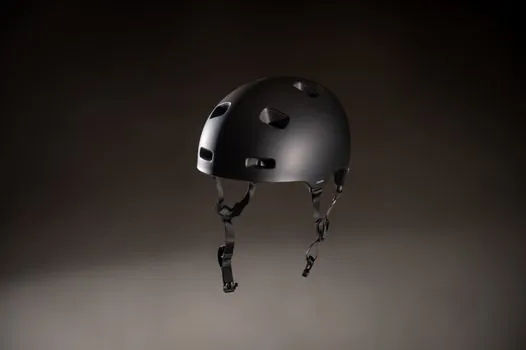
OSHA's 3-6-2024 SHIB calls chin straps "an effective way to keep head protection on when working in awkward positions or when experiencing a slip or fall," a finding that maps directly to derrick work, tank-shell entry, and any task where the worker bends or climbs with the head below the harness point. [S1]
The Honeywell Fibre Metal Safety Helmet pairs a three-point chinstrap with a six-point ratchet suspension, a configuration that simultaneously addresses retention, micro-adjustment for head shape, and impact-energy distribution across six contact points rather than four. The six-point pattern reduces peak force transmitted to the skull relative to a four-point pin-lock suspension at the same drop mass, which is the underlying mechanism behind the industry's migration away from legacy cap-style hard hats on elevated work. [S3]
For procurement writing, requiring a "Type II, Class [G/E], chin strap, six-point suspension" line item is the minimum that captures the OSHA 3-6-2024 guidance and stays inside the API RP 54 framework for occupational safety on drilling and servicing operations. [S1][S2]
Face, Eye, and Hearing Integration
OSHA's SHIB recommends "Type II head protection with integrated eye and face protection, like face shields and goggles" for oil and gas sites, on the rationale that chemical splash, hot-work sparks, and pressure-vented particulates can defeat a chin-cup on safety glasses alone. [S1]
The Honeywell reference design ships a certified polycarbonate visor that is rated as a secondary eye protector, meaning the wearer still needs primary safety glasses or goggles underneath to meet Z87.1; the bundled visor handles debris, wind, and dust that would otherwise force frequent lens cleaning on a long shift. [S3]
For tasks with arc-flash or high-noise exposure, the same helmet platform accepts earmuff-style hearing-protection mounts and communication systems, an integration that matters on confined-space entry where radio contact is mandatory under API RP 54 Section 4 hot-work and PPE clauses, and where a hard-hat-mounted headset preserves hearing protection without breaking the helmet shell's dielectric rating. [S1][S2]
Materials, Temperature, and Chemical Resistance
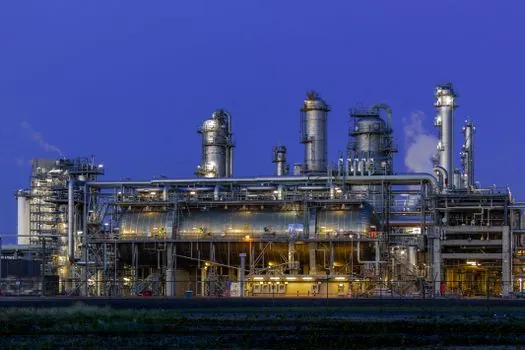
Shell material drives both weight and chemical tolerance: HDPE caps (typical of the MSA V-Gard line used on US oilfields) handle routine hydrocarbon splash and UV exposure at the lowest unit cost, while PC/ABS and glass-reinforced nylon shells trade higher cost for better low-temperature impact strength and broader chemical resistance. [S4]
The published -30°C to +50°C service envelope for the Honeywell PC/ABS shell is meaningful at the engineering margin: standard HDPE caps become brittle near -20°C, which is a known failure mode for cold-region upstream and arctic-midstream work, and several procurement specs now call out a -30°C lower limit in the technical data sheet rather than trusting a generic "outdoor use" claim. [S3]
For sites with H2S exposure, the helmet specification should be cross-checked against the site's respiratory and eye-protection program: the helmet itself is not a chemical barrier, but a non-vented Class E shell prevents gas ingress through the ventilation ports and is therefore the default on sour-service facilities regardless of electrical hazard. [S1][S3]
Inspection, Service Life, and Replacement Triggers
OSHA's 3-6-2024 SHIB requires employers to inspect head protection before each use; the visible checks are shell crazing, UV chalking, suspension webbing fraying, and cracked ratchet knobs, any one of which forces the unit out of service regardless of age. [S1]
Manufacturers typically publish a 5-year service life from the date of first use for the suspension and a 10-year shell life, with the date stamp molded into the brim, but impact-indicator technology (a one-shot visual marker) lets a supervisor confirm whether the helmet has already absorbed a sub-failure impact and should be retired early, an important control on oil and gas sites where a near-miss often goes unreported. [S1]
For the procurement spec, the cleanest write-up is: "ANSI/ISEA Z89.1-2014, Type II, Class E, non-vented, six-point ratchet suspension, three-point chin strap, integrated Z87.1 polycarbonate face shield, PC/ABS or glass-reinforced nylon shell, -30°C to +50°C rated, replace on UV damage, impact activation, or 5-year suspension / 10-year shell limit." That single line ties the helmet back to the SHIB guidance and the API RP 54 occupational safety framework in one pass. [S1][S2][S3]
Selection Comparison: Cap vs Helmet on Oil and Gas Sites
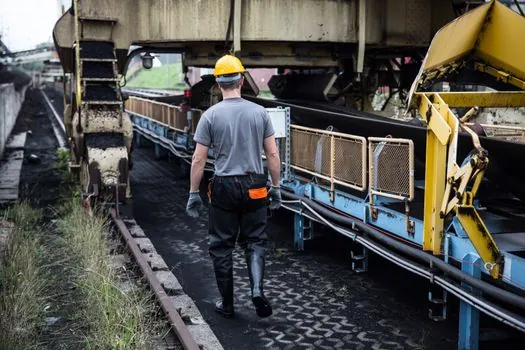
Two options dominate the field: legacy Type I cap-style hard hats (typical HDPE, four-point suspension, no chin strap) and modern Type II safety helmets (PC/ABS or glass-reinforced nylon, six-point suspension, chin strap, accessory rails). On four decision criteria relevant to oil and gas worksites, the comparison is sharp. [S1][S3][S4]
First, lateral impact: Type I caps carry no side-impact certification, while Type II helmets pass ANSI Z89.1 side-impact testing, which is the deciding factor on process units with swinging tools and pressure-relief venting. Second, retention: cap-style hard hats routinely dislodge during slips, climbing, and derrick work, whereas a three-point chin strap holds the helmet through those events. Third, accessory integration: cap-style shells accept only basic side slots, while safety-helmet platforms carry Z87.1 face shields, earmuff mounts, and headlamp clips without breaking the dielectric rating. Fourth, low-temperature toughness: standard HDPE caps become brittle near -20°C, while PC/ABS helmets are rated to -30°C for cold-region service. [S1][S3]
The verdict on the four criteria is that the safety-helmet form factor wins on three of four (lateral impact, retention, accessory integration) and ties on the fourth when HDPE caps are restricted to warm-climate use; the cap survives only on a cost-driven, low-hazard, warm-climate site where lateral impact and retention are demonstrably controlled. [S1][S3][S4]
Common Spec Mistakes and Failure Modes
Specifying Class C on a refinery turnaround is the single most common error, because the buyer wants venting for comfort and accidentally drops the dielectric rating to zero; the fix is a non-vented Class G or Class E shell with an optional vented comfort liner that does not penetrate the shell. [S1][S3]
A second recurring error is ordering Type I caps for elevated work to save cost, ignoring the OSHA 3-6-2024 guidance that explicitly ties chin straps and Type II to heights, oil and gas, and chemical-exposure tasks. [S1]
A third failure mode is treating the helmet as a chemical barrier; shells resist splash but do not replace a chemical-resistant hood, and a vented shell on a sour-service site can wick H2S-laden air directly across the scalp, a configuration that must be excluded by spec. [S1][S3]
For a maintenance-of-way or storage-yard site, a Type I Class G cap is still defensible on cost grounds; for any unit with side-impact, height, or chemical exposure, the specification should default to Type II, Class E, chin strap, non-vented, with the accessories listed in the previous section.
Track these two signals over the next procurement cycle: the share of facilities that have rewritten their PPE matrix to mandate chin straps and Type II shells (rising across US onshore operators per the December 2023 OSHA announcement that the agency itself was switching to safety helmets), and the rate at which HDPE four-point caps are removed from inventory on process units where lateral-impact exposure is documented. [S1][S7]
For component-level specifications, see safety helmet, and oil seal.
For related coverage, see Skid Steer Loader Selection for Quarrying: ROC, Weight, and Undercarriage Map.