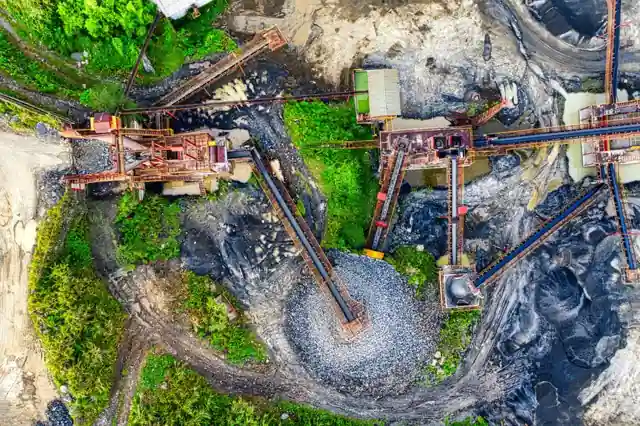
Mining perimeter fence specification is dictated by zone hazard class, with anti-climb small-aperture mesh on thick-wall steel pipe posts specified around tailings ponds, open pits, and underground mine entrances, while partial or porous windbreak variants are placed upwind of ore stockpiles and haul roads [S1][S3].
The technical envelope is harsh: uneven terrain, floating mineral dust, tailings water chemistry, and temperature swings all attack the fence simultaneously, so the spec sheet has to be written for the worst zone, not the average one. Civil-grade mesh and light galvanizing will fail in months under these conditions, which is why mining-grade fabric starts with thickened wire, reinforced welds, and heavy galvanized or polymer overcoats [S1].
What the fence is actually doing on a mine site
A mining perimeter fence is a continuous boundary isolator, not a decorative edge, and it has three jobs: keep personnel and wildlife out of high-risk operating zones, stop unauthorized removal of mineral product, and survive mining-environment attack long enough to be cost-effective [S1]. On remote resource operation sites those zones include open pit mines, ore storage yards, mineral processing areas, and tailings ponds, each with a different consequence-of-breach profile.
The fence is a physical barrier, not a substitute for control systems, and it works in parallel with patrol, monitoring, and access control. Workforce management layers, such as competency checks at the gate, fatigue zone tracking, and dual-authorization entry to hazardous areas, assume the perimeter is intact and the gate list is enforced, so under-spec'ing the fence undermines the access-control investment sitting behind it [S2].
Structural spec bands by zone
For high-risk closed perimeters around tailings ponds and underground mine entrances, the standard configuration is small-aperture anti-climb mesh, thickened steel wire, reinforced welds for vehicle and falling-rock impact, and thick-wall steel pipe support posts set in deep foundations to resist ground settlement and the strong winds common in mountainous mining areas [S1]. Partial-boundary deployment is acceptable for temporary ore stacking areas where the consequence of breach is lower and the layout is short-term.
For dust and wind management, porous or solid fence systems placed upwind of stockpiles and along haul road edges cut wind speed by 50 to 80 percent within a zone extending roughly 10 times the fence height, which makes the fence itself a process asset, not just a safety asset [S3]. This dual-role logic is why the spec writer should ask whether the fence line is buying safety, dust control, or both, before locking the panel type.
Surface protection: where light coatings die

Heavy galvanized coating is the baseline for mining fence because it resists abrasion from floating mineral dust and chemical attack from tailings water; on more aggressive sites an additional anti-abrasion polymer coating is layered on top to slow surface wear from long-term dust friction [S1]. Light-grade civil fencing surface treatment cannot survive in a mining atmosphere and will fail rapidly, so any quote that prices the job against a civil fence baseline is almost certainly under-spec'd.
The dust argument compounds this. MSHA's permissible exposure limit for respirable crystalline silica sits at 50 micrograms per cubic meter, a threshold many sites struggle to maintain without a multi-method suppression program, and visible haul-road dust plumes have been linked to vehicle collisions that rank among the top causes of mining fatalities [S3]. A fence line that is also doing dust duty has to be specified for both duties.
Comparison: three fence roles on one site
Three functional variants typically share one mining lease, and the spec should be written separately for each rather than averaged. The high-risk closed perimeter uses anti-climb small-aperture mesh on thick-wall steel pipe posts in deep foundations, with heavy galvanized plus optional polymer coating, accepting higher unit cost because consequence of breach is highest. The haul-road and stockpile wind line uses porous or solid panels upwind of dust sources to cut wind speed by 50 to 80 percent across a zone roughly 10 times fence height, trading some climb resistance for aerodynamic performance [S3]. The temporary ore stack perimeter uses lighter partial-boundary mesh where deployment speed matters more than multi-year durability, with planned re-spec as the pad grows.
Selection criteria reduce to four: threat level (climb, vehicle impact, fall rock), environmental attack (dust chemistry, temperature swing, wind), lifetime expectation (permanent vs temporary), and secondary function (dust, windbreak, wildlife exclusion). The same fence cannot win on all four, which is why mine sites run multiple fence specs side by side. For an adjacent heavy-industry reference on zone-mapped spec bands, see the oil and gas safety fence selection guide, which uses the same risk-zone logic for a different process environment.
Access control, gates, and the workforce layer

Gate placement is part of the spec, not a finishing detail. Access gate positions should align with internal transportation routes of mining zones so that vehicle inspection and management do not obstruct normal mining vehicle circulation, with reserved transport convenience built into the layout to avoid creating choke points at the boundary [S1]. On the workforce side, skills-to-task verification at the gate, including training, certification, and fitness-for-work checks before access is granted, only delivers value if the gate list is enforced against a fence line that actually contains the controlled zone [S2].
For high-risk entries, dual-authorization authentication such as a fingerprint scan paired with a card credential is a common pattern, and mobile cardholder challenge lets security staff confirm a card is being used by its rightful owner rather than a passed-back badge [S2]. The fence and the access system are a single containment argument: a perimeter that is too easy to climb defeats the gate reader, and a reader that grants access to an unqualified worker defeats the fence.
Failure modes the spec must address
Three failure patterns repeat across mining fence installations. First, post foundation failure in mountainous zones where local geological movement, including landslides, damages the foundation, which is why periodic post-stability inspection is required as part of the maintenance plan rather than treated as optional [S1]. Second, surface coating failure where light civil-grade coatings cannot withstand mineral dust abrasion and tailings water chemistry, with rapid coating breakdown leading to base-metal corrosion and panel replacement inside the planned life. Third, layout failure where the fence line obstructs haul-truck circulation, creating a pressure to cut gates informally, which collapses the containment argument.
Comparison context across adjacent industries is useful here: a construction site safety fence selection guide covers shorter-life temporary perimeters with different threat and coating priorities, and the mining spec writer should treat that as a contrast case rather than a template.
Inspection, maintenance, and verification
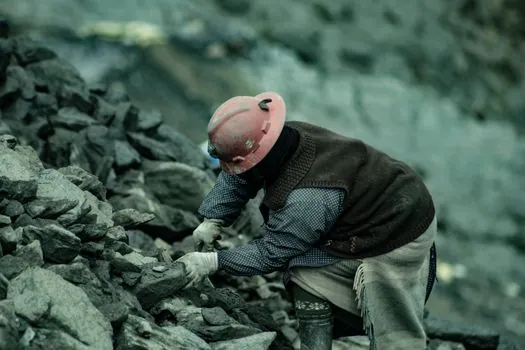
Periodic stability inspection of support posts and mesh panels is required for any mining perimeter fence, and the cadence tightens in mountain mining areas where landslide and settlement risk are elevated [S1]. A practical inspection pass checks post plumb, foundation integrity, mesh weld points, coating condition, gate operation, and vegetation or stockpile build-up against the fence line, with any breach logged and repaired inside a defined interval.
On the dust side, suppression effectiveness is measurable rather than assumed: wind-speed reduction across the 10-times-fence-height zone, dust deposition rates, and visible-plume frequency are all auditable, and 79 percent of EHS investment respondents in the ERM 2026 Annual Trends Report reported significant operational efficiency improvements, which is the kind of figure that supports a fence-plus-suppression capex line rather than a fence-only line [S3]. For a wider view of how fence selection sits inside industrial safety planning, the safety fence encyclopedia entry covers the cross-industry baseline.
Track for the next planning cycle: any revision to MSHA's respirable crystalline silica permissible exposure limit, currently 50 micrograms per cubic meter, and any tightening of state-level dust rules that would push more sites toward porous-fence windbreaks as primary suppression [S3]. Also worth watching is consolidation of skills-to-task and fatigue-zone access control with perimeter gate readers, which is where fence spec and workforce management stop being separate purchase decisions.
For component-level specifications, see mining dump truck, and fire safety.