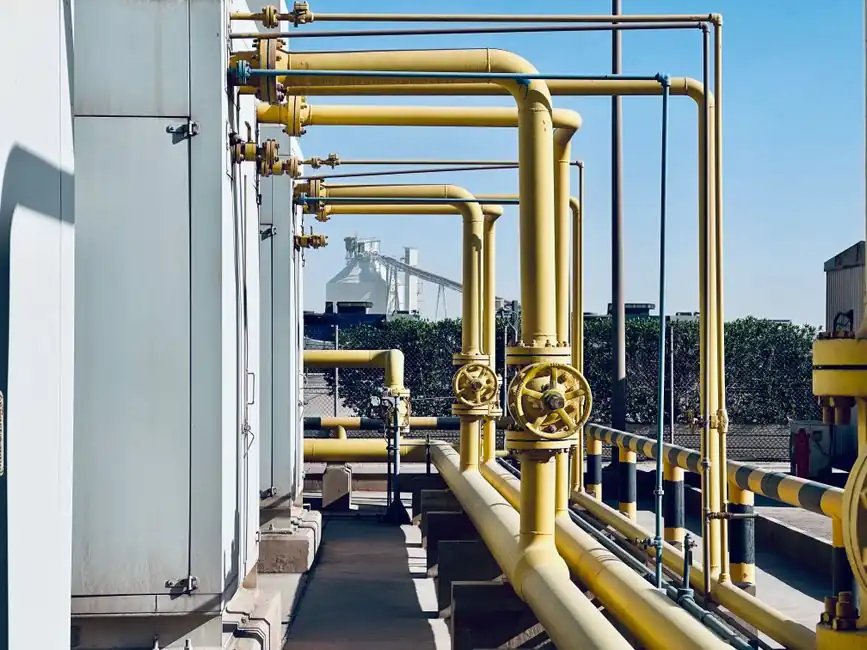
Oil and gas facilities are not protected by one fence type; specifiers should match fence class, height and mesh to a defined zone hierarchy (public interface, outer boundary, access control, observation, operating, critical asset) and confirm corrosion class, gate schedule and any required security rating before procurement [S2].
The U.S. Department of Transportation sets federal safety standards for natural gas pipelines and related facilities, and the Federal Energy Regulatory Commission evaluates and approves the location, construction and operation of interstate pipelines, storage fields and above-ground facilities such as taps, valves, metering stations, pig launchers, receivers and compressor stations [S1]. That regulatory backdrop is why perimeter specification is treated as part of process safety, not a standalone civil scope.
358 Anti-Climb Mesh: Spec Band and Where It Fits
358 welded mesh is named for its 3 in by 0.5 in aperture with 8-gauge wire, and it is rated as extremely high security for critical infrastructure including oil and gas facilities, with high resistance to corrosion, weather exposure and impact damage when hot-dip galvanized and powder coated [S3]. The aperture geometry is small enough to deny hand tools, wire cutters and finger/foothold grip, which is why specifiers push it to the inner ring around process skids, compressor stations and control rooms rather than across the full kilometre of tank-farm boundary.
For oil and gas duty, 358 panels are commonly specified at 2.4 m to 3.0 m height with 4 mm to 6 mm wire, post centres around 2.5 m, and a flat or folded top to keep CCTV and PIDS (perimeter intrusion detection) line of sight unobstructed [S3]. A practical procurement check is to ask for a written anti-cut and anti-climb test record, and to confirm the panel-to-post fixing is security bolt or shear-nut, not standard M8 coach screws.
Palisade, Welded Mesh and Chain Link: Mapping to Tank Farm, Pipeline and Outer Zones
Rigid palisade and welded mesh sit between 358 and chain link in the oil and gas spec stack: palisade gives high impact resistance and a strong visual deterrent for tank farms and loading bays, welded mesh gives a balance of strength, sightline and cost for substation and pipeline valve compounds, and heavy-duty chain link covers long outer perimeters and temporary contractor yards where the threat istrespass, not forced entry [S2].
General high-security industrial guidance rates anti-climb welded mesh (small aperture, heavy gauge, anti-cut, powder coated over galvanized wire) as very high security with excellent durability in humid and coastal outdoor conditions, and the same logic applies when the fence backs onto a hydrocarbon storage zone rather than a data centre or airport [S3]. Standard chain link remains appropriate where the role is to define ownership and channel traffic, not to resist a determined intrusion, and is most often used on the public-interface ring.
Comparison of Fence Options Against Oil and Gas Selection Criteria
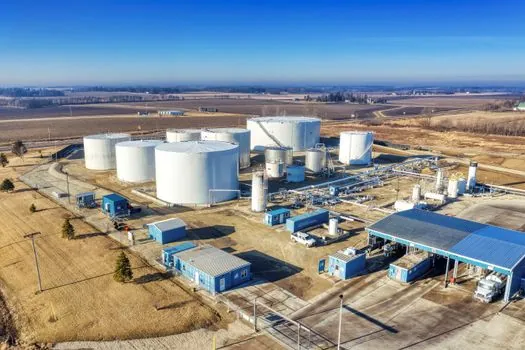
Selection reduces to four practical criteria: security class, corrosion resistance, sightline for surveillance, and cost per running metre. On that table 358 mesh sits at the top of security class and surveillance transparency, palisade is highest on impact deterrence, welded mesh is the balanced mid-band, and chain link wins on cost and speed of install for long boundaries [S2][S3].
Where the facility sits inside a coastal or sour-gas corrosion zone, all four must be hot-dip galvanized to ISO 1461 class equivalents and, for 358 and welded mesh, additionally powder coated or PVC over-galv; the heavier the wet/dry or H2S exposure, the more the comparison tilts away from standard chain link toward 358 or palisade with documented coating weights [S3]. For an engineer writing the spec, the decision rule is simple: start from the worst credible intrusion at each zone, then back-fit cost, not the other way around.
Integration With Gates, Detection, Lighting and Radar
No fence, including 358, replaces access authorization, alarm verification, trained personnel, lighting or emergency procedures, and the perimeter is treated as one layer in a wider deter, detect, delay and respond stack [S2]. On the detection side, ESA radar systems such as MESA-class units are now specified for 24/7 oil and gas perimeter duty in wind, rain, fog, dust and dense RF, with full 360 deg coverage, AI/ML classification to separate UAS from other aerial activity, and open architecture to feed C2 and VMS platforms and cue optics and alarms [S4].
For the fence layer itself, that translates into two engineering rules: keep a clean observation zone of 3 m to 10 m inside the fence so radar and cameras have a clear clutter picture, and specify gate positions, vehicle barriers and turnstiles inside the same zone hierarchy so the fence is not defeated by an uncontrolled portal. The high-security fencing also benefits from the safety fence reference page for cross-checking height, post embedment and base-plate detail against the local wind and soil class.
Limitations, Failure Modes and Standards to Watch
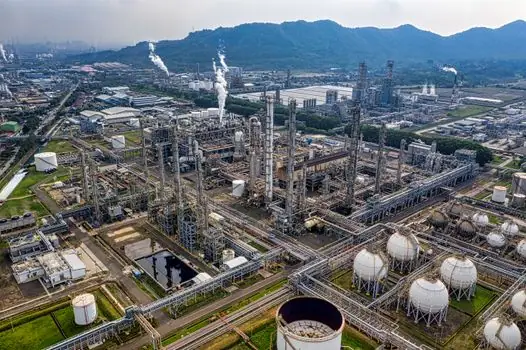
Common failure modes in oil and gas perimeter projects are predictable: undersized posts that deflect under a climb load, missing anti-tamper fixings on 358 panels, hot-dip only without powder coat in coastal sites, gates rated below the fence they sit in, and a perimeter that is otherwise strong but pierced by unprotected utility ducts and pipe bridges [S2][S3]. None of these are fixed by buying a heavier fence; they are fixed at the GA and detail stage.
For gas-specific sites, the perimeter also has to coexist with hazardous-area rules for any electrical or electronic equipment within the fence line, so lighting, cameras and intrusion detection must be selected against the relevant zone classification rather than the security spec alone. The supporting lighting equipment and electric lamps and fire safety reference pages are useful for checking the explosion-protection interface before final procurement.
Site Risk Assessment and Procurement Checklist
The procurement process should start from a documented site security risk assessment, a redacted site-perimeter drawing, the facility type and zone list, fence length, required height, gate schedule, corrosion environment, and the physical zones that need product selection, all of which then drive the fence and barrier configuration [S2]. For oil and gas specifically, add the hazardous-area zoning map and any operator-mandated security rating, because the rating will set the bar above generic industrial guidance.
A field-engineer checklist for tender evaluation: (1) aperture and wire diameter stated in writing and matched to the zone threat; (2) coating system with documented standard and class for the site corrosion band; (3) post section, embedment depth and post centres sized for the local wind and, where relevant, blast overpressure; (4) gate security class equal to or higher than the adjoining fence; (5) proven integration points for PIDS, CCTV and radar; and (6) a maintenance plan that includes re-tensioning, coating inspection and post-impact replacement [S2][S3][S4].
Trackable signals for the next 6 to 12 months: more oil and gas tenders that split the perimeter into 3 to 5 fence classes on a single drawing rather than a single fence spec; wider pairing of 358 mesh with ESA radar for UAS-aware sites; and tighter coating-class calls in coastal LNG and refinery scopes. Related reading on temporary and lower-tier fencing, including the spec map in construction site safety fence selection, is useful for the contractor-yard and shut-down turnaround ring around a permanent oil and gas perimeter.