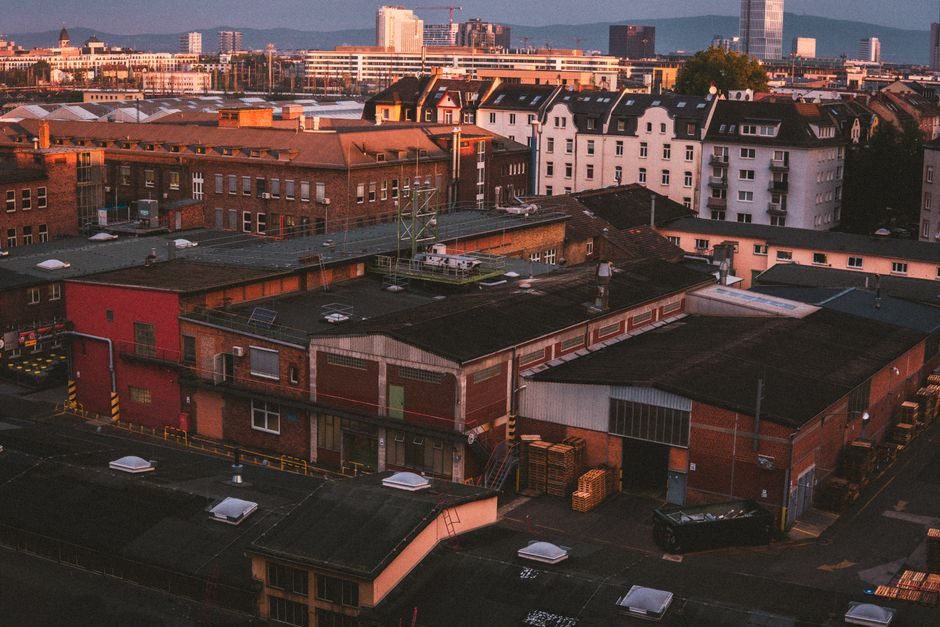
Modified bitumen membrane in 2026-06 is still a two-polymer market — SBS (styrene-butadiene-styrene) for cold-flexible roofs and underground tanking, APP (atactic polypropylene) for hot-climate exposed roofs — with nonwoven polyester, fiberglass mat and composite carriers split across the three duty bands [S1][S2].
For a procurement engineer, the spec shortlist is built from four hard gates: polymer modifier chemistry, reinforcement mass per unit area, low-temperature flexibility (typically expressed as cold-flex at –5 °C to –20 °C for SBS grades) and high-temperature flow resistance (commonly 70 °C to 130 °C for APP), plus the build-up — torch-applied, self-adhesive, or hot-melt (non-curable rubber-asphalt) [S3][S4].
Polymer modifier: SBS vs APP and where each one wins
SBS-modified bitumen gives an elastomeric matrix with cold-bend performance typically quoted down to –20 °C on premium grades, plus elongation at break in the 30–45% range — the reason SBS dominates underground tanking, plaza decks and northern-climate exposed roofs [S1].
APP-modified bitumen is plastomeric, with heat resistance to 110–130 °C and a tighter cold-flex window (commonly 0 °C to –5 °C), making it the default for sun-exposed low-slope roofs in hot-arctic and equatorial builds where UV ageing, not cold-bend, is the controlling failure mode [S2]. On a 2026-06 project where the deck swings from –15 °C winter to +60 °C summer, a single-polymer spec is wrong: dual-layer systems with an SBS base sheet and an APP cap sheet are now the standard hybrid to handle the full thermal band, and the cap-sheet granule surfacing further pushes surface ageing past the underlying polymer limit.
Reinforcement carrier: polyester mat, fiberglass, or composite
The carrier is what stops the membrane from splitting over a moving substrate crack, and the three commercial options behave very differently in 2026-06 production. Polyester (nonwoven PET) mat, typically 180–250 g/m², gives the highest tear and puncture resistance and the best elongation to match a cracked concrete deck [S2].
Fiberglass mat, around 60–100 g/m², is dimensionally stable and used as the inner sheet of multi-ply BUR where shrinkage, not puncture, is the failure mode. Composite carriers (PET + fiberglass scrim laminated together) split the difference — better dimensional stability than PET alone, higher tear than fiberglass alone — and are the most common choice in the 4 mm torch-applied mainstream grade [S1]. For a trafficked plaza or a planted roof where root resistance and puncture drive the spec, insist on a polyester carrier ≥200 g/m²; for a steel-deck exposed roof with mechanical fastening, a composite scrim is usually the cost-engineered answer.
Build-up: torch-applied, self-adhesive, or non-curable rubber-asphalt
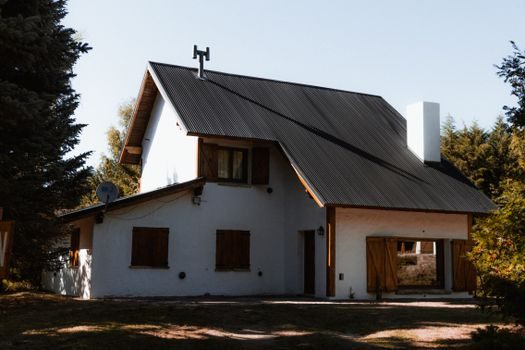
Build-up method is the second-order gate that ties back to substrate and site safety. Torch-applied SBS/APP remains the workhorse for concrete decks — the heat re-activates the bitumen at the lap and gives a monolithic seam [S1].
Self-adhesive modified bitumen membrane (peel-and-stick, often with a silicone release film) eliminates the torch and is the only practical answer on insulation boards, on combustible substrates, and on most retrofit occupied-building work [S3]. The trade-off is lower initial tack under cold weather and a tighter slope limit (commonly ≤5° / 1:12 for the standard self-adhesive range), so on larger low-slope roofs it is still used as a base sheet under a torch-applied cap.
Non-curable rubber modified asphalt coating (非固化橡胶沥青防水涂料) is the third option — a viscous, never-fully-cured rubber-asphalt paste applied hot or cold at 2–3 mm, which stays tacky for the design life and self-heals around a puncture [S4]. It is specified on deformation joints, pile heads and detail nodes where a sheet membrane cannot conform, not as a primary sheet alternative; a sheet plus non-curable paste is the typical detail build-up at pipe penetrations.
Spec gates: thickness, cold-flex, heat resistance, watertightness
Cross-vendor comparison on a 2026-06 datasheet should line up on at least four values: nominal thickness (3.0 mm, 4.0 mm, 4.5 mm), cold-flex temperature (–5 / –10 / –15 / –20 °C), heat resistance (70 / 90 / 110 / 130 °C), and hydrostatic watertightness (commonly 0.3 MPa for 2 h on the 4 mm grade) [S1][S2]. A reliable rule of thumb: a 4 mm torch-applied SBS with a 200 g/m² polyester carrier, –20 °C cold-flex, 90 °C heat resistance covers most below-grade and plaza-deck scopes; a 4 mm APP cap sheet with mineral granules is the matching exposed-roof spec in hot climates [S2].
Compared side-by-side on a 2026-06 project, the typical picks look like this: SBS + polyester + torch-applied for underground and plaza (cold-flex priority, –20 °C, 4 mm); APP + composite + torch-applied + granules for exposed low-slope roofs in hot zones (UV and heat-flow priority, +130 °C, 4 mm); self-adhesive SBS + polyester for occupied-building retrofit and insulation-faced decks (no-torch priority, 3 mm); non-curable rubber-asphalt paste as detail-layer complement at joints and penetrations, not as primary sheet [S1][S3][S4].
Standards, sourcing, and 2026-06 supply reality
The dominant product standard for SBS/APP modified bitumen membrane in China is GB 18242 (SBS) and GB 18243 (APP), with the design-build reference drawn from GB 50108 (underground waterproofing) and GB 50345 (roof waterproofing). Non-curable rubber-asphalt coating is covered by JC/T 2216 (revised 2018) for composition, viscosity and the never-cure tackiness retention requirement [S4].
On the supply side, 2026-06-30 sourcing is still China-dominant: full turnkey production lines (SBS/APP modified bitumen membrane line, twin-screw mixer, calender, sand,撒沙,膜面矿物粒料撒布) are quoted FOB China main port with typical 1 set MOQ and a stated supply capability of roughly 10 sets/month per major line, with TT or LC payment terms [S1].
Factory-direct options from CHENHUA-style integrated plants cover the SBS / APP production line, nonwoven reinforcement for bitumen membrane, self-adhesive waterproofing roll and self-adhesive flashing bitumen tape from a single vendor — useful when a 2026-06 buyer wants one PO to cover cap sheet, base sheet, detail tape and the production line itself [S2]. For a project buyer (not a line buyer) the same vendors also stock the finished roll: peel-and-stick self-adhesive modified bitumen waterproofing membrane at standard 3 mm / 4 mm thicknesses, 1 m width and 10 m roll length being the most common stock-keeping unit [S3]. A related plant decision — the Combustible Gas Detector 2026 Buying Guide — is the cross-reference for any 2026-06 plant that is co-locating a torch-applied waterproofing line near a solvent or bitumen-heating zone, where LEL detection and ATEX/IECEx zone classification are the next gate.
For a 2026-06 procurement, the trackable signal to watch next is the APP cap-sheet granule-bond test (peel strength at 23 °C, commonly ≥1.0 N/mm on premium grades) — a value most Chinese datasheets now publish in line with the European EN 13707 expectation, and one a spec writer should pin on the PO before signing, not after a roof starts shedding granules in year two. A second watch item is the self-adhesive lap shear at –10 °C: vendors that publish a –10 °C lap shear ≥0.5 N/mm are the safer pick for cold-climate peel-and-stick work where standard 23 °C lab numbers overstate field tack.
For component-level specifications, see modified bitumen membrane, waterproof membrane, and pressure transmitter.