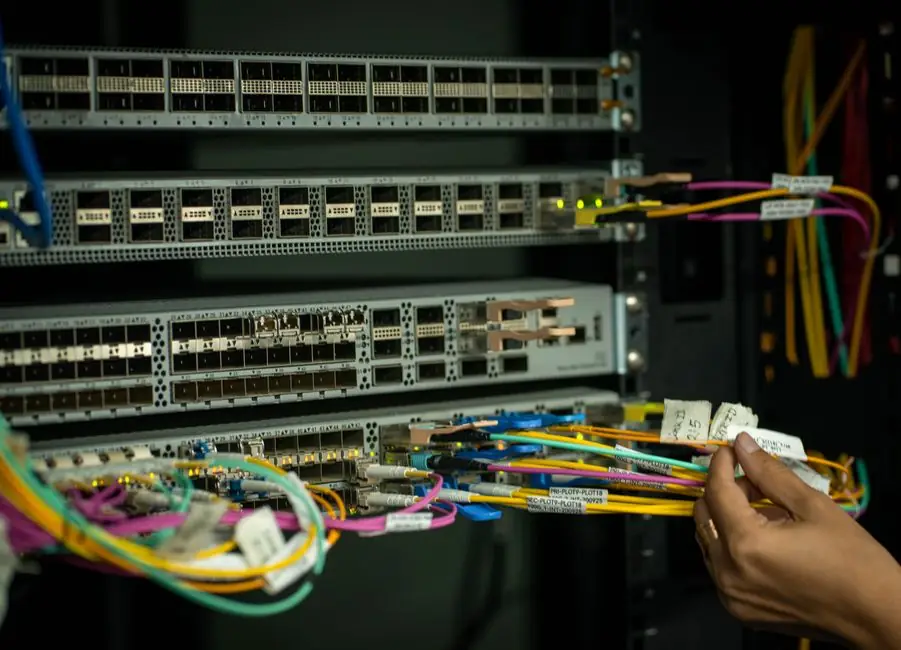
A modular data center delivery timeline that once ranged from 24–36 months commonly falls to 16–20 months when modular strategies are applied [S2].
The scope includes factory-built IT halls, power rooms, cooling systems, electrical skids, battery rooms, containerized equipment, and integrated blocks assembled before installation on prepared pads [S3].
What determines a modular skid lead time
The 16–20 month figure covers a complete delivery cycle, not the truck-to-install interval for one module. A conventional program stacks site work, building construction, mechanical and electrical installation, and commissioning, while modular delivery moves more assembly into controlled factory environments as site preparation proceeds in parallel [S2][S3].
Four schedules remain decisive: utility interconnection, equipment procurement, factory integration, and field completion. Transformers, switchgear, utility power, and specialist labor remain constrained inputs even when modular architecture shortens the site schedule [S3].
One prefabrication comparison reduced onsite construction from about 36 weeks to 16 weeks for a typical data center, showing where factory completion can remove roughly 20 weeks from the field portion of delivery [S8]. That figure does not include the full development cycle, which can still extend from design and utility approval through final commissioning [S3].
Skid, powered shell, and turnkey comparison
A skid is a packaged subsystem with a defined interface, a powered shell adds the enclosure and core services, and a turnkey package carries the project through operational readiness. A 2026 procurement guide identifies scope boundaries, interface ownership, and acceptance evidence as the three decisive differences between a powered shell and a turnkey modular data center [S5].
The best comparison is not price alone. Evaluate each option against schedule certainty, interface risk, repeatability, and acceptance-test depth. Modularization performs strongly when the same technical pattern repeats across sites, while one-off redundancy, cooling, security, or tenant layouts reduce the benefit [S3].
Factory and site interfaces that move the schedule

Factory assembly moves more than fabrication. Digital modeling during design and manufacture is used to reduce commissioning risk and improve operational predictability, while integrated power and cooling systems can be pre-tested before shipment [S4].
The data logger and monitoring functions should be specified early because factory testing, site integration, and operational acceptance need a common evidence trail. Buyers should also define who owns the DC power supply controls, protection settings, test procedures, and handover records rather than leaving those duties implicit in the shipment.
Local work does not disappear. Pads, duct banks, substations, security, roads, stormwater, utility tie-ins, and final integration remain site activities [S3]. A skid can arrive before those elements are ready, creating storage and preservation risk without shortening the critical path to energized capacity.
Acceptance testing should include a witnessed load example where applicable. A 200 kW factory acceptance test example and an adaptable acceptance matrix provide a practical starting point for buyers defining what must be proven before a modular AI data center ships [S5].
Where modular delivery fits, and where it fails
Modular delivery is strongest for phased capacity, remote or labor-constrained markets, repeatable edge or enterprise programs, and speed-sensitive AI capacity. Utilities are staging power in phases, while tenants want capacity now, making factory-built modules a potential way to align modular data center deployment with energization milestones rather than waiting for the entire campus [S3].
It is a poor fit for highly bespoke facilities whose power, cooling, security, redundancy, or tenant layout changes at each phase. It also fails when a buyer treats a box arriving on site as proof of readiness. The practical value comes from standardized engineering, procurement, and assembly before field labor becomes the schedule limiter [S3].
Edge computing is a structural use case for factory-assembled infrastructure because localized resources for telecommunications, industrial automation, and financial services require repeatable deployment with limited onsite construction [S4]. For these applications, site acceptance criteria should include environmental performance, communications interfaces, thermal behavior, and service-access requirements rather than module dimensions alone.
How to underwrite the 2026 schedule

A defensible modular project plan starts with the 16–20 month delivery range, then separates it into design, permitting, utility approval, procurement, factory fabrication, pre-testing, transport, site preparation, mechanical and electrical connection, commissioning, and handover [S2][S3]. Each long-lead item needs an owner, release date, factory date, delivery date, and site dependency.
That preference does not establish a guaranteed schedule, so buyers should test whether proposed factory savings are offset by transformer, switchgear, interconnection, or permit delays.
Procurement teams should also compare the broader industrial equipment lead-time dashboard and the long-lead equipment list for a 100 MW data center. These references are useful for identifying which electrical purchases can control the energization date even when the modular enclosure itself is ready.
Market pressure does not equal delivery certainty
Market forecasts show strong expansion but substantial differences in scope and methodology. One estimate places the modular data center market at USD 41.0 billion in 2026 and USD 93.6 billion in 2031 [S1], while another projects USD 35.44 billion in 2026 and USD 116.53 billion by 2034 [S7].
The narrower prefabricated segment was estimated at USD 4.77 billion in 2026, with a forecast of USD 7.48 billion by 2031 and a 9.41% compound annual growth rate [S4]. These figures describe market value rather than a project’s construction duration, and the spread between estimates makes the forecast unsuitable as a lead-time input.
The operational conclusion is narrower: modularization can compress delivery when design, utilities, logistics, and tenant requirements align, but it does not remove those dependencies [S3]. For procurement, the most useful 2026 figure is the 16–20 month program range, paired with a separate field-work estimate of about 16 weeks for prefabricated delivery rather than 36 weeks for typical onsite construction [S2][S8].
The next trackable signal is the supplier’s factory schedule against the utility energization schedule. If the factory acceptance date and the first utility energization milestone diverge, the advertised modular lead time will not control project completion.