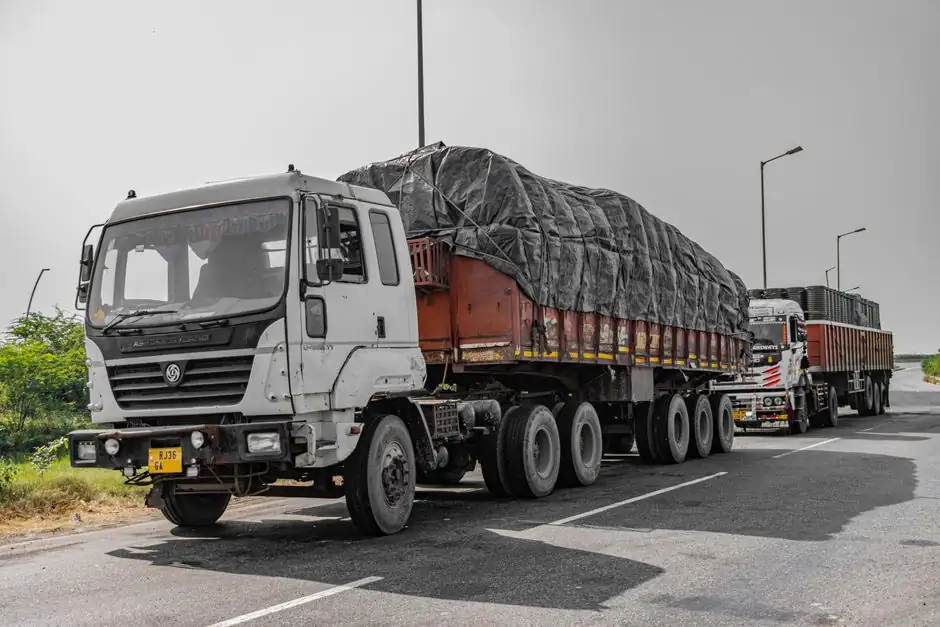
Ultra-class haul-truck buyers should plan around configuration and supply-chain uncertainty because no OEM or market source reviewed publishes a uniform 2026 delivery window for these trucks [S1][S2][S3].
The decision covers rigid-frame electric-drive, diesel-electric and autonomous ultra-class systems, with a 290-metric-ton Komatsu 930E-5AT demonstrating the upper payload class now in service [S1].
What Ultra-Class Lead Time Actually Includes
Ultra-class lead time is the elapsed period from an approved purchase order to an accepted truck ready for deployment, not the factory assembly window alone. It includes model selection, payload and tire configuration, powertrain integration, autonomy hardware, software, commissioning, site infrastructure, training and dealer acceptance [S1][S2].
A factory quotation therefore does not provide a reliable mine-readiness date unless the scope includes those downstream items. Komatsu's 1,000-truck commissioning milestone shows the scale of integration required: its FrontRunner system covers autonomous haulage and extends into autonomous water trucks for road maintenance [S1]. The 1,000th vehicle was a 930E-5AT with a 290-metric-ton payload deployed at Barrick's Nevada Gold Mines operation in the United States [S1].
For planning purposes, record at least five separate dates: purchase-order acceptance, build start, factory completion, site commissioning and customer acceptance. A truck leaving the factory but awaiting autonomous commissioning is not yet production-ready, particularly where dispatch, fleet-management or site infrastructure work remains incomplete [S1].
Payload, Powertrain and Road Fit
A 150-ton rigid truck is suited to deep open-pit operations with wide haul roads and steady loading, while a 200-ton truck can lose operating value if spare parts and trained technicians are unavailable [S3]. The practical selection is therefore a site-fit exercise, not a contest for the largest published payload.
Payload, road width, gradient, tire support and local service capacity must be checked before finalizing a delivery plan. Buyers also need to assess tire availability, braking performance, fuel or energy use, cabin visibility and operator fatigue [S3]. Those variables can change the commercial configuration even when the basic truck class remains unchanged.
Electric-drive models may reduce mechanical complexity, while diesel-electric systems can provide strong control on steep haul roads [S3]. Komatsu's 930E-5AT establishes that an ultra-class electric-drive truck can carry 290 metric tons in autonomous service, and the model represented more than 500 autonomous trucks across customer sites as of April 21, 2026 [S1].
Who Should Reserve Capacity for a 2026 Delivery?
Buyers with a funded mine plan, a qualified loading and dumping system, approved road geometry and a defined site-support model should reserve production slots for ultra-class trucks [S3]. These are high-capacity open-pit assets whose economics depend on stable routes, suitable loading equipment and predictable dispatch rather than a large headline payload [S3].
Prospective operators should assess service capacity, parts availability, technician training, and compatibility with the mine's operating system before selecting an ultra-class haul truck [S3]. Autonomy depends on whole-system operating fit, and service availability and technician training can affect the value and uptime realized from autonomous mining trucks [S3].
Ultra-class procurement is not suitable for sites with narrow roads, inconsistent loading, weak road foundations or an uncertain commodity plan. A 200-ton unit is a poor fit if parts take too long to arrive or technicians are not properly trained, even if its paper specifications are strong [S3].
Quantifying Delay Exposure Instead of Guessing
That exposure justifies tracking supplier promises and commissioning milestones as separate schedule risks rather than accepting one undifferentiated lead-time figure.
For each vehicle, the commercial team should request a written delivery baseline covering factory build, shipping, site arrival, mechanical commissioning, autonomous commissioning and customer acceptance.
Buyers should closely examine tire availability when selecting a mining truck, because delayed spare-parts deliveries can reduce truck value and uptime [S3]. The buyer should obtain the tire size, approved suppliers, shipment lead time and replacement-stock policy before treating the truck delivery date as the start of productive haulage.
Autonomy Changes the Delivery Definition
Komatsu commissioned its 1,000th ultra-class autonomous haul truck on April 21, 2026, demonstrating that autonomous deployment can be commissioned at fleet scale rather than treated as a single experimental vehicle [S1]. Komatsu's 930E ultra-class electric drive haul truck is its most widely deployed model, with more than 500 autonomous trucks operating at customer sites worldwide [S1].
Autonomous procurement needs a delivery plan that extends beyond the machine. Komatsu continues to expand automation across mine-site operations, including autonomous water trucks to improve safety [S1]. A mine must therefore specify which of those functions form part of the initial acceptance package.
Komatsu has also demonstrated autonomous operation of a power-agnostic electric-drive truck connected to a dynamic trolley line [S1]. This configuration may fit operations with suitable infrastructure, but it also expands the interface beyond the truck itself, so power, route and control-system responsibilities must be allocated in the contract.
Market Signals Do Not Equal Factory Lead Times
The global mining-truck market was estimated at USD 13.9 billion in 2025, with a forecast compound annual growth rate of 6% from 2026 to 2035 [S6]. A separate estimate places the 2026 market at USD 26 billion and projects USD 42 billion by 2033, also at a 6% compound annual growth rate [S5]. These figures describe market scale, not factory output, allocation or delivery intervals for ultra-class trucks.
The same distinction applies to segment shares. One estimate assigns 58% of the 2026 market to autonomous trucks, 39% to rigid-frame haul trucks and 46% to diesel, while placing North America at 43% and Asia Pacific at 31% [S5]. These percentages cannot be converted into a delivery probability or months-in-production without published order-book and scheduling data.
Caterpillar has proposed a modular Cat 793 large mining truck platform with diesel-mechanical, diesel-electric and battery-electric options, indicating that future configurations may widen rather than narrow the sourcing decision [S5]. Buyers should therefore preserve configuration flexibility where site infrastructure remains unsettled.
Contract Terms That Control the Schedule
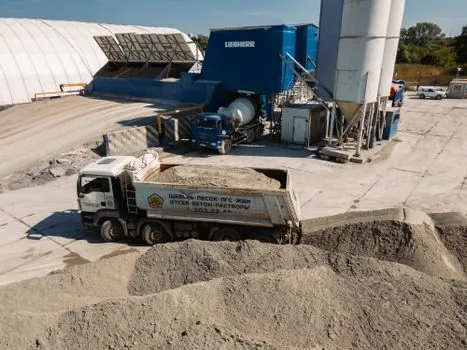
The purchase agreement should define the delivery baseline, milestone acceptance, delay remedies and the boundary between OEM commissioning and customer infrastructure. It should also identify who owns tire supply, spare parts, software licensing, autonomy integration, training and recurring support [S1][S2][S3].
At least four dates should be contractual: factory completion, shipment, site commissioning and production acceptance. For autonomous trucks, a separate date should be required for fleet-system commissioning, while for electric or trolley-connected systems the energization milestone should be stated separately [S1].
The closing planning test is straightforward: the buyer can calculate scheduled productive hours from the accepted delivery date, identify the replacement parts and tires needed on day one, and assign responsibility for every delayed interface. Without those outputs, a nominal truck delivery window remains a factory estimate rather than an operational lead time.