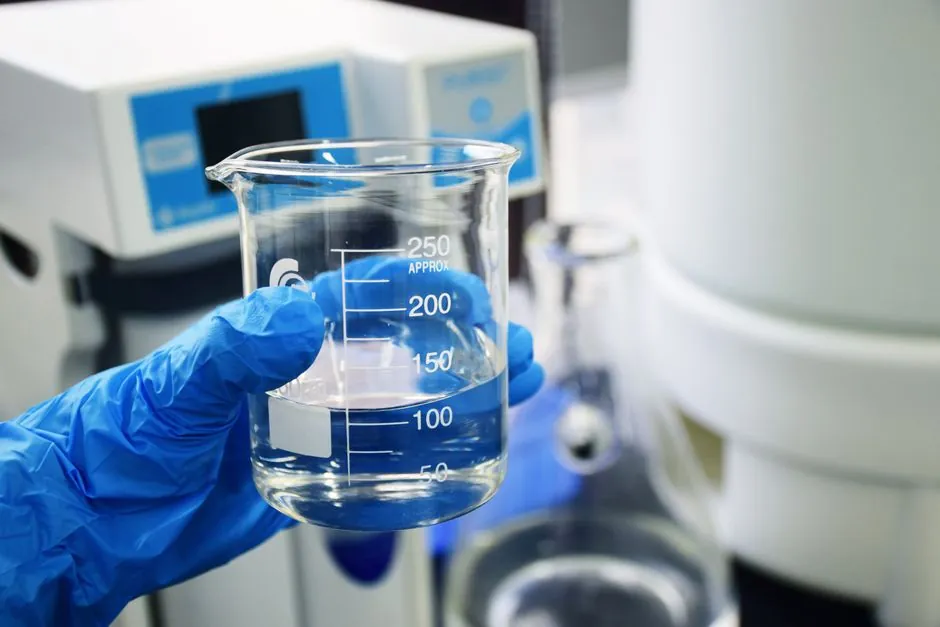
The two instruments address different analytes. A moisture analyzer quantifies water content by mass loss, infrared absorption, or capacitive change, while a dissolved oxygen meter quantifies O2 partial pressure in a liquid using a polarographic, galvanic, or optical (luminescent) membrane sensor. The chemical target is different, so there is no primary cross-sensitivity between them on the same stream: H2O does not fluoresce like an O2-sensitive dye, and O2 does not contribute to the mass loss that a moisture balance records.
Where the two appear in the same workflow (for example a bioreactor fed with wet substrate, or a pharmaceutical drying line where the off-gas is scrubbed through aerated water), the only real overlap is environmental: temperature, pressure, and ionic strength affect both measurements, but each instrument has its own compensation loop, not a shared interference. Practical instrument pairing is driven by the process variable you must control, not by cross-talk between the two probes.
What each instrument actually measures
A moisture analyzer reports water mass, water activity (aw), or relative humidity depending on the configuration; loss-on-drying and halogen-heated balances are the lab default, while capacitive and impedance probes dominate in-line use at ranges typically expressed as % moisture or ppm water in gases. A moisture analyzer does not respond to dissolved gases because its weighing cell or dielectric measurement ignores species that do not change mass or permittivity relative to the dry matrix. [S3]
A dissolved oxygen meter reports mg/L O2, % saturation, or partial pressure in mbar; modern portable units (for example the Mettler Toledo InTap portable DO meter) are built around an optical luminescent cap or a replaceable membrane cartridge, and they are calibrated in air-saturated water at known barometric pressure [S3]. The optical variant is not affected by flow velocity in the way a polarographic cell is, which is why portable field units can be lowered into a tank or grab sample without a stirrer.
Where the two instruments collide on a real stream
The classic case is a continuous denitrification biofilm reactor: influent DO of 8.3 to 11.9 mg/L was shown to depress nitrate removal efficiency, while nitrite loading above 1.46 N-NO2- kg/m3/day at pH 7.5 dropped removal efficiency below 90% [S2]. A DO probe is the right tool to track that boundary, and a moisture analyzer has no role because the limiting variable is dissolved gas concentration, not water content.
On the moisture side, the same paper notes influent temperature and ionic strength shift DO readings; for moisture analyzers, dissolved salts and bound water skew loss-on-drying results unless the drying program is set above the bound-water transition. Both effects are matrix interferences inside each instrument's own method, not cross-sensitivity between the two.
Selection criteria: stream phase and decision variable
For a liquid stream where you need to confirm oxygen exposure (aeration tank, condensate return, boiler feedwater), specify a dissolved oxygen meter with optical membrane technology if portability and low maintenance matter, or polarographic if you need fast sub-second response at the cost of membrane and electrolyte replacement. For a solid or gas stream where water content drives product quality (drying, tablet granulation, instrument air), the moisture analyzer is the only correct pick. [S3]
Industrial and lab use cases diverge sharply. The InTap portable DO meter is positioned for spot checks in beverage, brewing, and water-treatment plants, with air calibration and salinity correction built into the handset [S3]. A lab moisture balance in the 0.001 g readability class is the parallel tool for QA benches that need to report moisture per USP <921> or equivalent loss-on-drying monographs; benchtop conductivity work in similar QA benches is covered separately in benchtop conductivity meter selection for laboratory QA benches.
Comparison matrix for instrument choice
Decision criteria line up cleanly across the two families. On measured variable, a moisture analyzer returns % moisture or aw (dimensionless, 0 to 1), while a DO meter returns mg/L, % saturation, or mbar partial pressure. On sensing principle, moisture uses thermogravimetric, infrared, capacitive, or impedance cells; DO uses polarographic, galvanic, or luminescent optical membranes. On typical application stream, moisture fits drying, granulation, gas dew point, and humidity-controlled storage; DO fits aeration basins, condensate, fermentation, and surface-water monitoring. On dominant interferents, moisture analyzers are skewed by volatile organics, bound water, and sample mass loss, while DO meters are skewed by temperature, salinity, barometric pressure, and membrane fouling. Cross-sensitivity between the two does not appear in this matrix because it does not exist as a defined error term; any apparent interaction is a shared environmental variable, not a chemical interference. [S3]
For shop-floor engineers weighing a single purchase, the rule is: if the spec is water content, buy a moisture analyzer and accept that any DO effect on the sample is invisible to the instrument; if the spec is dissolved oxygen, buy a DO meter and accept that water activity of the liquid will shift the calibration but not be reported as moisture. Combined aqueous measurements on the same skid (typical of fermentation plants) need both instruments mounted in parallel, with their own compensation loops, rather than a single hybrid sensor.
Limits, failure modes, and what the spec sheet will not tell you
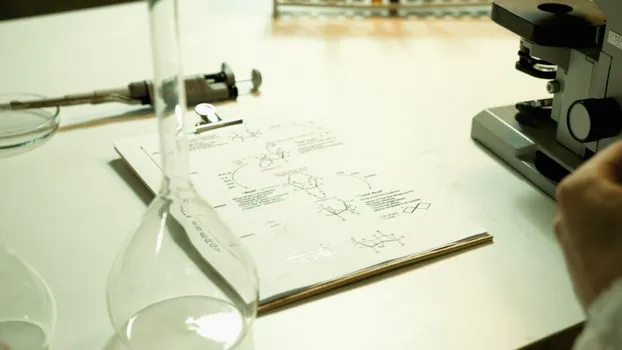
Moisture analyzer failure modes revolve around sample preparation: insufficient particle size reduction leaves bound water inside granules and biases the result low; over-drying drives off volatiles other than water and biases the result high. The 5 to 10 minute halogen-heated run at 105 C is a method choice, not a fundamental property, and method transfer between labs is the most common source of dispute. [S1]
DO meter failure modes are dominated by membrane condition: a coated or biofouled cap reads low, while a stored-in-dry cap on an optical sensor drifts on its first hour of operation. A luminescent cap is not consumed by O2 flux, so it does not need electrolyte refresh, but the cap is a consumable with a finite photobleach life. The O2 partial pressure reading does not need stirring on optical sensors the way polarographic cells do, but a stagnant sample in a beaker still equilibrates slowly with headspace, so grab-sample timing matters.
Standards, calibration, and traceability
Moisture analyzers are calibrated by weight-set traceability and by SmartPac-style temperature references, while DO meters are calibrated against air-saturated water at known barometric pressure or against a zero-O2 solution of sodium sulfite. The portable InTap unit follows the same air-saturation procedure at 100% RH and corrects the reading to mg/L using built-in temperature and salinity coefficients [S3]. For a broader instrument comparison on solids, liquids, and gases, the gas analyzer family covers combustion and flue gas, and the oxygen detector reference covers portable safety O2 meters that share a sensor family with the DO probe but live in a different compliance regime.
Where the two instruments do need to agree on a number is in mass-balance closure: a dryer exhaust water load measured by an in-line moisture probe should reconcile against the wet-basis and dry-basis weighings on the inlet and outlet moisture balances, and any drift larger than 1 to 2% absolute typically points to a sampling error rather than a sensor cross-talk. Lab QA benches that need to chase that closure should also look at pressure transmitter selection criteria for compressed air lines when instrument-air dew point is in scope, since pressure stability is a hidden driver of both moisture and DO baseline drift.
Trackable signals to watch over the next two quarters: published field comparisons of optical vs polarographic DO caps in high-biomass wastewater, and updates to portable DO handset firmware that add salinity-compensation presets for brine streams. Any change in those will shift the decision matrix above without altering the core finding that moisture analyzers and DO meters do not cross-react on the same sample.