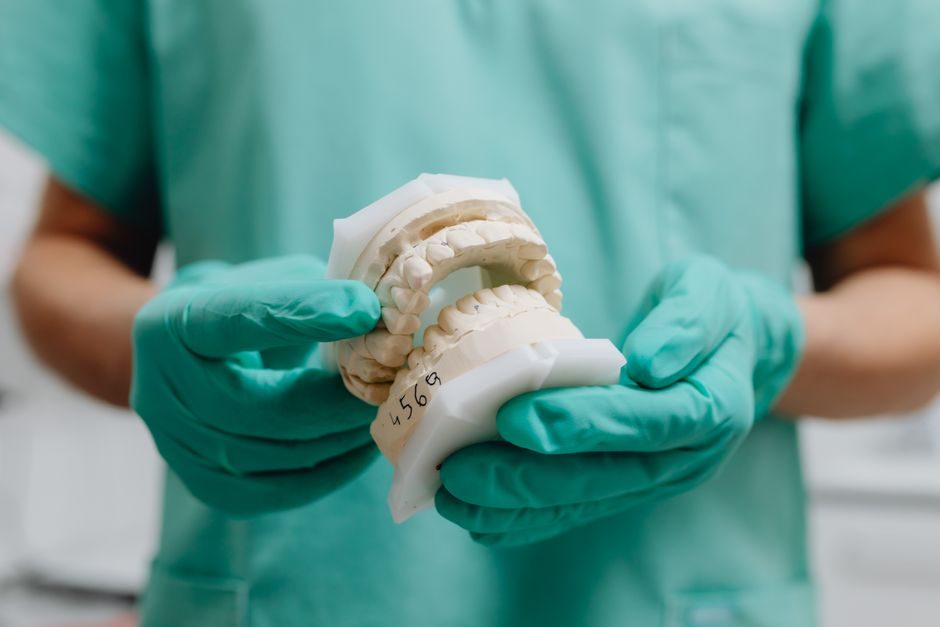
A mold base is the standardized pre-hardened frame that holds cavities, cores, ejector pins, and guide pillars; selecting by steel grade, hardness window, and polymer corrosivity prevents premature failure and avoids 20-40% over-spend on under-utilised tooling.
The four operating classes in 2026 are LME-standard 50-series (P20/S50C, 28-32 HRC, ≤500k shots), through-hardened H13/718-pre-hard (38-44 HRC, 0.5-1M shots), stainless 420/2083 (HRC 30-36, corrosive polymers), and beryllium-copper C17200 inserts (>50 W/m·K thermal conductivity) for hot-runner manifolds [S1].
LME 50-Series Standard Frames (P20, S50C, 1050)
The LME (Lord / European) 50-series is the entry-level standardized frame format with plate thicknesses graded in 50 mm increments (50-100-150-200-250 mm) and dimensional tolerances held to ±0.02 mm on guide-pin bores. P20 (1.2311, DIN 2738) and the equivalent S50C (JIS G4051) are supplied pre-hardened to 28-32 HRC, which is enough for prototype runs and short production of unfilled or low-filler thermoplastics such as PP, PE, and ABS [S1].
Moldburger Mold Industry (Humen, Dongguan, Guangdong) stocks LME 50-series frames and confirms the format is the global default for export-oriented mold makers because mating standard parts — leader pins, support pillars, ejector sleeves — interchange across Chinese, Japanese (MISUMI-compatible), and European catalogs [S1]. Shot life is typically capped at 500,000 cycles for unfilled PP; glass-filled PA66 with 30% filler drops that figure by roughly half because abrasive wear of the cavity surface accelerates.
Through-Hardened H13 and 718H for High-Wear Polymers
Where abrasive glass-fiber reinforced or high-temperature engineering polymers (PA66-GF30, PPS, PEEK, PC) are specified, mold-base inserts and cavity plates are upgraded to through-hardened tool steels. H13 (DIN 1.2344, AISI H13) is vacuum-degassed, quenched, and tempered to 48-52 HRC for cavity and core inserts, while 718H (DIN 1.2738, modified P20+Ni) is supplied pre-hardened to 33-38 HRC for larger frames that cannot be effectively through-hardened in section sizes above 200 mm without distortion [S1].
A practical mid-tier spec is 718H cavity and core plates at 35-38 HRC combined with H13 slides, lifters, and gate inserts at 48-52 HRC — this hybrid build is the most common 2026 configuration for automotive interior parts with shot counts between 0.5 and 1 million. For deeper cavity machining the through-hardening route drops to 1.2083 / 420 stainless at 30-36 HRC when corrosion from PVC, flame-retardant additives, or hydrolyzed PET becomes a failure mode [S1].
Stainless and Corrosion-Resistant Bases (2083, S136, 420ESR)
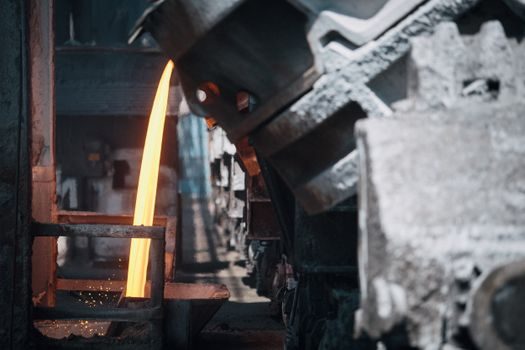
Stainless mold-base materials (DIN 1.2083 / AISI 420, DIN 1.2085 / AISI 420F+S, and the higher-purity 1.2083 ESR or equivalent S136 from Bohler-Uddeholm) are used when the polymer chemistry, flame retardants, or cooling water attack standard P20. Hardness is held at 30-36 HRC for frame plates and 48-52 HRC for through-hardened cavity inserts, balancing machinability with corrosion resistance [S1].
Optical-grade or medical applications push toward 1.2083 ESR / S136 because electroslag remelting reduces inclusion content and improves polishability to SPI-A1 (Ra ≤ 0.012 μm) and A2 (Ra 0.025-0.05 μm) — the threshold grades required by the automotive-headlamp and contact-lens mold sectors. Lead time on stainless frames runs 15-25% longer than P20 equivalents because of slower EDM and grinding feeds, and stainless material itself carries a 2-3× multiplier over P20 plate price in 2026 Asian catalogs.
Beryllium-Copper Inserts for Hot-Runner Thermal Management
Where hot-runner manifolds, mold-cooling inserts, or pinpoint gates concentrate heat, beryllium-copper (UNS C17200, CuBe2, 25-30 wt% Be equivalent in solution) replaces steel inserts to lift local thermal conductivity above 50 W/m·K — roughly 8-12× higher than P20 or H13 at 24-28 W/m·K. The same alloy age-hardens to 38-44 HRC after a 3-hour 315°C precipitation treatment, which is enough for gate inserts and cooling cores but not load-bearing cavity surfaces [S1].
Moldburger lists C17200 mold inserts and ejector sleeves in its standard-parts range and confirms the alloy is bonded by shrink-fit or brazed pockets into a steel mold base rather than used as a full frame — the cost per kilogram is roughly 20-30× P20 plate, so the geometry is kept to localized thermal-management zones only. Use of casting mold thermal-transfer inserts from the same CuBe family is standard in high-cavitation multi-cavity hot-runner systems where gate-to-cavity heat balance decides part warpage.
Selection Matrix: Steel Class vs Polymer vs Shot Life

The four steel classes sort cleanly against polymer, abrasive filler content, and target shot life. P20 / S50C LME 50-series covers unfilled PP, PE, ABS at ≤500k shots; 718H + H13 hybrid serves PA66-GF30, PPS, PEEK at 0.5-1M shots; 2083 / S136 is mandated for PVC, flame-retardant PC, and medical-grade parts; CuBe C17200 inserts are dropped into any of the above for hot-runner gates and cooling cores [S1].
For volume >1M shots the selection shifts toward fully through-hardened H13 frames (vacuum-degassed, HRC 48-52, plate sizes up to 800 × 800 mm) or powder-metallurgy tool steels such as ASP2023 (Uddeholm Vanadis 23) for abrasive glass-filled compounds. Lead-time on through-hardened H13 frames from Chinese suppliers in Dongguan and Shenzhen typically runs 25-40 working days versus 15-20 days for pre-hardened P20 / 718H equivalents, and the cost multiplier is 1.8-2.5×.
Failure Modes and Maintenance Window
Premature failure clusters in three patterns. Cavity-surface wear from glass-filled polymer (visible as Ra drift on polished surfaces from SPI-A2 to SPI-C1 within 200k shots) is the dominant mechanism on P20 frames used beyond their design polymer class. Cooling-channel corrosion from chloride-bearing cooling water attacks 1.2311 / P20 within 2-3 years, but leaves 1.2083 / 420 essentially unaffected at the same water chemistry [S1].
A third pattern is heat-check cracking on H13 cavities when cooling-line placement is asymmetric and surface temperature swings exceed 200°C per cycle. Maintenance windows that retain steel life are EDM dressing at 0.05-0.10 mm per re-polish, stress-relief at 580-620°C between overhauls, and full nitriding (salt-bath or plasma) for sliding cores. The same maintenance logic transfers to sand-casting mold pattern tooling where the steel base class controls the pattern wear pattern, although the abrasive mechanism is sand rather than glass fiber.
The 2026 watch-list on mold-base supply covers three signals: pricing of P20 plate in the Chinese spot market (currently tracking RMB 18,000-22,000/ton), delivery lead times for 718H ≥400 mm thickness (currently 30-45 days), and tighter European REACH compliance on beryllium-copper dust exposure for grinding shops using C17200 — buyers should track these as quarterly checkpoints for sourcing decisions.
This topic is covered further in Linear actuator types, drive classes, and 2026 spec-first selection map.